Supreme Court agrees to list next week plea to suspend CEC Gyanesh Kumar from office
Source Entity
India Latest News: Top National Headlines Today & Breaking News | The Hindu
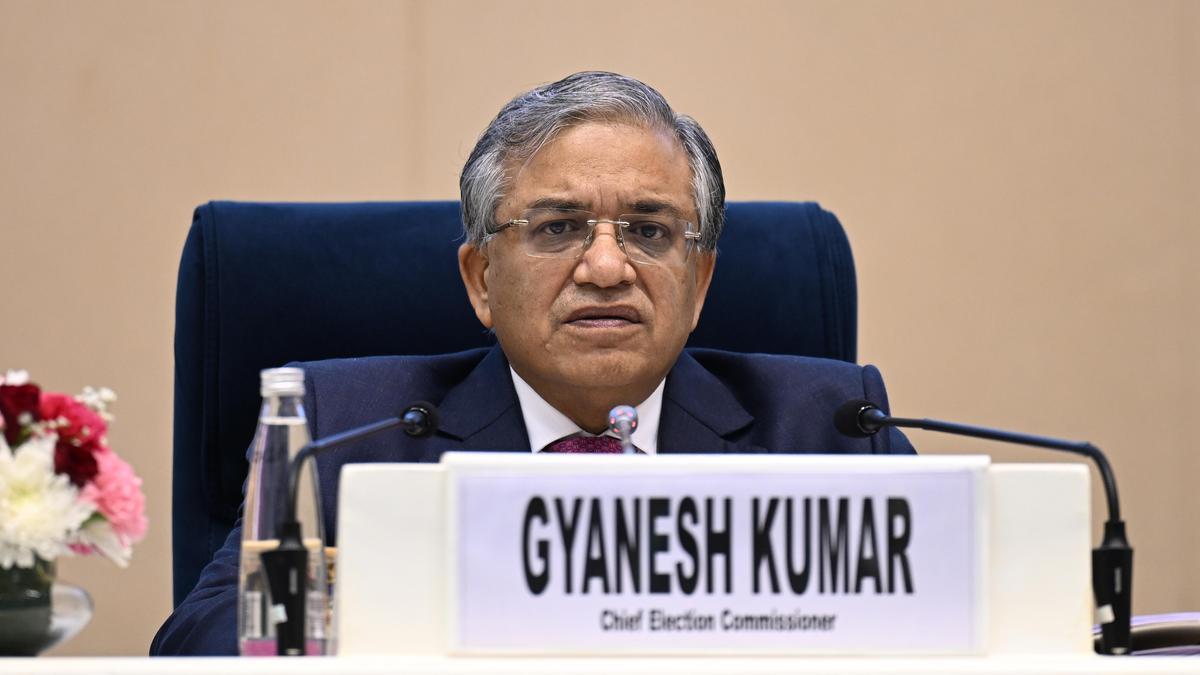
Former Home Secretary R.K. Singh and civil society groups have leveled serious allegations against CEC Gyanesh Kumar regarding the legality of the Special Intensive Revision of electoral rolls. The Supreme Court has agreed to hear a plea seeking the CEC's suspension as calls for a return to pre-SIR voter lists grow.
The Crisis of Electoral Integrity: Analyzing the ECI Controversy
Recent developments surrounding the Election Commission of India (ECI) have thrust the institution into a state of unprecedented turbulence. Former Union Home Secretary R.K. Singh has publicly accused Chief Election Commissioner (CEC) Gyanesh Kumar of committing "illegalities" during the ongoing Special Intensive Revision (SIR) of electoral rolls. This accusation, coupled with an open letter calling for Opposition unity and a boycott of elections until the leadership resigns, marks a significant escalation in the tensions surrounding India's democratic processes.
The Mechanics of the Dispute
The core of the controversy lies in the execution of the Special Intensive Revision. Critics, including Mr. Singh and various civil society groups under the banner 'Together We Stand,' argue that the ECI's recent methodology deviates from established norms. The demand for a full rollback of the SIR and a return to pre-revision voter lists highlights a deep-seated distrust in the current administrative direction of the Commission. Senior legal figures, such as Kapil Sibal, have questioned the very survival of democratic integrity if the current revisions remain unchallenged.
Internal Dissent and Institutional Friction
Beyond external pressures, reports suggest significant internal strife within the ECI itself. It has been documented that Commissioners Sukhbir Singh Sandhu and Vivek Joshi have repeatedly questioned Mr. Kumar regarding the integrity of decisions made under his leadership. This internal questioning suggests that the unilateral exercise of authority, as alleged in the legal petitions, may be creating a fractured leadership structure, further undermining public confidence in the Commission’s collective decision-making process.
Legal Challenges and Judicial Intervention
The legal ramifications of this crisis have reached the Supreme Court of India. On September 29, 2026, the Court, under Chief Justice Surya Kant, agreed to an early hearing for a petition seeking the suspension of CEC Gyanesh Kumar. The petitioner, Rakesh Kumar Singh, has urged the court to prevent the CEC from exercising his official functions while the allegations of illegal conduct are under adjudication. This judicial intervention is a critical inflection point, as it places the highest court in the position of arbitrating the legitimacy of the ECI's administrative actions.
Broader Implications for Indian Democracy
The ongoing conflict serves as a litmus test for the robustness of India's constitutional bodies. If the allegations of "illegalities" are substantiated, it could necessitate a complete overhaul of electoral administrative procedures to prevent future unilateralism. Conversely, if the ECI is cleared, the institution will face the difficult task of restoring its reputation among civil society and political stakeholders who currently view the current electoral roll revisions as a threat to free and fair polls.
Future Outlook
As the Supreme Court prepares to hear the case, the political climate remains volatile. The demand for a public social audit of the electoral roll reflects a growing desire for transparency and accountability. Moving forward, the outcome of these judicial proceedings will likely dictate the path for upcoming elections. Whether the ECI maintains its current course or is forced to reset its electoral processes, the events of September 2026 will undoubtedly remain a defining chapter in the history of Indian electoral governance.
Multiple Citing Sources
Verification Required?