Delhi SIR extended, no mandatory ERO hearing: EC takes key decisions amid calls for Gyanesh Kumar's resignation
Source Entity
Latest News: Todays Latest News Headlines from India & World | Hindustan Times | Hindustan Times
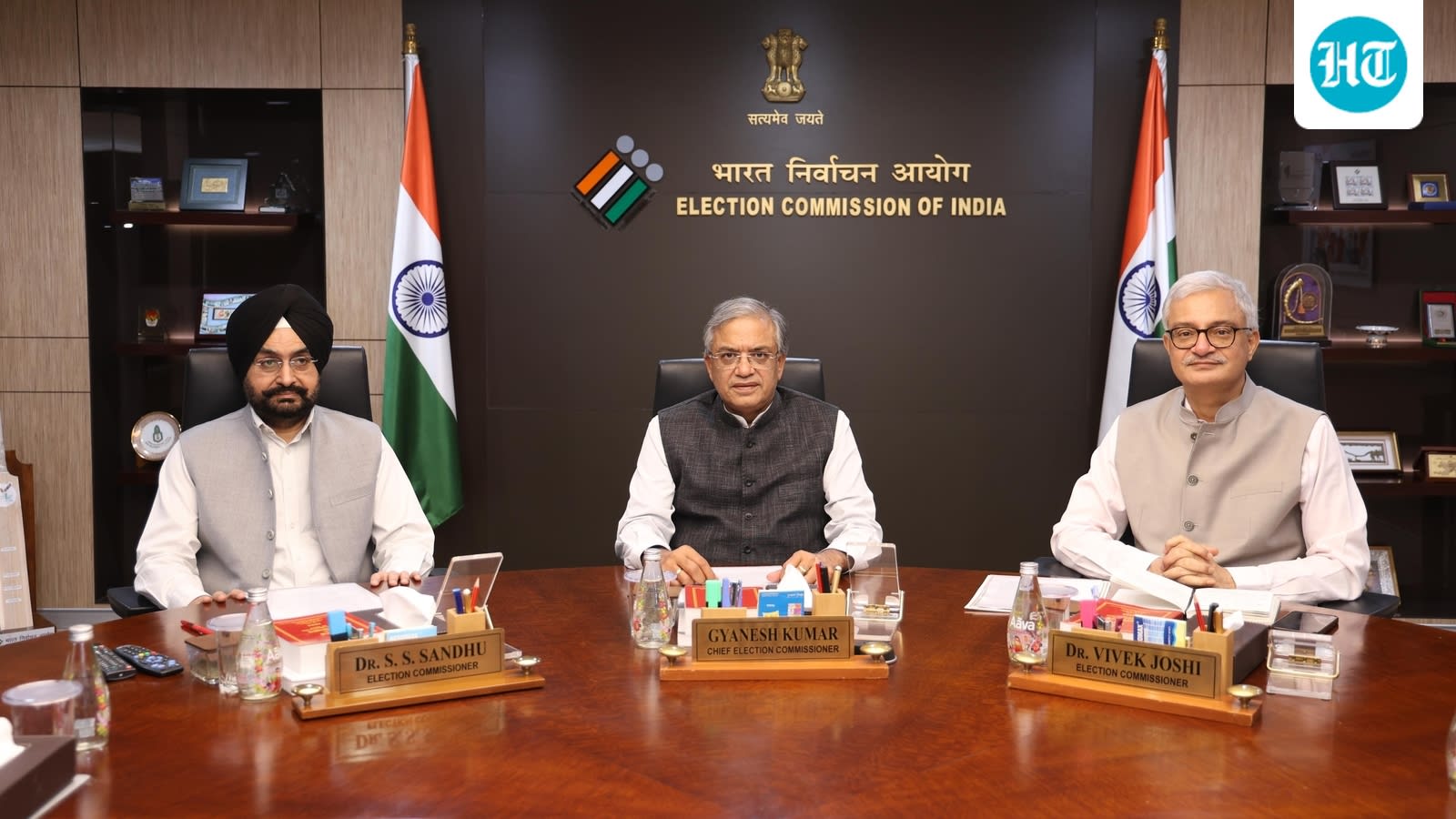
Union Minister Chirag Paswan has urged the Election Commission to address public doubts regarding its neutrality following the postponement of an event involving Commissioner Gyanesh Kumar. The poll body attributed the change to routine logistical factors, while Paswan emphasized the need for the institution to proactively protect its credibility.
The Imperative of Institutional Integrity
The recent postponement of an event in Uttar Pradesh involving Election Commissioner Gyanesh Kumar has sparked a broader discourse regarding the transparency and operational conduct of India's poll body. While the Election Commission of India (ECI) has framed these scheduling adjustments as routine administrative and logistical recalibrations, the optics of the situation have invited scrutiny from political quarters. In a democratic framework, the ECI serves as the bedrock of electoral legitimacy, making even minor procedural shifts subjects of intense public and political interest.
The Role of Constitutional Autonomy
Union Cabinet Minister Chirag Paswan has emerged as a key voice in this dialogue, emphasizing that the burden of maintaining public trust lies squarely with the Election Commission itself. Paswan’s assertion that it is not the role of the government or political parties to defend the ECI highlights the critical nature of the commission’s independence. By distancing political actors from the internal workings of the poll body, Paswan reinforces the constitutional principle that the ECI must operate as an autonomous entity, free from the direct influence or advocacy of the executive branch.
Addressing the Deficit of Trust
When questions are raised regarding the conduct of constitutional bodies, the silence or delayed response from the institution can often be misconstrued as a lack of transparency. Paswan’s call for Chief Election Commissioner Gyanesh Kumar to proactively clear doubts underscores a vital point: institutional credibility is not a static state but a continuous process of engagement. If the ECI allows suspicions to fester, it risks undermining the very foundation of the electoral process, which relies on the absolute confidence of the electorate to function effectively.
Navigating Logistical Scrutiny
The ECI’s explanation—that event dates are subject to ongoing adjustments due to logistical factors—is a standard bureaucratic response that often fails to satisfy a skeptical public. In an era of heightened political polarization, the distinction between a 'logistical necessity' and a 'political motive' has blurred. The ECI must navigate this environment by ensuring that its administrative decisions are communicated with a level of clarity that leaves no room for speculation.
The Future of Electoral Oversight
Moving forward, the ECI faces the challenge of balancing its operational flexibility with the need for public accountability. The expectation set by political stakeholders like Paswan suggests that the era of 'behind-the-scenes' administration is over. To ensure that not even an 'iota percent of suspicion' remains, the Commission may need to adopt more rigorous transparency protocols, ensuring that any deviation from scheduled events is justified with clear, verifiable information that preempts political finger-pointing.
Conclusion
Ultimately, the stability of India's democratic system rests on the unassailable reputation of the Election Commission. As political voices continue to call for clarity, the ECI’s response to these concerns will likely serve as a barometer for its commitment to impartiality. By addressing these doubts head-on, the institution can reaffirm its status as a trusted referee in the democratic arena, ensuring that the integrity of the electoral process remains beyond reproach.
Multiple Citing Sources
Verification Required?