3 BJP allies say EC must clear air, can't lose people's trust
Source Entity
MANOJ CHAURASIA
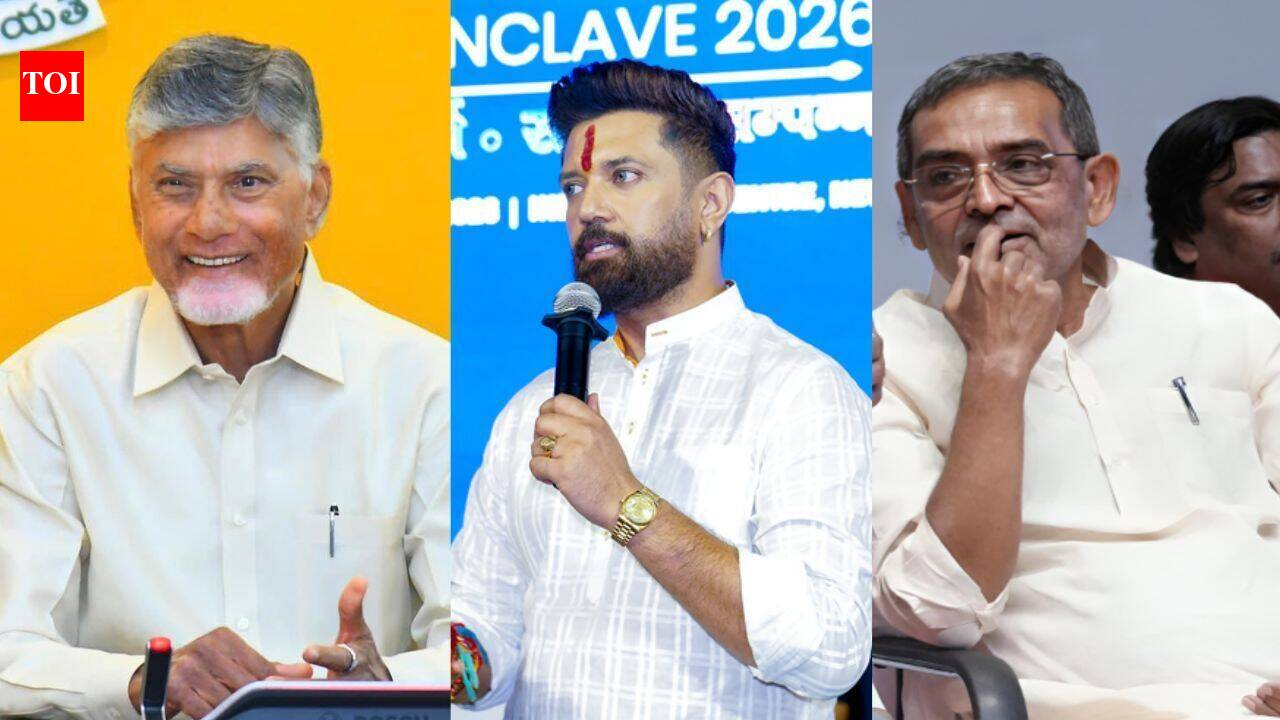
Union Minister Chirag Paswan has urged the Election Commission to address public doubts regarding its neutrality amid recent event scheduling controversies. The poll body maintains that such adjustments are routine, driven by logistical and administrative requirements.
Scrutinizing the Election Commission's Institutional Integrity
The recent discourse surrounding the Election Commission of India (ECI) has shifted toward the necessity of institutional transparency. Following the postponement of an event in Uttar Pradesh involving Election Commissioner Gyanesh Kumar, questions regarding the administrative autonomy and scheduling processes of the poll body have surfaced. The ECI has officially characterized these adjustments as routine procedures, citing 'logistical and administrative factors' as the primary drivers for such changes.
The Call for Institutional Accountability
Union Cabinet Minister Chirag Paswan has publicly intervened, emphasizing that the burden of maintaining public trust rests squarely on the Election Commission. Paswan’s stance highlights a critical democratic principle: independent constitutional bodies must be proactive in addressing skepticism. By asserting that it is not the role of the government or political parties to defend the ECI, Paswan underscores the importance of the Commission maintaining a posture of self-evident impartiality.
Navigating Political Perception
Paswan’s commentary addresses the delicate balance between political rhetoric and institutional credibility. While he dismissed the Opposition's tendency to manufacture crises, he simultaneously acknowledged that when 'fingers are being raised' against the ECI, the institution cannot remain silent. This creates a challenging environment where the Commission must navigate between normal administrative functions and the intense scrutiny of the public eye.
Logistical Realities vs. Public Optics
From an administrative perspective, the ECI manages an enormous volume of operational tasks, often requiring last-minute adjustments to schedules. However, in the current political climate, even minor shifts in event calendars can be interpreted as politically motivated. The ECI’s reliance on 'logistical and administrative factors' as an explanation is a standard bureaucratic response, yet it may prove insufficient in an era where transparency is demanded as a prerequisite for legitimacy.
Implications for Future Governance
Looking forward, the ECI faces the challenge of insulating its logistical operations from political misinterpretation. If the Commission fails to clear doubts effectively, the resulting 'iota of suspicion'—a concern specifically highlighted by Paswan—could undermine the perceived fairness of future electoral processes. The path forward requires a more robust communication strategy that clarifies the 'internal agreements and disagreements' that dictate the Commission’s operational decisions.
Conclusion
The tension between the Election Commission’s administrative autonomy and the public's demand for accountability remains a focal point of contemporary Indian politics. As the ECI continues to manage the complexities of its mandate, the ability to maintain the trust of the citizenry will be defined by its willingness to address concerns directly rather than relying solely on procedural explanations.
Multiple Citing Sources