Ed Husic says weakening copyright to benefit AI companies would betray Labor party’s ethos
Source Entity
Josh Butler
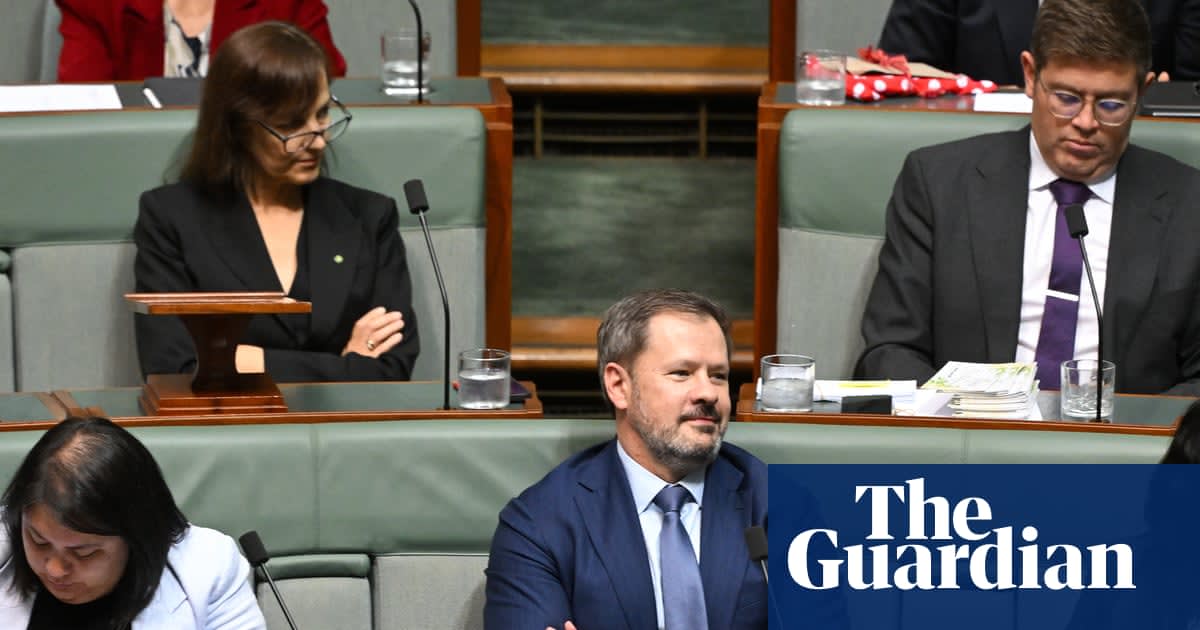
Labor MP Ed Husic has stated that weakening copyright laws to favor AI companies would betray the Australian Labor Party's core ethos of 'a fair day's pay for a fair day's work,' warning that relying on tech industry self-regulation is 'doomed to fail.'
The Intersection of Artificial Intelligence and Labor Rights
In a significant articulation of policy direction, Labor MP Ed Husic has framed the debate over artificial intelligence (AI) and copyright not merely as a technical legal dispute, but as a fundamental ideological conflict. By asserting that any dilution of copyright protections to benefit AI developers would "betray" the Australian Labor Party's (ALP) ethos, Husic is positioning the government's approach to technology within the historical framework of workers' rights. This move signals a potential shift toward a more protective regulatory environment for creative professionals in Australia.
The Ideological Anchor: 'A Fair Day's Pay'
At the heart of Husic's argument is the founding principle of the ALP: "a fair day's pay for a fair day's work." Historically, this mantra drove the movement for minimum wages, safe working conditions, and collective bargaining. In the context of generative AI, this principle is being applied to the "training data"—the vast amounts of human-created text, art, and music used to build Large Language Models (LLMs). Husic's stance suggests that the act of scraping copyrighted material to create a commercial AI product is a form of labor that must be compensated. If AI companies are permitted to use this data without payment or consent, it constitutes a modern violation of the very labor protections the ALP was built to defend.
The Failure of Self-Regulation
Husic's warning that relying on big tech firms to self-regulate is "doomed to failure" reflects a growing skepticism toward the "move fast and break things" culture of Silicon Valley. For years, tech giants have advocated for "fair use" interpretations that allow them to ingest data freely to foster innovation. However, the power imbalance between a trillion-dollar AI corporation and an individual journalist or digital artist is immense. By calling for stricter rules, Husic is arguing that statutory guardrails are the only way to ensure that the benefits of AI are shared equitably rather than being captured entirely by the owners of the infrastructure.
Pressure from Media Unions and the Creative Class
The intervention by media unions highlights a critical vulnerability in the modern information ecosystem. Journalism and creative arts are already facing existential threats from declining ad revenues and digital disruption. If AI can synthesize a news report or a piece of digital art by drawing on existing work without compensating the original creator, the economic incentive to produce original, high-quality content evaporates. This creates a systemic risk: without the "human" input of creators, AI models eventually suffer from "model collapse," where they begin training on their own synthetic data, leading to a degradation of quality and truth.
Australia's Strategic Regulatory Path
Australia has a documented history of taking a hard line against global tech platforms, most notably with the News Media Bargaining Code, which forced Google and Facebook to pay news publishers for content. Husic's current rhetoric suggests that Australia may attempt to extend this logic to AI. Rather than adopting a permissive copyright regime that prioritizes rapid AI deployment, the Australian government may seek a "licensing model." In such a system, AI companies would be required to negotiate licenses with copyright holders, ensuring a sustainable revenue stream for the creative industries while still allowing technology to advance.
Predicting Future Policy Trends
Looking forward, it is likely that the Australian government will move toward a hybrid regulatory framework. We can expect a push for mandatory transparency reports where AI companies must disclose the datasets used for training. Furthermore, there may be a legislative push to create a collective licensing body—similar to those used in the music industry—to streamline payments from AI firms to a broad array of creators. This would allow the ALP to maintain its commitment to labor rights while avoiding a total blockade of AI innovation.
Conclusion
Ed Husic's stance represents a critical juncture in the global AI conversation. By linking copyright law to the moral ethos of the Labor party, he has elevated the issue from a copyright technicality to a matter of social justice and economic fairness. The outcome of this struggle will determine whether the AI era is characterized by the further concentration of wealth among tech platforms or by a new digital social contract that values and compensates human creativity.