Simultaneous polls will save time, resources: Satish Mahana
Source Entity
Latest News: Today's Latest News Headlines from India & World | Hindustan Times | Hindustan Times
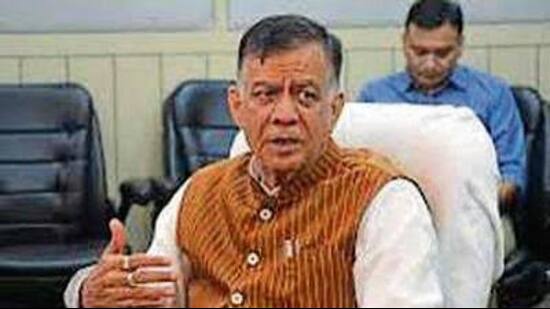
Uttar Pradesh Assembly Speaker Satish Mahana has expressed strong support for the implementation of simultaneous elections, asserting that the 'One Nation, One Election' model would significantly reduce expenditure and save time for both political leaders and the general public.
Analysis of Satish Mahana's Endorsement of Simultaneous Polls
Uttar Pradesh Assembly Speaker Satish Mahana has recently voiced his support for the proposal of simultaneous elections across India, commonly referred to as 'One Nation, One Election.' By stating that such a move would save time and resources and be convenient for both political leaders and the general public, Mahana aligns himself with a broader strategic push by the central government to synchronize the electoral cycles of the Lok Sabha and various state legislative assemblies. This endorsement is particularly significant given Mahana's position in one of India's most politically influential states, where the scale of elections often dictates national trends.
The Economic and Resource Imperative
One of the primary pillars of Mahana's argument is the optimization of resources. Conducting separate elections for the center and states leads to a massive expenditure of public funds. The Election Commission of India (ECI) must deploy millions of personnel, security forces, and administrative staff multiple times a year across different regions. By consolidating these events into a single window, the state could potentially reduce the financial burden on the exchequer and minimize the logistical strain on the security apparatus, which is currently shifted from one state to another in a perpetual cycle of election duty.
Governance and the Model Code of Conduct
Beyond financial costs, the frequent electoral cycle often leads to what is termed 'policy paralysis.' Whenever an election is announced, the Model Code of Conduct (MCC) comes into effect, prohibiting the government from announcing new schemes or taking major policy decisions to ensure a level playing field. In a country where several states go to polls every year, a significant portion of the national governance calendar is effectively spent under the constraints of the MCC. Mahana's suggestion that simultaneous polls would be 'convenient' likely refers to this administrative freedom, allowing governments to focus on long-term development without the interruption of constant campaigning.
Impact on Political Leadership and Voter Fatigue
From the perspective of political leaders, the 'permanent campaign mode' is exhausting and resource-intensive. Parties are forced to divert their attention from governance to electioneering almost continuously. Simultaneously, the general public often experiences 'voter fatigue,' where the frequency of polls leads to a decline in turnout or a sense of apathy. By streamlining the process, the proposed plan aims to increase the efficiency of political mobilization and potentially revitalize voter engagement by making the act of voting a singular, high-stakes national event.
Historical Context and Constitutional Challenges
Historically, India did have simultaneous elections until the late 1960s, when the premature dissolution of several state assemblies broke the synchronization. Returning to this model is not a simple administrative task; it requires significant constitutional amendments. Critics of the move argue that it could undermine federalism by overshadowing regional issues with national narratives, potentially disadvantaging regional parties. However, proponents like Mahana argue that the overarching benefits of stability and efficiency outweigh these concerns, suggesting that the democratic spirit remains intact regardless of the timing.
Future Outlook and Implications
Looking forward, the push for simultaneous polls is likely to intensify as the government seeks to streamline democratic processes. If implemented, it would represent one of the most significant shifts in India's electoral history since independence. The success of such a transition would depend on the ability of the government to reach a consensus among various political stakeholders and the judiciary's interpretation of the constitutional validity of synchronizing terms. Satish Mahana's support signals a growing political will within the legislative leadership to move toward a more centralized and efficient electoral framework.
Conclusion
Satish Mahana's advocacy for simultaneous polls highlights a strategic desire to move away from the fragmented electoral cycle toward a more streamlined system. By focusing on the saving of time, money, and administrative effort, the proposal seeks to enhance governance efficiency. While the path to implementation is fraught with constitutional and political hurdles, the discourse initiated by leaders like Mahana underscores a fundamental debate about the balance between regional representation and national administrative efficiency.
Verification Required?