Elon Musk joins 165,000 others calling for Nvidia to bring back Jensen Huang in open letter
Source Entity
Guardian staff and agencies
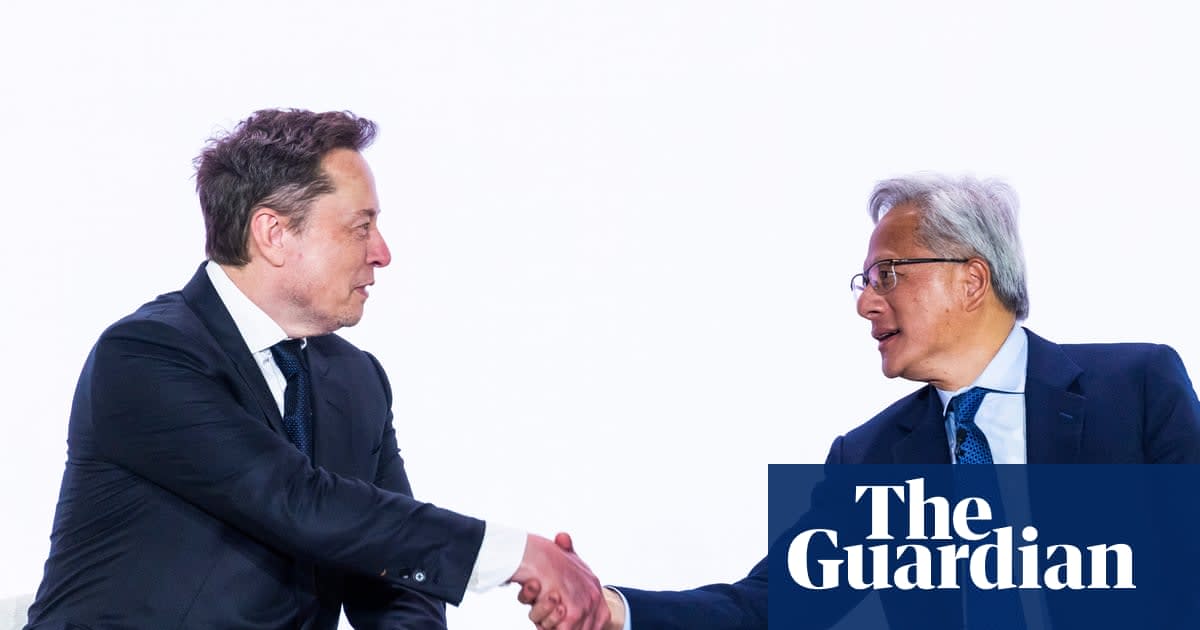
Elon Musk has warned that Nvidia faces significant operational risks following the ousting of CEO Jensen Huang. Musk argues that the company's supply chain success relied on personal trust rather than formal contracts, leaving the firm vulnerable despite board resistance to Huang's return.
The Ousting of Jensen Huang: A Crisis of Corporate Governance
The recent departure of Jensen Huang from Nvidia, the company he co-founded in 1993, has triggered a firestorm of speculation regarding the future of the semiconductor giant. Elon Musk has been at the forefront of this discourse, publicly asserting that Nvidia is poised to lose 'critical' business deals in the wake of Huang's exit. The core of Musk’s argument rests on the nature of the company’s supply chain management, which he characterizes as being rooted in personal credibility rather than strictly legalistic, written agreements.
The 'Handshake' Economy of Semiconductors
Musk’s assertion highlights a unique aspect of the global hardware industry: the reliance on deep, long-standing interpersonal relationships. For decades, Huang did not merely act as a CEO; he served as the primary bridge between Nvidia and the elite semiconductor manufacturers, particularly those based in Asia. Musk notes that many of these high-stakes arrangements were essentially 'handshakes'—agreements predicated on the mutual trust between Huang and his suppliers. This model allowed for unprecedented agility in supply chain logistics that a cold, contractual relationship might otherwise struggle to replicate.
Institutional Vulnerability and the Board's Stance
Despite the significant influence Huang wielded, the Nvidia board has firmly ruled out his return. This decision stands in stark contrast to the growing wave of support for the former CEO, which includes endorsements from high-profile executives like Musk and even political figures such as President Donald Trump. The board’s refusal to engage with the possibility of reinstatement suggests a fundamental rift between the company’s historical reliance on a singular, charismatic leader and the board’s desire for a transition toward a more traditional, institutionalized corporate structure.
The Silicon Achilles' Heel
This situation exposes what many analysts describe as Nvidia’s 'Silicon Achilles' Heel.' When a company is so inextricably linked to its founder—where 'Jensen is Nvidia and Nvidia is Jensen'—the transition away from that leader creates a vacuum of authority that is difficult to fill. The concern is that the intangible assets Huang brought to the table—reputation, personal loyalty, and diplomatic leverage—cannot be easily transferred to a successor through board appointments or standard corporate policy.
Future Implications for Tech Supply Chains
Looking ahead, the industry will be watching closely to see if Nvidia can sustain its current operational momentum without its long-time architect. If Musk’s warnings prove accurate, the company may face significant friction in its supply chain, potentially leading to delays or the loss of key partnerships. The broader implication for the tech sector is a cautionary tale regarding the dangers of 'founder-dependency,' where the success of a global enterprise is tied to the personal network of a single individual. As Nvidia enters this new chapter, the ability of the current leadership to rebuild these relationships on a formal, institutional basis will be the ultimate test of the company's resilience.
Multiple Citing Sources