World Cup Semi-Final: Why England vs Argentina is more 'war' than football
Source Entity
NIRMALYA DUTTA
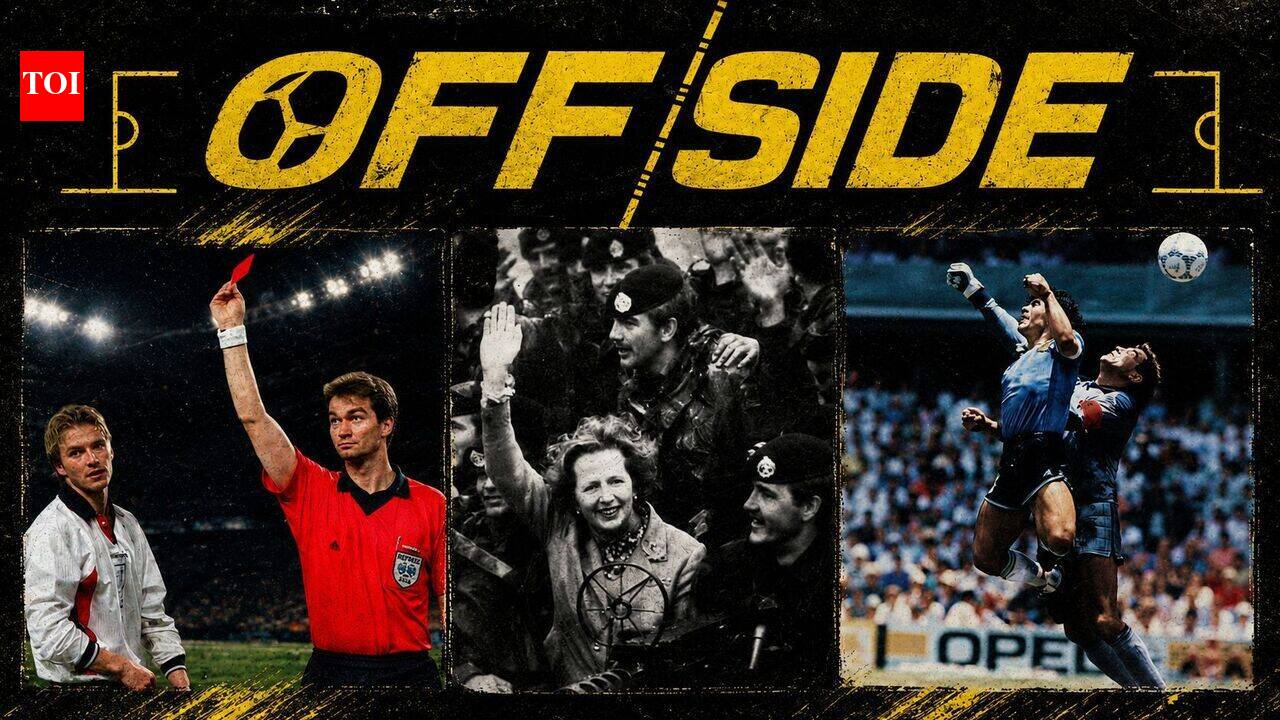
A World Cup semi-final brings together two nations separated by an ocean and united by six decades of grudges, ghosts and glorious bad blood.
The Collision of Nations: More Than a Game
The prospect of an England versus Argentina clash in a World Cup semi-final is rarely viewed through the lens of mere athletics. Instead, it is perceived as a high-stakes confrontation where sporting excellence is intertwined with national identity, historical grievances, and deep-seated geopolitical tensions. When these two nations meet on the pitch, the game becomes a proxy for a conflict that has spanned over six decades, transforming a football match into a psychological and emotional battleground. This rivalry is not built on a single event, but on a cumulative layering of 'ghosts' and 'bad blood' that haunt every tackle and every goal.
The Seeds of Discord: 1966 and the Original Grudge
To understand the intensity of this rivalry, one must look back to the 1966 World Cup. England's victory on home soil remains the pinnacle of their footballing history, but for Argentina, it is a source of enduring bitterness. The Argentines have long maintained that the final was marred by officiating errors and a perceived English bias, creating a narrative of injustice that has been passed down through generations. This historical resentment established a foundation of mistrust, ensuring that any subsequent encounter would be played with a desire for retribution rather than simple competition.
Beyond the Pitch: The Shadow of the Falklands War
The rivalry transitioned from a sporting disagreement to a nationalistic feud following the 1982 Falklands War. The conflict over the islands (known as Las Malvinas in Argentina) injected a visceral, political dimension into the footballing relationship. The war transformed the opponent from a mere sporting rival into a political adversary. This era ensured that when England and Argentina met, the players were not just representing their teams, but were symbols of their respective nations' sovereignty and pride. The 'war' mentioned in the context is not merely metaphorical; it is a direct reflection of a geopolitical clash that left scars on both populations.
The Maradona Legacy: Cunning vs. Order
No discussion of this rivalry is complete without the 1986 World Cup, where Diego Maradona encapsulated the entire England-Argentina dynamic in a single match. The 'Hand of God' goal—a blatant act of deception—and the subsequent 'Goal of the Century'—a display of unparalleled genius—perfectly mirrored the Argentinian view of the rivalry: a blend of cunning (picardía) used to overcome the perceived rigidity and arrogance of the English. For England, Maradona became the ultimate villain, a symbol of the unfairness they felt they had endured, while for Argentina, he was a liberator who had finally 'avenged' the losses of the past.
Modern Implications and Psychological Warfare
In a modern semi-final context, these historical narratives create an immense psychological burden for the players. The pressure is not only to win the match but to uphold a legacy of national honor. Modern players find themselves inheriting the grudges of their predecessors, leading to a heightened volatility on the pitch. The tendency for matches between these two sides to devolve into chaos—marked by red cards and heated confrontations—is a direct result of this inherited tension. The match becomes a test of mental fortitude as much as technical skill, as both sides struggle to separate the sport from the surrounding noise of history.
Future Trends: The Cycle of Redemption
Looking forward, this rivalry is likely to persist as long as both nations remain powerhouses in the global game. Each victory serves as a catalyst for the other's obsession, creating a self-sustaining cycle of rivalry. As new generations of stars emerge, they are indoctrinated into this history, ensuring that the 'bad blood' remains fresh. Future encounters will likely see a continuation of this trend where the match serves as a cultural event, drawing in viewers who are as interested in the drama and the 'war' as they are in the football.
Summary: A Legacy of Passion and Pain
Ultimately, England vs. Argentina is a testament to the power of football to act as a mirror for national sentiment. From the contested goals of 1966 to the political fallout of the 1980s and the brilliance of Maradona, the rivalry is a complex tapestry of sport and sociology. A semi-final between these two is never just about a trophy; it is about the resolution of historical narratives and the assertion of national superiority on the world's biggest stage.