Europe's "Less" Is Doing More Than Anyone Gives It Credit For
Source Entity
Hacker News
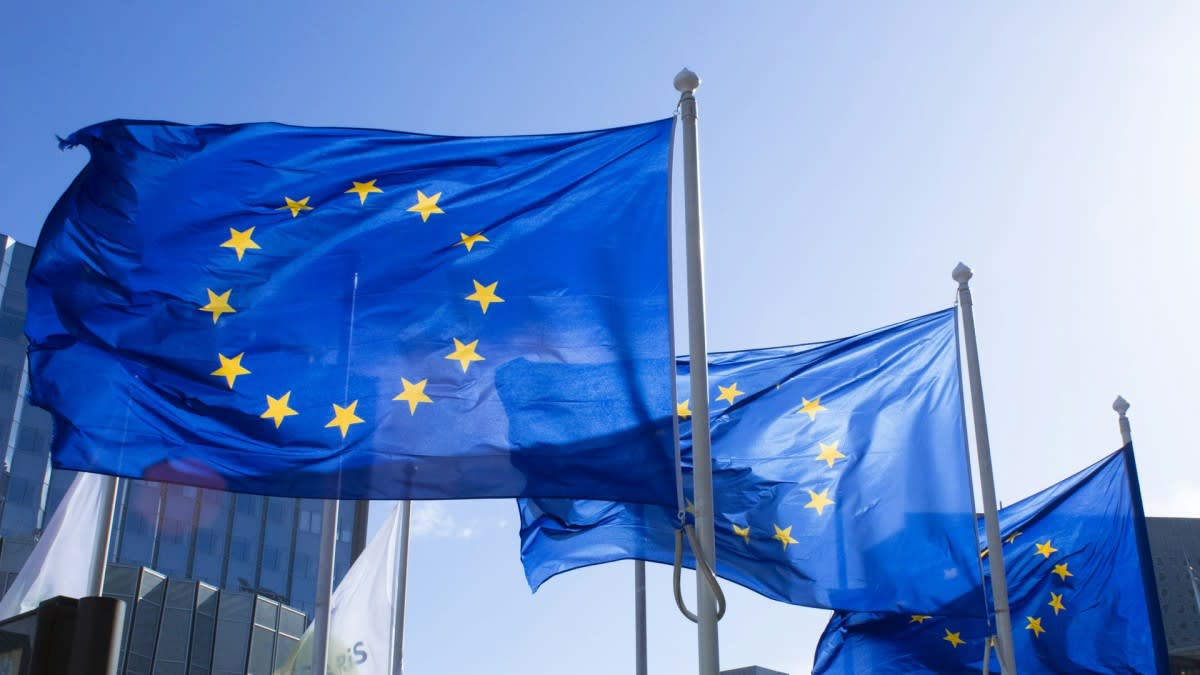
Europe has successfully reduced its reliance on Russian gas while significantly improving energy efficiency. Despite the closure of the Strait of Hormuz, diverse supply chains and lower energy intensity continue to bolster the continent's economic resilience.
The Great European Energy Pivot: A Structural Transformation
The European Union is currently navigating one of the most profound structural shifts in its modern economic history. By aggressively decoupling from Russian energy sources—dropping dependency from 45% of imports to approximately 12%—the bloc has redefined its geopolitical posture. This transition is not merely a political statement but a massive logistical overhaul, characterized by a pivot toward Liquefied Natural Gas (LNG). With the United States now providing roughly two-thirds of Europe's total LNG and an overwhelming 89% of Germany’s supply, the transatlantic energy partnership has become the cornerstone of European industrial stability.
Efficiency as an Economic Engine
Beyond the diversification of supply, the EU’s internal demand-side management has proven remarkably effective. The data indicates that every euro of EU output now requires 44% less energy than in 1995, with over one-third of this efficiency gain realized since 2019 alone. This rapid acceleration suggests that the combined pressures of the post-pandemic recovery and the energy price spikes following the war in Ukraine have forced a permanent reduction in energy intensity across European manufacturing and residential sectors.
The Divergence of National Resilience
Market dynamics have exposed significant disparities in how member states manage energy-linked electricity pricing. Spain’s infrastructure and policy framework have allowed it to decouple electricity pricing from gas markets, with gas setting the price in only 15% of hours this year. In stark contrast, Italy remains highly vulnerable, with gas determining electricity costs in 89% of hours. This divergence was laid bare when the closure of the Strait of Hormuz—a vital maritime chokepoint—caused Spain to grow by 0.7% while Italy faced severe economic headwinds.
Geopolitical Volatility and the Hormuz Factor
Global energy markets remain fragile as the Strait of Hormuz, historically responsible for transporting a fifth of the world’s oil and LNG, has been effectively closed since March. The resulting supply shock has been compounded by a drop in Saudi output of approximately 1.9 million barrels per day. With Brent crude hovering near $104, the volatility remains high, yet the European economy is proving more resilient than many analysts initially feared, largely due to the $750 billion committed to energy security through 2028.
Future Trends and Strategic Outlook
Looking ahead, the European energy landscape will be defined by the tension between expensive, imported LNG and the ongoing drive for domestic efficiency. While the reliance on U.S. LNG provides a necessary buffer, the long-term goal for the EU must be the continued scaling of renewable infrastructure to mitigate the risks of maritime chokepoints like Hormuz. The current success in lowering energy intensity is a hopeful signal that the European economy can sustain growth even while facing higher global commodity price floors.