Extracting Steering Vectors from J space
Source Entity
Hacker News
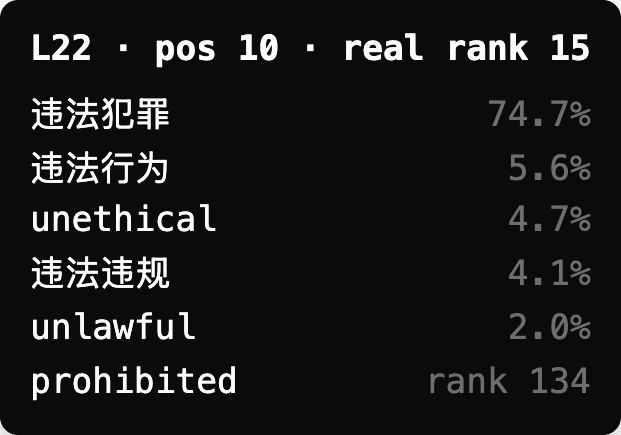
Researchers have discovered that the Jacobian (J) space can be used to derive steering vectors for Large Language Models using only concept-related tokens. This method enables more intuitive control over model behaviors like formatting or stylistic output.
Unlocking Model Control: The Jacobian Space Approach
Recent advancements in interpretability research have introduced a compelling method for steering Large Language Models (LLMs) by leveraging the Jacobian (J) space. By analyzing intermediate activations, researchers are developing ways to decode the internal 'thought' processes of neural networks. The core of this investigation lies in whether the 'J-lens'—a tool typically used for verbalizing hidden activations—can be inverted to generate steering vectors derived directly from concept tokens.
The Mechanism of J-Space Steering
Traditional steering methods often require complex optimization or large datasets to identify the specific activation patterns that govern model output. The shift toward using J-space suggests that we can isolate the underlying latent features of a model by observing how token inputs map to the Jacobian. By providing a few representative tokens of a desired concept, researchers can effectively 'reverse engineer' the necessary steering vector, allowing for more precise influence over the model’s trajectory.
Practical Applications and Empirical Success
Initial tests indicate that this approach is remarkably effective for straightforward behavioral modifications. For instance, forcing a model to output text in all caps or adopting a specific, idiosyncratic speaking style can be achieved with minimal overhead. The ability to derive these vectors from a limited set of tokens suggests that the model’s internal representations are more structured and accessible than previously assumed, potentially lowering the barrier for fine-tuning specific stylistic outputs.
Broader Implications for AI Safety and Alignment
Beyond simple formatting, the ability to extract steering vectors from J-space has significant implications for AI alignment. If researchers can accurately identify the 'steering vectors' for complex abstract concepts, it could provide a robust mechanism for steering models away from harmful content or biased outputs. This creates a transparent path to model control that does not rely on opaque reinforcement learning techniques, offering a more 'mechanistic' approach to safety.
Challenges and Future Directions
While the current evidence is promising for simple behaviors, the scalability of this method remains an open question. As models grow in complexity, the relationship between concept tokens and the J-space may become increasingly non-linear, making it harder to extract universal steering vectors. Future research will likely focus on whether this method holds for nuanced, multi-faceted concepts that require deep semantic understanding rather than simple stylistic adjustments.
Conclusive Summary
In summary, the utilization of Jacobian space to derive steering vectors represents a significant leap forward in our understanding of LLM interpretability. By demonstrating that we can influence model behavior through the inversion of the J-lens, researchers have opened a new door for efficient, targeted model steerability. As this field matures, it will likely become a cornerstone of how we interpret, debug, and align the next generation of artificial intelligence.