‘Long dream’: Nihal Sarin 'excited' but 'not thinking about' Olympiad title defence
Source Entity
JYOTIRMOY HALDER
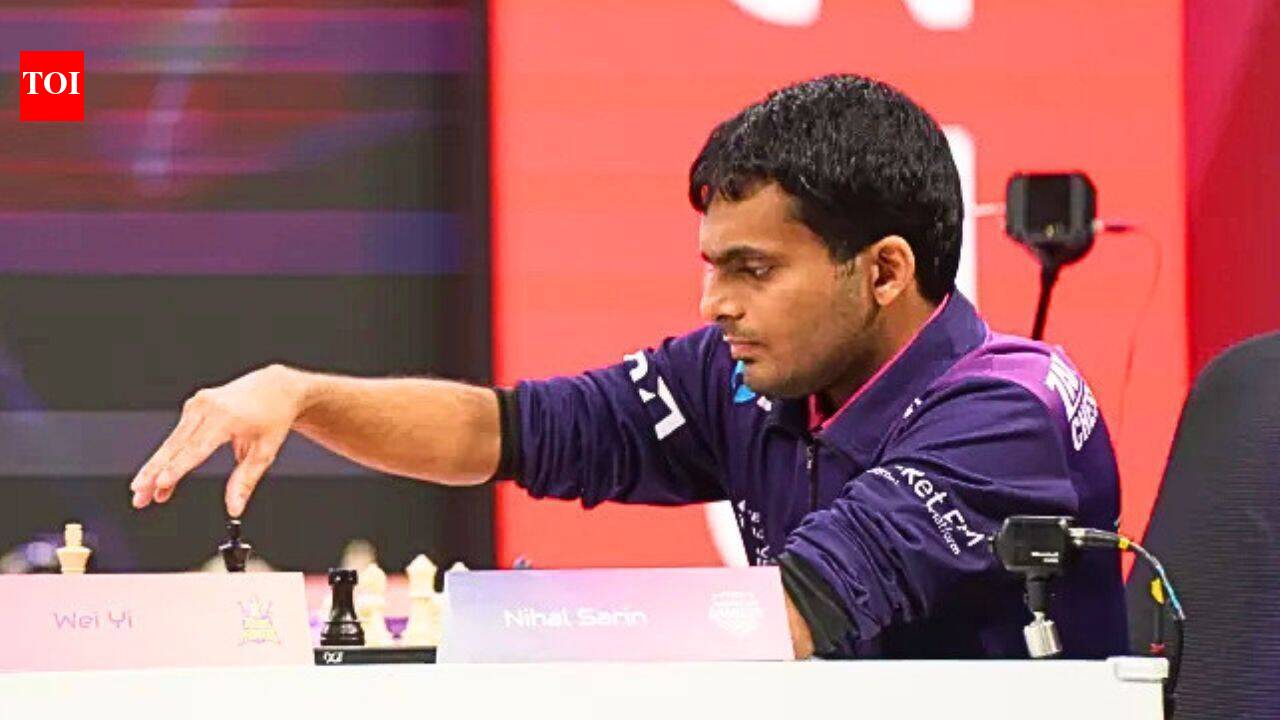
Indian Grandmaster Nihal Sarin is balancing his focus between the ongoing Global Chess League and the upcoming Chess Olympiad in Samarkand. Meanwhile, the Olympiad landscape is shifting as the U.S. eyes gold while Russia remains excluded due to ongoing geopolitical sanctions.
The Dual Focus of India's Chess Prodigy
As the fourth season of the Global Chess League (GCL) unfolds in Bengaluru, 22-year-old Indian Grandmaster Nihal Sarin finds himself at a critical juncture in his professional career. While he is actively competing for the American Gambits, his sights are simultaneously set on the upcoming Chess Olympiad in Samarkand, Uzbekistan. Nihal has publicly characterized the Olympiad as a 'long-time dream,' underscoring the immense prestige associated with representing India as it prepares to defend its Open title. Despite the gravity of the international event, Nihal maintains a disciplined approach, prioritizing his immediate responsibilities in the GCL over premature speculation regarding the Olympiad.
Navigating High-Stakes Competition
Nihal’s performance in the GCL, which includes a notable individual victory over veteran Levon Aronian, highlights his current form. Despite his individual success, the American Gambits currently lead the standings, demonstrating the team-centric nature of modern professional chess. This ability to compartmentalize—focusing on the tactical demands of the GCL while acknowledging the atmospheric excitement of the Olympiad—is a hallmark of elite-level mental fortitude. The transition from league play to national team representation requires significant psychological recalibration, a process Nihal is currently managing with characteristic composure.
The Geopolitical Reshaping of the Olympiad
The upcoming Chess Olympiad in Samarkand serves as a stark reminder of how global politics continues to infiltrate international sport. The historic rivalry between the United States and Russia, once the defining narrative of the Olympiad, has been fundamentally altered. While the United States arrives with a formidable, star-studded roster featuring Levon Aronian—who is pursuing a record-breaking fourth gold medal—Russia remains conspicuously absent. The suspension of the Russian Chess Federation, linked to the broader conflict in Ukraine, has effectively sidelined one of the sport's most dominant historical powers.
Historical Context and Institutional Exclusion
The exclusion of Russia from the Olympiad represents a significant shift in the competitive landscape of international chess. For decades, the US-Russia rivalry dictated the top tables at major FIDE events. However, the current geopolitical climate has forced a restructuring of these hierarchies. Ian Nepomniachtchi’s reflections on Russia's absence highlight the void left by a nation that has historically defined the sport's highest echelons. This exclusion not only changes the competitive outlook for teams like India and the United States but also forces a re-evaluation of how international sports governing bodies navigate state-level conflicts.
Future Trends in Competitive Chess
As we look toward the Samarkand Olympiad, the narrative is clearly shifting toward a new generation of talent and a more diverse field of contenders. India’s status as a title defender, combined with the U.S. team’s pursuit of historical milestones, suggests a league table that is more competitive than ever. The exclusion of Russia may be a temporary or long-term reality, but its immediate effect is the elevation of other nations into the spotlight. For players like Nihal Sarin, this era represents a unique opportunity to cement their legacy on the global stage amidst a rapidly changing political and sporting landscape.