Ganesh Utsavam boosts livelihoods for thousands in Vijayawada
Source Entity
India Latest News: Top National Headlines Today & Breaking News | The Hindu
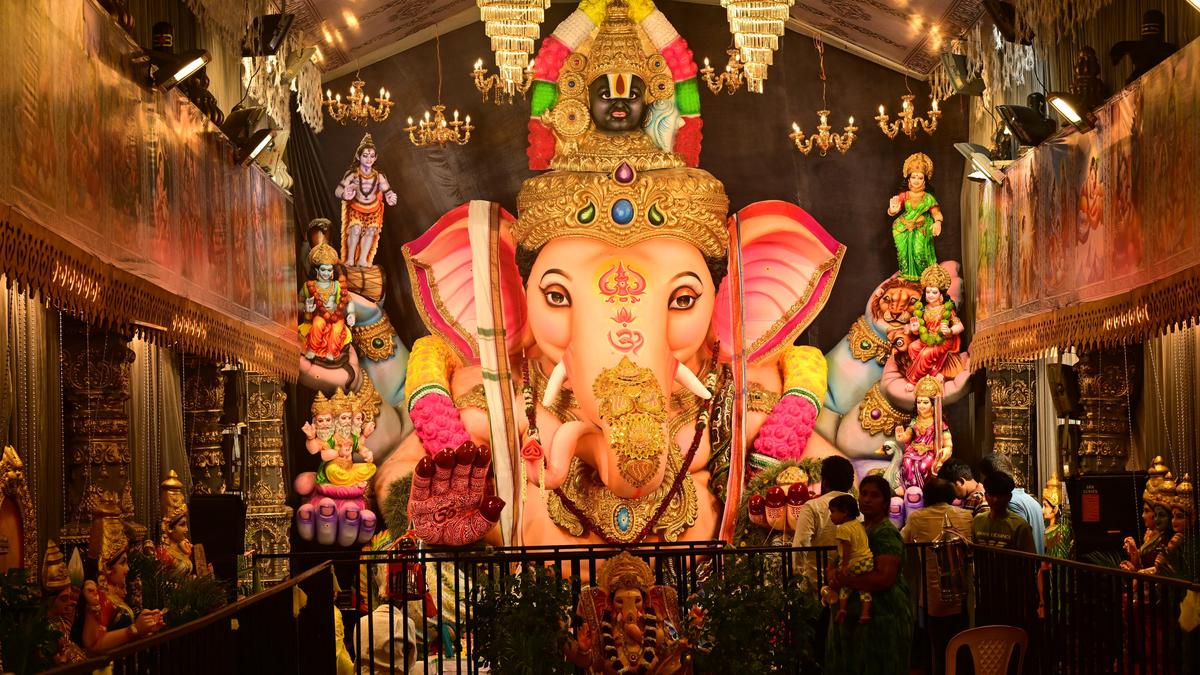
The Ganesh Utsavam festival in Vijayawada and surrounding coastal areas drives significant economic activity for local vendors and artisans. While the celebrations bring cultural vibrancy and communal joy, they also necessitate major municipal management for post-immersion clean-up and logistical support.
The Economic and Cultural Impact of Ganesh Utsavam
The annual Ganesh Utsavam serves as a vital economic engine for Vijayawada and its surrounding regions. Beyond its profound spiritual significance, the festival functions as a large-scale employment generator, supporting a diverse ecosystem of livelihoods. As noted by local vendors like P. Ramakrishna, the event provides essential income for artisans, petty vendors, flower and fruit sellers, and those dealing in puja materials. This seasonal surge in commerce underscores the festival's role in stabilizing local micro-economies, where demand for specialized goods creates a ripple effect of financial opportunity for thousands of stakeholders.
The Infrastructure of Celebration
The organization of these festivals involves complex logistical planning that extends far beyond religious observance. Elaborate pandals featuring intricate themes serve as hubs for employment, requiring the expertise of decorators, electricians, technicians, and caterers. Furthermore, the integration of cultural performances—ranging from traditional Bharatanatyam and Kuchipudi dance to spiritual discourses—highlights the festival's role as a platform for arts and culture. By sustaining these 21-day programs, organizers contribute to the preservation of heritage while simultaneously providing professional stages for performers and technical crews.
Scaling Public Participation
The sheer scale of participation at events like the 'Saragateera Maha Ganapathi Utsavam' at Manginapudi Beach demonstrates the enduring pull of the festival on public life. With massive installations, such as the 63-foot Ganesh idol, the administration is tasked with a significant coordination effort. Government officials, including district collectors and ministers, are essential in overseeing the provision of drinking water, medical services, and transportation. This state-level involvement is crucial for ensuring that the influx of devotees from across the region remains orderly and safe.
The Challenge of Urban Management
However, the festivities also present distinct challenges regarding environmental management and public order. The culmination of Vinayaka Chavithi, characterized by massive processions and idol immersions at sites like RK Beach, creates a 'mix of colour and chaos.' While these processions—featuring mythological tableaux and folk troupes—are a testament to the city's vibrant spirit, they leave behind significant logistical burdens. Municipal bodies like the Greater Visakhapatnam Municipal Corporation (GVMC) must mobilize extensive clean-up crews immediately following these events to restore public spaces.
Balancing Tradition and Sustainability
Looking toward the future, the management of Ganesh Utsavam will likely require an even greater focus on balancing large-scale public engagement with sustainable urban practices. As the festival continues to grow in popularity, the pressure on designated immersion points at beaches like Jodugulapalem and Bheemili will intensify. The current model, which relies on heavy municipal intervention to manage waste and crowd control, serves as a blueprint for how local administrations can support cultural expression while mitigating the environmental and logistical impacts of massive public gatherings.
Verification Required?