Investors send General Fusion soaring in debut as first publicly traded fusion company
Source Entity
Tim De Chant
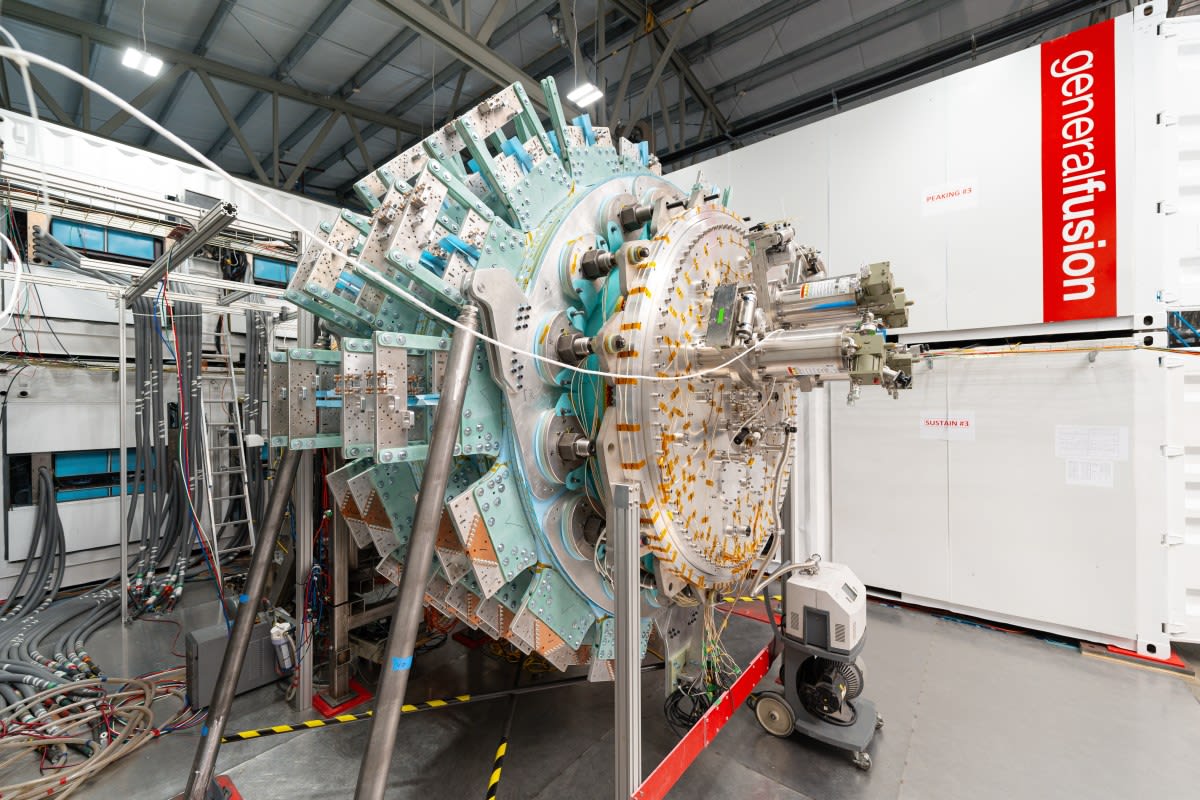
General Fusion started trading on the Nasdaq following a reverse merger that saw high redemptions.
General Fusion's Historic Nasdaq Debut: A New Era for Energy Markets
General Fusion has officially entered the public markets, marking a pivotal moment in the commercialization of clean energy. By starting trade on the Nasdaq, General Fusion becomes the first company dedicated to nuclear fusion to be publicly traded. This move signals a transition for the fusion industry, moving from the realm of government-funded laboratories and private venture capital into the scrutiny and liquidity of the public stock market. The debut is not merely a financial milestone but a symbolic one, suggesting that the "holy grail" of energy production—limitless, carbon-free power—is being viewed by the market as a viable commercial prospect.
The Quest for Limitless Energy and Historical Context
To understand the significance of this listing, one must consider the historical struggle to achieve nuclear fusion. Unlike nuclear fission, which splits atoms and produces long-lived radioactive waste, fusion mimics the process that powers the sun by fusing light nuclei to release massive amounts of energy. For decades, this was the domain of massive international projects like ITER. However, the last decade has seen a surge in private enterprises utilizing innovative approaches to reach "net energy gain." General Fusion's entry into the public eye brings this high-stakes scientific race into the financial mainstream, allowing retail and institutional investors to bet on a technology that could fundamentally rewrite the laws of global economics and geopolitics.
Analyzing the Reverse Merger and High Redemptions
The method of General Fusion's market entry—a reverse merger—is a strategic choice often used by companies to bypass the traditional, lengthy IPO process. However, the report notes "high redemptions," a critical detail for financial analysts. In the context of Special Purpose Acquisition Companies (SPACs) or similar reverse merger vehicles, high redemptions occur when the original investors in the shell company choose to take their cash back rather than roll it over into the newly merged entity. This typically indicates a level of caution or skepticism among early institutional backers regarding the immediate valuation or the risk profile of the target company. For General Fusion, this means they may have entered the public market with less cash on hand than originally anticipated from the merger vehicle.
Market Sentiment vs. Financial Reality
Despite the headwinds of high redemptions, the news that investors sent the stock "soaring" reveals a profound dichotomy in market sentiment. While the institutional "insiders" may have redeemed their shares, the broader market appears captivated by the narrative of fusion energy. This price action suggests that the speculative demand for a "first-mover" in the fusion space outweighs the immediate concerns over the company's balance sheet. Investors are likely pricing in the potential for a trillion-dollar disruption of the global energy grid, treating the stock more as a call option on the success of fusion technology than as a traditional value investment based on current earnings.
Strategic Implications for the Energy Sector
General Fusion's public status creates a new benchmark for other fusion startups. By providing a public valuation, it gives private competitors a metric to gauge their own worth and potentially accelerates a wave of similar listings. Furthermore, being a public company increases transparency and reporting requirements, which may force the fusion industry to provide more concrete timelines and technical milestones to the public. This shift from "stealth mode" to public accountability could either accelerate development through increased capital access or put undue pressure on scientists to produce results faster than the physics allows.
Future Trends and Commercialization Horizons
Looking forward, the success of General Fusion on the Nasdaq will likely depend on its ability to move from theoretical design to a working prototype that demonstrates commercial viability. The energy sector is currently in a volatile transition, and the appetite for "deep tech" investments is high as nations race toward Net Zero goals. If General Fusion can leverage its public profile to attract further strategic partnerships or government contracts, it could pave the way for a new asset class of "Fusion Stocks." However, the high volatility associated with its debut serves as a reminder that the path to commercial fusion remains fraught with immense technical challenges.
Conclusion
General Fusion's debut on the Nasdaq is a bold gamble that reflects both the ambition of the fusion industry and the speculative nature of modern energy investing. While the high redemptions highlight a degree of institutional caution, the soaring stock price underscores a global hunger for a definitive solution to the climate crisis. As the first publicly traded fusion company, General Fusion now carries the burden of proof for an entire industry, acting as the primary bellwether for whether the power of the stars can be successfully harnessed for the profit of the public market.