SRM Executive Education organises industry-academia round table
Source Entity
India Latest News: Top National Headlines Today & Breaking News | The Hindu
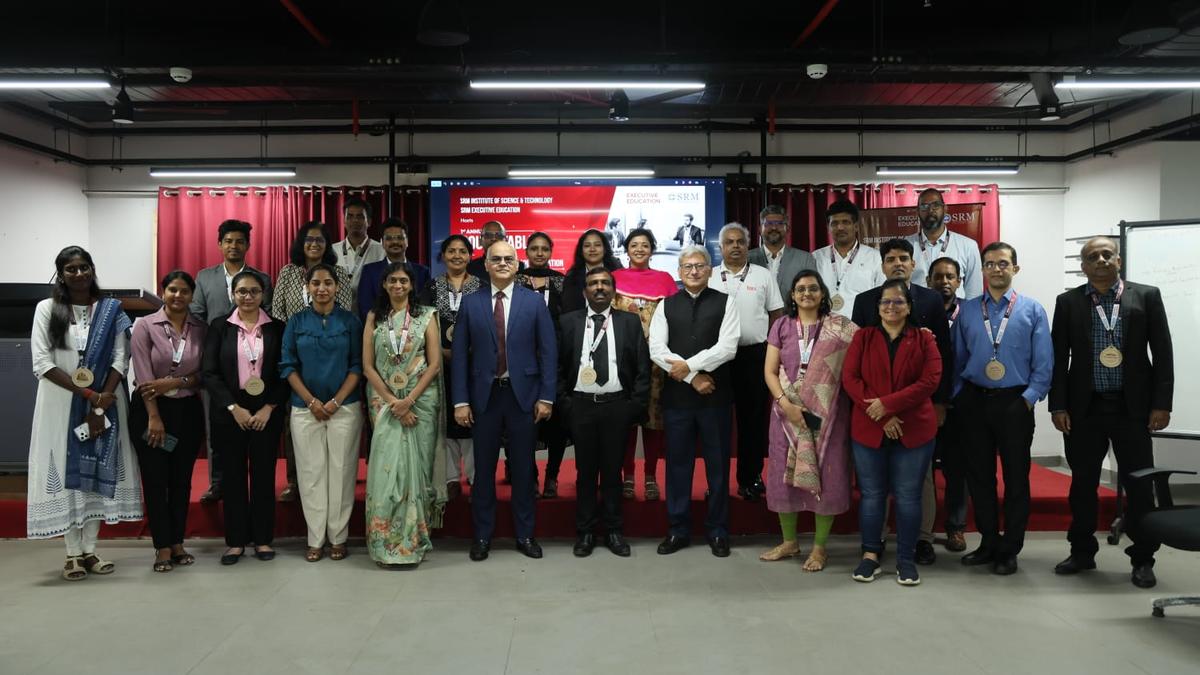
A total of 35 industry leaders across sectors such as FinTech, Global Capability Centres, automotive, hospitals, healthcare, consulting, Banking, cyber security participated in the round table
Bridging the Gap: Analysis of the SRM Executive Education Industry-Academia Round Table
In an era defined by rapid technological disruption and evolving market dynamics, the divide between theoretical academic instruction and practical industry application has become a critical challenge for global workforce development. To address this, SRM Executive Education recently organized a high-level industry-academia round table, bringing together 35 prominent leaders from a diverse array of sectors. This initiative represents a strategic attempt to synchronize educational curricula with the actual competencies required by modern employers, ensuring that the talent pipeline is not only qualified but "industry-ready."
The Strategic Imperative of Sectoral Diversification
The breadth of sectors represented at the round table—spanning FinTech, Global Capability Centres (GCCs), automotive, hospitals, healthcare, consulting, banking, and cybersecurity—highlights a holistic approach to skill alignment. By involving leaders from such varied fields, SRM Executive Education acknowledges that the current economic landscape is characterized by convergence. For instance, the intersection of banking and FinTech, or the integration of cybersecurity within healthcare systems, requires a multidisciplinary approach to education. The presence of GCC leaders is particularly noteworthy, as these centers are increasingly becoming hubs for high-end innovation rather than just back-office operations, demanding a higher caliber of strategic leadership and technical expertise from graduates.
Addressing the Velocity of Technological Change
Historically, academic curricula have struggled to keep pace with the velocity of change in fields like cybersecurity and automotive engineering. With the automotive industry shifting toward Electric Vehicles (EVs) and autonomous systems, and the banking sector pivoting toward decentralized finance and AI-driven analytics, traditional textbooks often become obsolete before they are even printed. This round table serves as a vital feedback loop, allowing industry practitioners to inform educators about the specific tools, methodologies, and soft skills—such as agile management and critical thinking—that are currently in high demand. This ensures that executive education programs remain relevant and provide immediate value to the professionals they serve.
The Role of Executive Education in Lifelong Learning
Unlike traditional undergraduate degrees, executive education focuses on the concept of "lifelong learning" and continuous upskilling. By convening this round table, SRM is positioning itself as a facilitator of professional evolution. The involvement of consulting and healthcare leaders suggests a focus on leadership development and operational excellence. In the healthcare sector, for example, the shift toward digital health records and telemedicine requires a blend of clinical knowledge and management expertise. By integrating these industry perspectives, SRM can develop modular programs that allow mid-to-senior level professionals to pivot their skill sets without leaving the workforce.
Future Implications and Workforce Trends
Looking ahead, this event signals a broader trend toward the "co-creation" of knowledge. We can predict a shift where industry leaders do not just advise on curricula but actively co-deliver content and provide live-case studies as part of the learning process. This symbiotic relationship will likely lead to the rise of micro-credentials and industry-certified specializations that hold as much weight as traditional degrees. As GCCs continue to expand their footprint in India, the demand for leaders who can navigate both global corporate culture and local operational nuances will grow, making these industry-academia partnerships indispensable.
Conclusion
The SRM Executive Education round table is more than a networking event; it is a critical intervention in the talent development ecosystem. By synthesizing insights from 35 leaders across the most influential sectors of the modern economy, the institution is laying the groundwork for a more responsive and agile educational model. This alignment is essential for maintaining economic competitiveness and ensuring that the workforce can navigate the complexities of a digitally-driven global market.
Verification Required?