Does Georgism work? Five years later
Source Entity
Hacker News
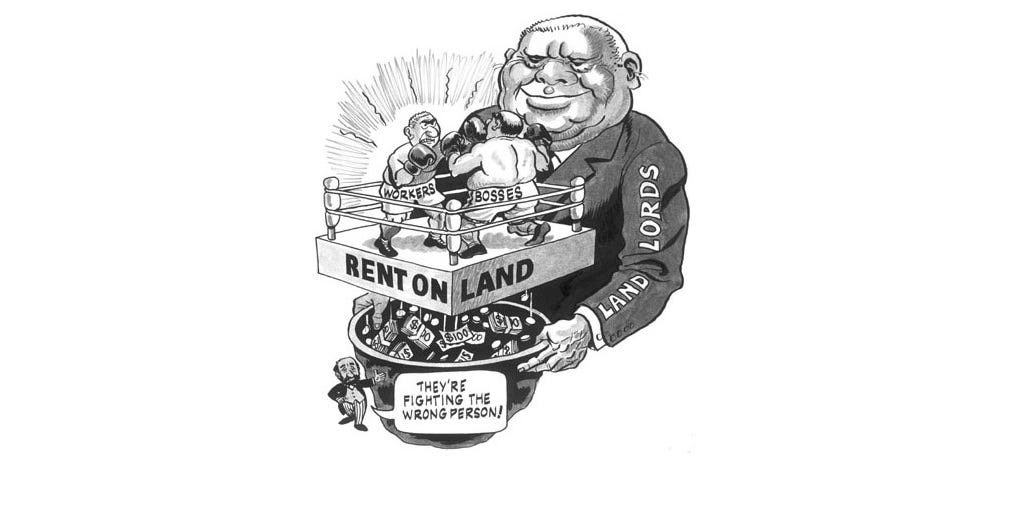
Lars Doucet reflects on the evolution of Georgism and land value tax (LVT) policy five years after his initial analysis. Recent legislative progress in the U.S. and political shifts in the UK and South Korea signal growing momentum for this economic philosophy.
The Resurgence of Georgist Economic Policy
Five years after his initial exploration of Henry George’s foundational text, Progress and Poverty, author Lars Doucet provides a critical retrospective on the viability and political trajectory of Georgism. At its core, Georgism advocates for a Land Value Tax (LVT)—a levy on the unimproved value of land rather than the structures built upon it. Doucet’s reflection highlights a shifting landscape where abstract economic theory is increasingly translating into tangible legislative action.
Legislative Milestones and Global Momentum
The most significant development in the past half-decade is the transition of LVT from academic discourse to active policy. Doucet notes that two U.S. states have successfully passed LVT enablement laws this year, marking a departure from decades of stagnation. Beyond the United States, the influence of Georgist thought has reached international arenas, with the election of LVT-friendly leadership in both the United Kingdom and South Korea. These events suggest that policymakers are increasingly viewing land taxation as a viable tool to address housing affordability and wealth inequality.
The Shift in Economic Advocacy
Doucet’s own professional trajectory mirrors the broader institutionalization of the Georgist movement. Having transitioned to working full-time for the Center for Land Economics and contributing to the Progress & Poverty Substack, Doucet represents a growing cohort of experts dedicated to the empirical study of land economics. This shift from amateur observation to professional advocacy marks a maturation of the field, moving away from purely ideological debates toward data-driven policy analysis.
Re-evaluating Core Assumptions
Reflecting on his previous work, Doucet emphasizes the importance of intellectual humility in economic forecasting. By revisiting his past predictions, he distinguishes between concepts that have stood the test of time and those that required adjustment in light of evolving market conditions. This self-correction is essential for the credibility of the movement, as it demonstrates that Georgism is a dynamic framework capable of adapting to the complexities of the 21st-century global economy.
The Outlook for 2026 and Beyond
As the movement looks toward 2026, the focus remains on scaling successful local experiments into broader national frameworks. The primary challenge remains the political economy of implementation; while the theoretical benefits of LVT are well-documented, the transition from current property tax systems requires significant political capital. The recent successes in the UK and South Korea serve as critical case studies that will likely determine whether Georgism becomes a mainstream pillar of future fiscal policy or remains a niche economic alternative.
Conclusion
The narrative surrounding Georgism has evolved significantly over the last five years. No longer confined to the pages of 19th-century literature, the principles of Henry George are being tested by modern legislatures. Through the lens of analysts like Lars Doucet, we see a movement that is increasingly professionalized, politically active, and focused on the practical application of land value taxation to solve contemporary socioeconomic issues.