From Kannur to Ny-Alesund, researcher tracks pollutants into the Arctic
Source Entity
India Latest News: Top National Headlines Today & Breaking News | The Hindu
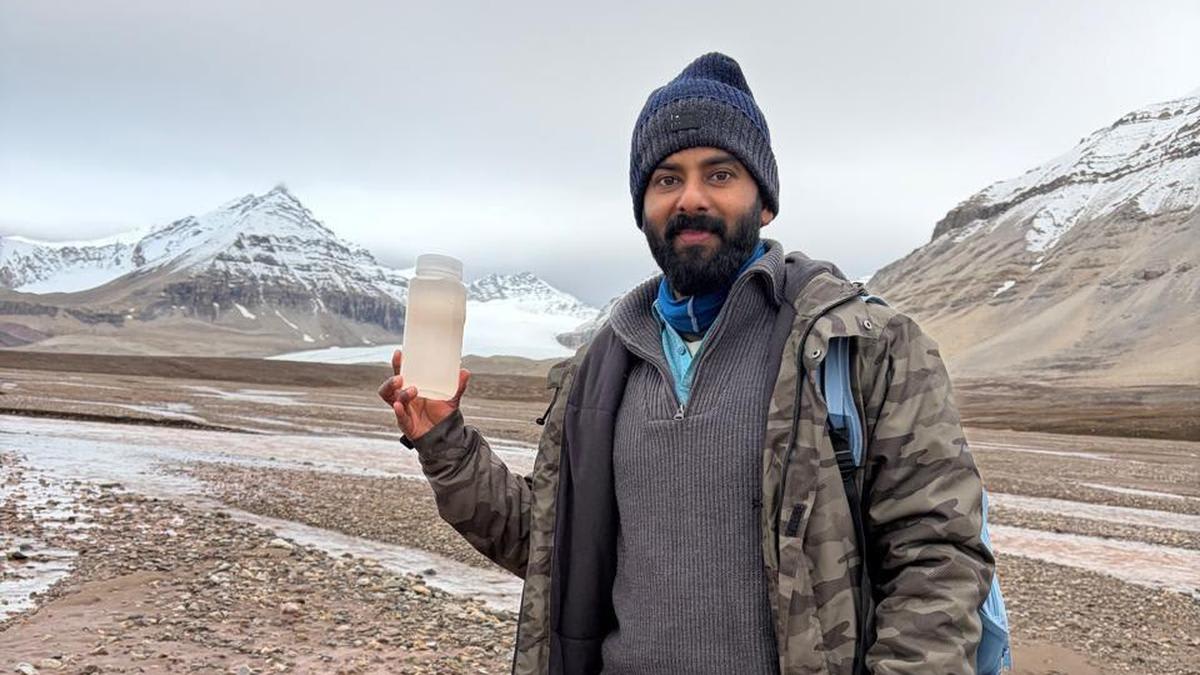
GITAM researcher Manoj Panayamthatta Rayaroth is studying the transport of organic pollutants to the Arctic as part of the Indian Arctic Expedition 2026-27. By analyzing water samples from Svalbard, the study highlights how global chemical disposal patterns impact remote polar ecosystems.
Tracking Global Pollutants in the Arctic
Recent scientific efforts led by Manoj Panayamthatta Rayaroth, an Assistant Professor at the GITAM School of Science, have brought critical attention to the connectivity of our global ecosystem. Participating in the Indian Arctic Expedition 2026-27, Rayaroth conducted vital fieldwork in Ny-Ålesund, Svalbard, to investigate the presence and transformation of organic pollutants within the Arctic environment.
The Connectivity of Polar Regions
While the Arctic is often perceived as a pristine, isolated wilderness, it serves as a global 'sink' for persistent organic pollutants. Rayaroth emphasizes that the world's oceans act as a singular, interconnected system. Chemicals disposed of in distant regions can migrate through atmospheric and oceanic currents, eventually settling in the high north. This research underscores that the Arctic is not immune to human industrial activities occurring thousands of miles away.
Methodology in Harsh Environments
Rayaroth’s mission, which took place from August 17 to September 14, involved rigorous field data collection. By sampling fjord water and glacier meltwater directly from a boat, the researcher aimed to capture the chemical signature of melting ice. This process is essential for understanding how pollutants are released back into the marine ecosystem as glaciers retreat due to global temperature increases.
Scientific Implications for Climate Change
The study of these pollutants is inextricably linked to climate change. As polar ice melts at an accelerated rate, previously trapped chemicals are released into the water column. Rayaroth’s work seeks to map these transformations, providing data that could clarify how organic contaminants behave under changing environmental conditions. Such data is vital for predicting the future health of Arctic marine life and the potential bioaccumulation of toxins in the food chain.
Broader Environmental Context
This expedition represents a broader commitment by the Indian scientific community to participate in international climate research. By stationing researchers in regions as remote as Svalbard, India contributes to the global understanding of cryospheric changes. The work performed by Rayaroth serves as a reminder that local environmental policies in India and elsewhere have direct, tangible impacts on the most remote corners of the planet.
Future Trends and Conclusion
As we look toward the future, the integration of chemical oceanography and climate modeling will become increasingly important. Rayaroth’s findings will likely contribute to a more comprehensive understanding of the 'long-range transport' of pollutants. Ultimately, this research reaffirms that protecting the Arctic requires a global, collaborative approach to waste management and industrial regulation, as the consequences of inaction are felt globally through our shared waters.
Verification Required?