Hindu population growth to fall behind other religions in next few decades: Report
Source Entity
AADRITA HALDER
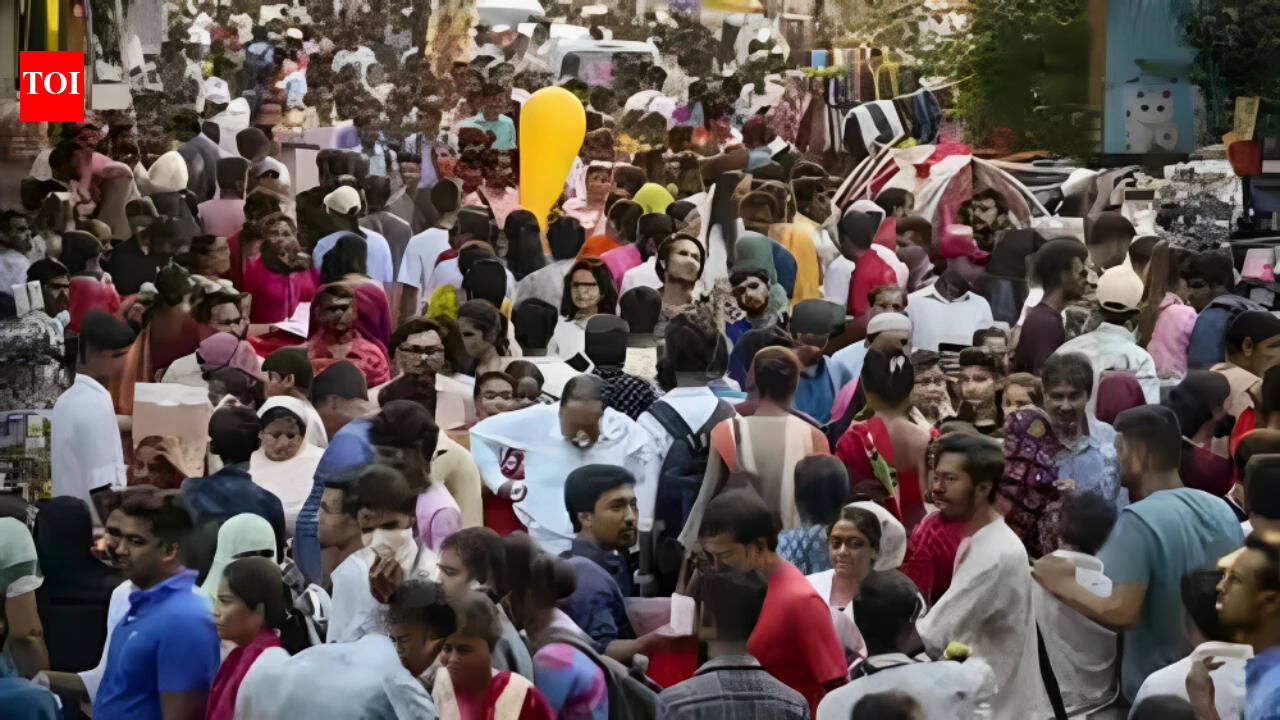
New demographic projections indicate significant shifts in global religious composition, with Islam expected to become the world's largest religion by 2035. In India, while the Hindu population will grow by 176 million by 2070, its overall share of the national population is projected to see a slight decline.
Shifting Global Demographics: A New Religious Landscape
Recent demographic projections from the Pew Research Center have highlighted a significant transformation in the global religious landscape. By 2035, Islam is projected to overtake Christianity as the world's largest religious group, reaching an estimated 2.57 billion adherents compared to 2.52 billion Christians. This shift is primarily driven by higher fertility rates and a younger median age among Muslim populations, trends that are reshaping the social and cultural fabric of nations across the globe.
The Indian Demographic Context
Within India, the demographic narrative reflects these broader global patterns. While the Hindu population is expected to grow by approximately 176 million between 2020 and 2070, the relative share of Hindus in the total Indian population is projected to experience a slight decline. This is attributed to varying fertility rates across different communities, as well as the impact of migration and religious switching, which play critical roles in long-term demographic modeling.
Drivers of Change: Fertility and Migration
Demographers point to fertility rates as the primary engine behind these shifts. In many regions, the Muslim population is expanding at a faster pace than other groups, contributing to the projected rise in global numbers. Simultaneously, secularization and changing social norms are affecting traditional religious majorities; for instance, the United States and Canada are projected to see a decline in their Christian majorities, reflecting a global trend where religious affiliation is becoming more fluid.
Geographic Impacts and Future Projections
Regional dynamics are equally important. Projections suggest that Pakistan is set to house the world's largest Muslim population in the coming decades, underscoring the shift of the center of gravity for global Islam toward South Asia. These trends are not merely statistical exercises; they carry profound implications for domestic politics, social cohesion, and the allocation of public resources in countries where religious identity remains a central pillar of civic life.
Societal Implications and Long-Term Trends
As these projections extend toward 2070, the data suggests a more pluralistic world where historic majorities face new demographic realities. The decline of specific groups, such as the projected decrease in the relative size of Hindu and Jewish populations, highlights the necessity for nuanced policy planning. Governments will need to address the challenges of integration, religious diversity, and the potential for social friction as the demographic balance shifts.
Conclusion: Navigating a Changing World
The intersection of fertility, migration, and religious identity creates a complex mosaic that will define the 21st century. While the raw numbers indicate growth for major faiths, the relative shifts signify a transition toward a more diverse global society. Understanding these trends is essential for policymakers, social scientists, and the general public to foster stability and mutual understanding in an era of unprecedented demographic change.
Multiple Citing Sources