Who is the Gloria Steinem of India?
Source Entity
India Latest News: Top National Headlines Today & Breaking News | The Hindu
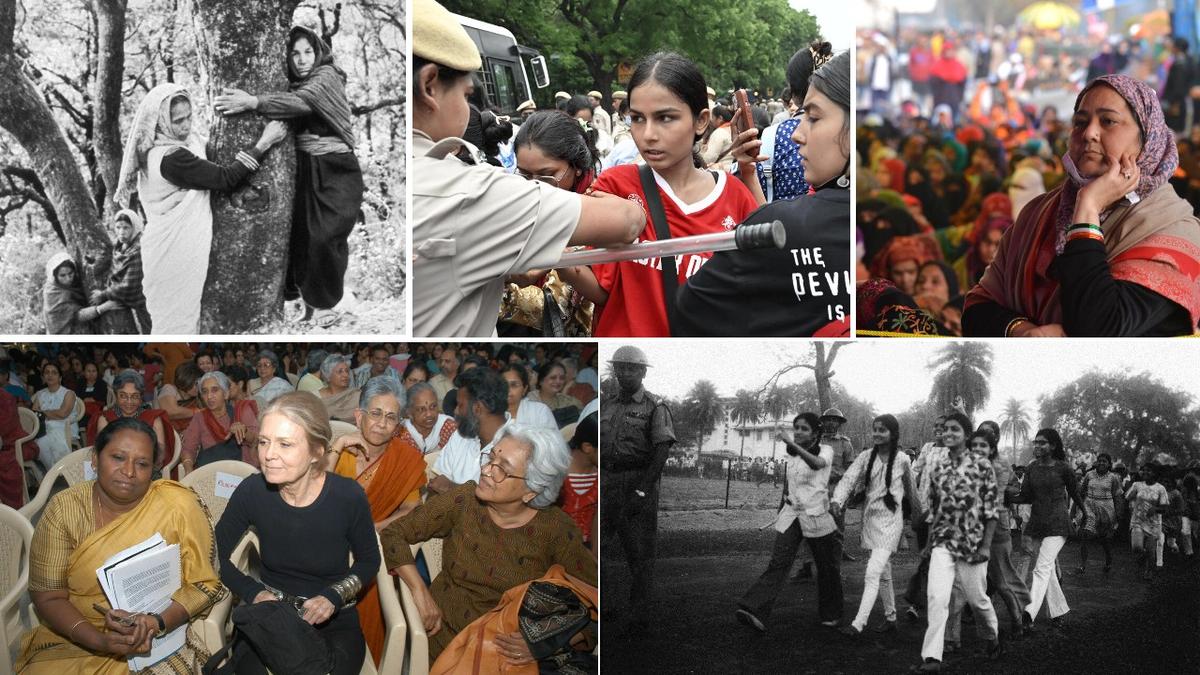
The death of Gloria Steinem has sparked global discourse on feminist leadership and the evolution of the movement. Unlike Western models, the Indian feminist movement has thrived through a decentralized, collective approach rather than relying on a single icon.
The Legacy of Gloria Steinem and the Question of Feminist Leadership
The recent passing of Gloria Steinem, a towering figure in the American feminist movement, has prompted a global re-examination of how gender equality movements are structured and sustained. Steinem’s career, marked by both monumental achievements and complex controversies, served as a beacon for many who sought a recognizable face for the cause. Her ability to navigate the limelight while maintaining a commitment to activism created a prototype of the 'feminist hero' that has defined Western discourse for over half a century.
The Search for a Singular Icon
In the wake of her death, observers are questioning whether the future of feminism can or should produce similar singular icons. The fascination with identifying a 'Gloria Steinem' for other nations—specifically India—reflects a Western-centric desire for centralized leadership. However, this search often ignores the fundamental reality that feminism is not a monolithic global entity; it is a fluid, adaptive movement that takes on the character of the cultural and political soil in which it is planted.
India’s Decentralized Feminist Paradigm
Unlike the American model, which often elevated specific charismatic leaders to the forefront, the Indian feminist movement has evolved for over five decades as a sprawling, decentralized collective. This structure is not a sign of weakness, but rather its greatest strength. By avoiding a single figurehead, the movement has shielded itself from the vulnerabilities associated with personality-driven politics, allowing it to reinvent itself continuously in response to diverse regional and socio-economic challenges.
The Resilience of Collective Action
History suggests that movements which rely heavily on a single individual face an existential crisis when that person departs or falls from favor. Conversely, the Indian model of feminism, characterized by grassroots collaboration and a lack of a central 'hero,' demonstrates an inherent resilience. It is a movement that has persisted through varying political climates, proving that the struggle for gender equity does not require a singular, luminous figure to remain a potent force for systemic change.
Future Trends and the Evolution of Activism
As we look to the future, the global feminist movement appears to be shifting away from the 'icon-based' model toward networked, digital-first, and decentralized forms of activism. The Indian experience provides a blueprint for this transition, demonstrating that collective power can be more durable and inclusive than individual advocacy. Rather than mourning the lack of a 'new Steinem,' the discourse should perhaps focus on how decentralized movements can better amplify the voices of the marginalized without the need for a central gatekeeper.
Conclusion: Defining the Future of Feminism
Ultimately, feminism has not 'had its day,' nor has it ceased to be a force for progress. Instead, it has morphed into a complex, multifaceted phenomenon that defies simple categorization. By recognizing the strength in India’s decentralized approach, the world can learn that the most effective way to sustain a movement is to ensure it is owned by the many, rather than the few.
Verification Required?