Google’s AI Mode now lets you link and interact with select apps
Source Entity
Aisha Malik
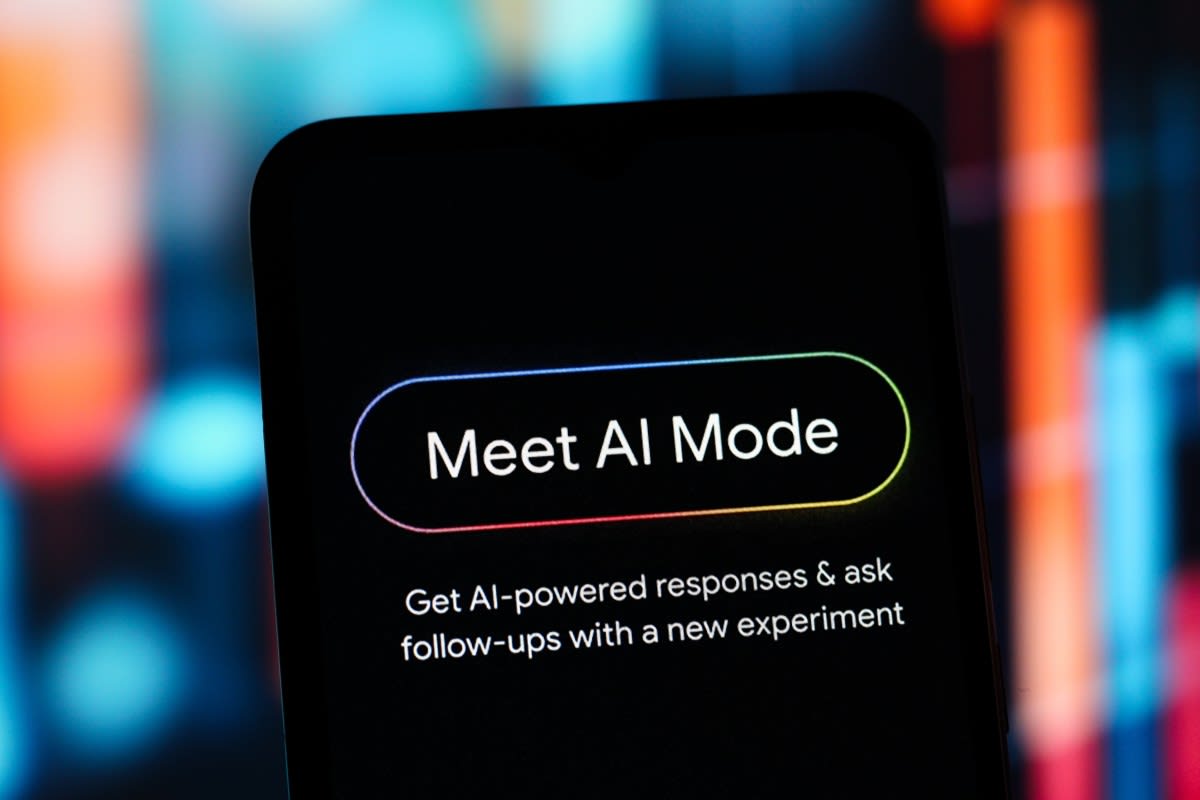
Google is evolving its AI Mode from a conversational interface into an action-oriented assistant by allowing users to link and interact with select applications to complete real-world tasks.
The Evolution of Google AI: From Information Retrieval to Task Execution
Google has announced a significant pivot in the functionality of its AI Mode, transitioning the tool from a passive knowledge engine into an active digital agent. By allowing users to link and interact with select applications, Google is effectively bridging the gap between generative AI and functional productivity. This update marks a critical shift in the AI paradigm: moving away from the 'chatbot' model—where the primary goal is to provide an answer—toward an 'agentic' model, where the goal is to execute a workflow. This development suggests that Google intends to position its AI as the central operating layer for the user's digital life, rather than just another search tool.
The Shift Toward Agentic AI and API Integration
At the core of this update is the integration of sophisticated APIs (Application Programming Interfaces) that allow the AI to not only read data but to write or trigger actions within third-party and first-party apps. Historically, LLMs (Large Language Models) suffered from a 'wall' where they could tell you how to do something but could not do it for you. By enabling interaction with select apps, Google is breaking this wall. This capability allows the AI to move beyond text generation and into the realm of task automation, such as scheduling appointments, updating spreadsheets, or managing communications across different platforms without the user having to manually switch between apps.
Redefining User Workflow and Productivity
This integration is poised to fundamentally alter the user experience by creating a unified interface for fragmented digital ecosystems. Instead of a user navigating through five different apps to organize a trip—checking a calendar, searching for flights, booking a hotel, and emailing a colleague—the AI Mode can now theoretically orchestrate these interactions through a single prompt. This reduction in 'cognitive load' and 'app-switching fatigue' is a major strategic move to increase user retention within the Google ecosystem. By making the AI the primary point of interaction, Google ensures that its AI becomes indispensable to the user's daily productivity loop.
Competitive Dynamics in the AI Ecosystem
Google's move is a direct response to the escalating 'AI arms race,' particularly against Microsoft's Copilot and Apple's Intelligence initiatives. Both competitors are striving to integrate AI deeply into the OS (Operating System) level to achieve similar app-level control. The battle is no longer about who has the most parameters in their model, but who has the best 'connectors' to the apps people actually use. Google's advantage lies in its massive existing footprint—Gmail, Docs, Drive, and Maps—which provides a seamless foundation for this app-linking capability that others may struggle to replicate without third-party cooperation.
Privacy, Security, and the Trust Gap
However, the ability for an AI to interact with select apps introduces significant security and privacy challenges. Granting an AI permission to 'interact' often means granting it access to sensitive personal data and the authority to perform actions on the user's behalf. This creates a critical vulnerability if the AI misinterprets a command or if the integration is compromised. Google will likely need to implement rigorous 'human-in-the-loop' confirmations—where the AI asks for permission before finalizing a task—to mitigate these risks. The success of this feature will depend less on the technology itself and more on the user's trust in Google's data handling practices.
Future Trajectory: Toward Autonomous Digital Assistants
Looking ahead, this update is likely the first step toward fully autonomous AI agents. We can predict a trend where AI Mode evolves from 'interacting with select apps' to 'orchestrating complex multi-app sequences' independently. In the near future, we may see the AI proactively suggesting tasks based on context—such as noticing a flight delay in an email and automatically suggesting a rescheduled meeting in the calendar and a new ride-share booking. This move transforms the AI from a tool that responds to prompts into a proactive partner that manages the logistics of modern digital existence.
Summary
Google's expansion of AI Mode into app interaction represents a strategic evolution from generative AI to agentic AI. By enabling the completion of tasks across applications, Google is enhancing productivity, countering competitive threats from Apple and Microsoft, and laying the groundwork for autonomous digital assistants. While privacy concerns remain a hurdle, the move signals a future where the AI serves as the primary orchestrator of the user's software ecosystem.