Empowering India’s next generation of innovators with ATL Saathi
Source Entity
Google DeepMind News
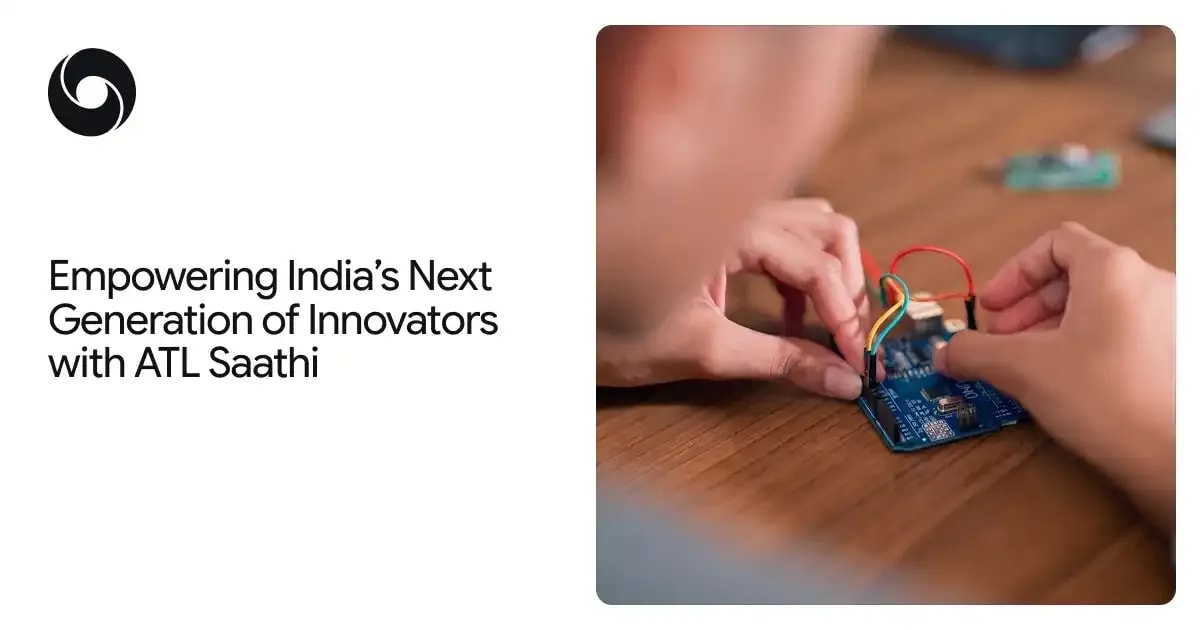
Google and AIM launched ATL Saathi, a Gemini-powered AI tool empowering Indian educators in robotics labs.
Empowering the Future: The Integration of Gemini AI in India's Robotics Labs
The launch of ATL Saathi, a collaborative effort between Google and the Atal Innovation Mission (AIM), marks a significant milestone in the digitalization of STEM education in India. By integrating Google's advanced Gemini AI into the fabric of Atal Tinkering Labs (ATLs), this initiative seeks to bridge the gap between complex technological concepts and classroom delivery. ATL Saathi is not merely a software tool but a pedagogical catalyst designed to empower educators who may not have deep backgrounds in robotics or artificial intelligence, enabling them to guide students through intricate technical projects with confidence.
Democratizing Technical Expertise via Gemini AI
At the heart of ATL Saathi lies Gemini, Google's most capable AI model. In the context of robotics labs, the primary challenge is often the steep learning curve associated with coding, circuit design, and mechanical engineering. Educators are frequently tasked with managing diverse student interests and skill levels simultaneously. ATL Saathi acts as an intelligent co-pilot, providing real-time guidance, troubleshooting tips, and project ideas. By lowering the barrier to technical entry, the tool ensures that the quality of mentorship is not limited by the individual teacher's prior expertise, effectively democratizing high-quality technical instruction across thousands of schools.
Strengthening the Atal Tinkering Lab Ecosystem
The Atal Tinkering Labs, an initiative by NITI Aayog, were established to foster a mindset of innovation, creativity, and critical thinking among school students. However, the physical infrastructure of these labs—equipped with 3D printers, sensors, and microcontrollers—requires a corresponding evolution in instructional methodology. The introduction of ATL Saathi ensures that the hardware provided by the government is utilized to its full potential. By providing a scalable way to support teachers, the initiative transforms these labs from mere repositories of equipment into vibrant hubs of active, inquiry-based learning.
Alignment with National Educational Goals
This partnership aligns seamlessly with India's National Education Policy (NEP) 2020, which emphasizes experiential learning and the integration of computational thinking from an early age. Historically, Indian education has been criticized for its reliance on rote memorization; however, the shift toward AI-assisted robotics education signals a pivot toward a 'learning-by-doing' approach. By fostering an environment where students can fail fast and iterate quickly with the help of AI-driven insights, India is positioning its youth to be creators of technology rather than just consumers.
Broader Implications for the STEM Pipeline
The broader implication of ATL Saathi is the potential creation of a more robust pipeline of skilled engineers and innovators. When students are exposed to AI-powered problem-solving in middle and high school, they develop a cognitive framework that is essential for the modern workforce. This initiative likely predicts a future where AI is not viewed as a replacement for human intelligence in the classroom, but as an augmentative layer that allows for personalized learning paths. As more educators become comfortable with AI tools, we can expect a ripple effect where AI integration spreads from robotics labs into other core scientific disciplines.
Conclusion: A Blueprint for AI-Driven Education
In summary, the launch of ATL Saathi represents a strategic intersection of corporate technological prowess and governmental educational vision. By equipping educators with Gemini-powered tools, Google and AIM are addressing the critical bottleneck of teacher readiness in the face of rapid technological change. This initiative not only enhances the current capabilities of Atal Tinkering Labs but also sets a precedent for how AI can be ethically and effectively deployed to scale quality education in developing economies. The long-term success of this program will likely be measured by the surge in grassroots innovations emerging from India's school-level laboratories.