GPU Management: Why Idle GPUs Are the New Grounded Aircraft
Source Entity
Hugging Face - Blog
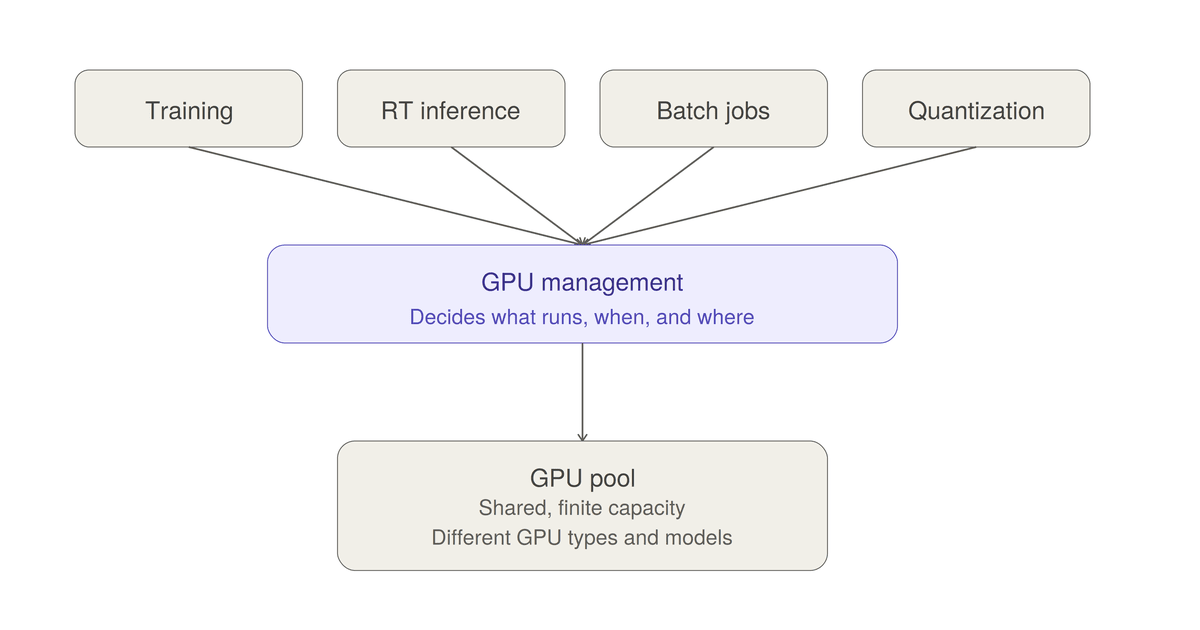
Modern data centers are treating idle GPUs as a significant financial liability, drawing parallels to the aviation industry's focus on high aircraft utilization. Optimizing GPU runtime is becoming critical for profitability as hardware costs and operational overhead continue to surge.
The Economics of Silicon: Why Idle GPUs Are the New Grounded Aircraft
In the rapidly evolving landscape of high-performance computing, a new operational philosophy is emerging that borrows heavily from the aviation industry. Just as airlines have historically measured survival by minimizing time spent on the tarmac, modern data center operators are beginning to recognize that idle Graphics Processing Units (GPUs) represent a massive, compounding financial liability. Because the cost of these assets—driven by extreme capital expenditure, depreciation, and ongoing maintenance—accrues by the calendar hour, any downtime is a direct erosion of potential revenue.
The Structural Cost of Inactivity
The fundamental economic challenge facing AI-driven enterprises is that GPU costs are fixed and relentless. Much like an aircraft, which incurs financing, insurance, and maintenance costs regardless of whether it is in the air, a GPU cluster demands constant overhead. When these units are idle, they cease to be productive assets and instead become 'grounded' capital. This structural imbalance forces companies to shift their focus from merely acquiring hardware to mastering the art of high-utilization workflows.
Lessons from Aviation Logistics
Aviation industry survival has always been dictated by the ratio of flight hours to ground time. This discipline requires perfect synchronization of turnaround logistics, network scheduling, and crew availability. Similarly, the modern data center is now tasked with managing 'turnaround' times for compute jobs. If a workload is not queued efficiently or if data pipelines are bottlenecked, the GPU stays idle, effectively burning money. This shift necessitates a move toward more sophisticated orchestration software that treats compute resources with the same strategic intensity as a fleet of commercial aircraft.
The Downstream Effects of Utilization
Utilization is not an isolated metric; it sits downstream of every other operational decision. In aviation, this means maintenance planning and crew rostering must be perfectly aligned to ensure the plane is ready to fly. In the context of GPU management, this translates to optimizing software stacks, data ingestion speeds, and energy consumption patterns. If any link in this chain fails, the utilization rate drops, and the cost-per-compute-hour skyrockets.
Future Trends in Compute Management
Looking ahead, we can expect a paradigm shift toward 'compute-as-a-service' models that prioritize extreme hardware efficiency. Companies that fail to master the utilization of their GPU fleets will find themselves at a severe competitive disadvantage compared to those that can squeeze every possible hour of processing out of their hardware. The future of data center management will be defined not just by the size of the cluster, but by the operational discipline that prevents these expensive assets from sitting idle.
Concluding Summary
As the industry matures, the analogy between grounded aircraft and idle GPUs will become the standard benchmark for evaluating enterprise efficiency. By viewing hardware through the lens of strict utilization, organizations can transform their data centers from cost-heavy liabilities into high-performance engines of value. The ability to minimize 'ground time' for silicon will ultimately determine which players survive in the increasingly capital-intensive world of artificial intelligence.