Nainital Police register FIR against ‘unknown persons’ for performing ‘purification’ of Mallikarjun Kharge’s rally venue
Source Entity
India Latest News: Top National Headlines Today & Breaking News | The Hindu
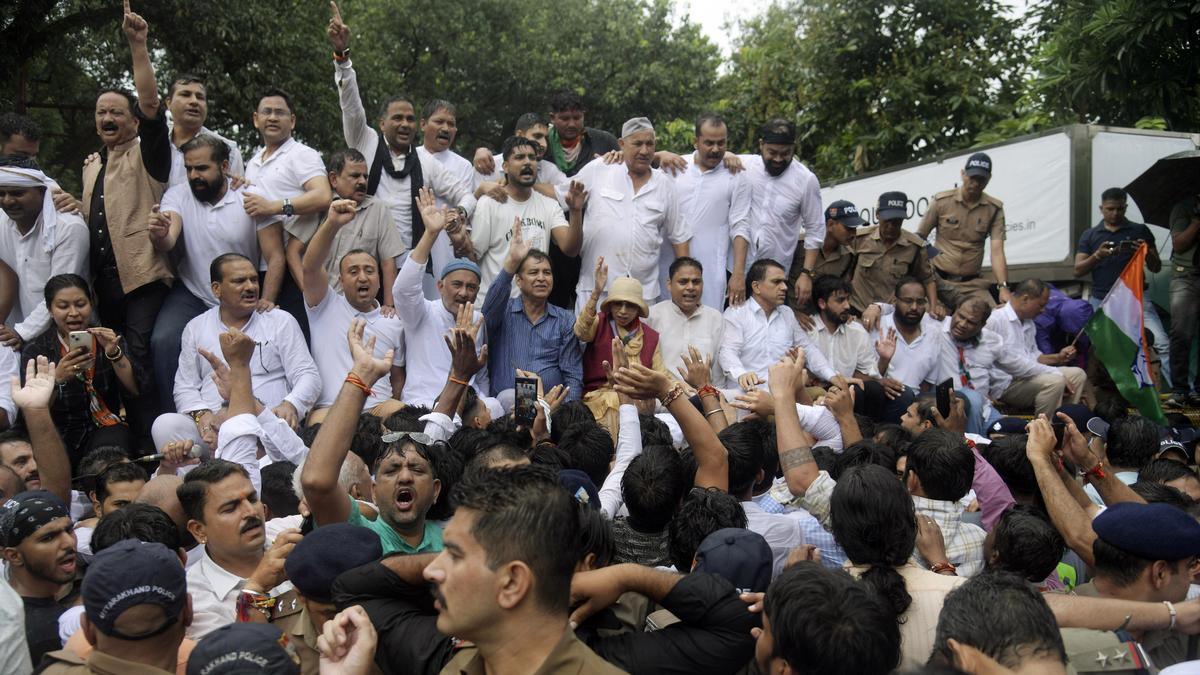
Uttarakhand police have registered an FIR against unknown persons following the controversial 'purification' ritual performed at a Haldwani venue after a rally by Congress president Mallikarjun Kharge. The action follows months of public outcry and numerous complaints from political and social organizations.
The Haldwani Purification Controversy: An Analysis
The Incident and Legal Escalation
Following a rally addressed by Congress president Mallikarjun Kharge in Haldwani, Uttarakhand, the Ramlila Maidan became the site of a controversial ritual known as 'shuddhikaran' or purification. On August 11, members of the Shri Ram Sena Dharmarth Seva Nyas Sangathan performed a 'hawan' at the venue, claiming the need to cleanse the space after the political event. This act, documented in viral social media footage, sparked immediate backlash and a series of formal grievances across the state.
Police Response and Public Pressure
After nearly a month of sustained demands for accountability from the Congress party and various civil society groups, the Nainital Police finally registered a First Information Report (FIR) against 'unknown persons.' According to Nainital Senior Superintendent of Police (SSP) Manjunath TC, the department had been inundated with approximately 80 complaints and petitions from across Uttarakhand, with 19 originating specifically from the Nainital district. The formal legal process was initiated at Haldwani Kotwali based on a complaint filed by Anju, a local lawyer and social activist.
Socio-Political Implications
The act of 'purification' of a public space following a political leader's visit is a highly charged symbolic gesture that underscores the deepening polarization within the Indian political landscape. By performing a ritual to 'cleanse' the ground, the participants signaled a rejection of the political ideology represented by the Congress president. This incident highlights how public venues have become battlegrounds for competing cultural and political narratives, moving beyond mere policy debates into the realm of identity and ritualistic symbolism.
The Role of Civil Society and Accountability
The involvement of local activists like Anju in forcing police intervention demonstrates the role of civil society in upholding secular standards in public spaces. The fact that police waited for a month before registering the FIR suggests a cautious approach to handling sensitive communal and political issues. The accumulation of 80 complaints indicates a significant level of public engagement and concern regarding the precedent set by such exclusionary rituals in public, state-owned venues.
Future Trends and Judicial Precedents
As the investigation into the 'unknown persons' progresses, the case serves as a crucial test for local law enforcement in balancing freedom of expression with the maintenance of public order and communal harmony. Future legal proceedings will likely focus on whether the ritual constituted a form of harassment or public nuisance, potentially setting a judicial precedent for how political venues are managed in the future. The outcome of this FIR will be closely watched by political analysts as an indicator of how authorities intend to curb provocative symbolic protests that threaten to disrupt the fragile social fabric of the region.
Verification Required?