Hard Drive pricing has gotten bad
Source Entity
Hacker News
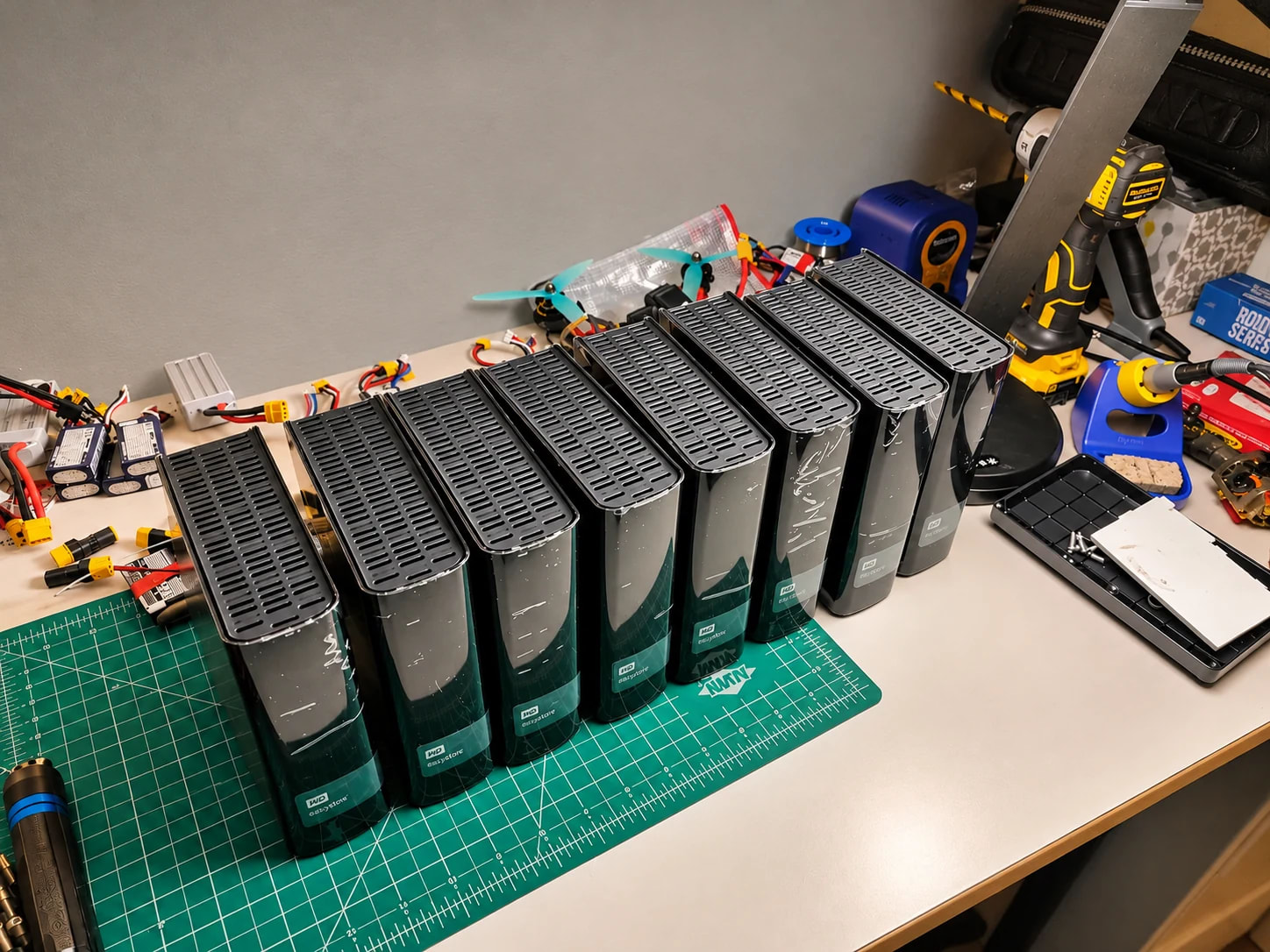
Rising hard drive costs are forcing storage enthusiasts to consolidate their hardware setups. By upgrading to higher-capacity 20TB drives, users are shifting away from traditional multi-disk arrays to streamline maintenance and manage costs.
The Shift in Storage Economics
The landscape of consumer-grade data storage has undergone a significant transformation, moving away from the era of affordable, high-volume capacity upgrades. For many self-hosters and data enthusiasts, the annual tradition of purchasing multiple hard drives during promotional periods like Black Friday has become economically unsustainable. The current market environment, characterized by stagnant or increasing prices, has disrupted the standard practice of maintaining a fleet of aging drives through regular, incremental replacements.
The Challenge of Modern Pricing
Historically, the price-per-terabyte metric favored the frequent purchase of mid-range capacity drives. However, current market conditions have rendered this strategy inefficient. When the cost of individual physical disks rises, the overhead of maintaining ten or more spinners—including power consumption, physical space, and SATA/SAS controller limitations—becomes a prohibitive burden for the average home server operator. The necessity to "shuck" disks, or remove them from external enclosures to repurpose them internally, highlights a broader trend where consumers are seeking creative workarounds to circumvent retail pricing tiers.
Consolidation as a Strategic Response
To combat these rising costs, storage enthusiasts are pivoting toward density over volume. With the availability of 20TB drives, users can now achieve the same total storage capacity with half the physical hardware. Transitioning from ten disks to five not only reduces the immediate financial impact of purchasing new hardware but also optimizes the power profile of the server, as fewer motors are spinning simultaneously. This reduction in the physical footprint of the array is a direct response to the lack of competitive entry-level pricing in the current hardware market.
The Technical Hurdles of ZFS Migration
Moving toward higher-capacity drives is not without its technical complexities. For those utilizing ZFS-based file systems, the process is far from plug-and-play. Because ZFS relies on specific pool layouts, changing the number of disks or their capacity requires a significant reorganization of data. This necessitates a temporary shuffling process—a delicate operation that requires sufficient spare storage capacity or a secondary array to hold data while the primary pool is restructured. This complexity serves as a barrier to entry, forcing users to balance the desire for cost savings against the risks of data migration.
Future Trends in Home Data Management
As capacity continues to climb, the future of home server management will likely favor fewer, larger drives over traditional "spindle-heavy" configurations. While this shift mitigates the impact of current price surges, it also concentrates the risk of data loss. With fewer drives in an array, the failure of a single high-capacity unit carries a greater impact on the total pool. Ultimately, the current market climate is compelling users to become more efficient, forcing a transition from quantity-based storage strategies to high-density, centralized architecture.