Where has Construction Automation been successful?
Source Entity
Hacker News
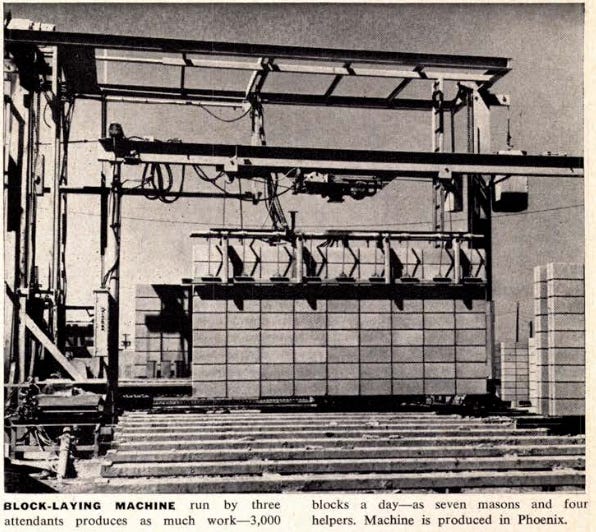
Construction automation aims to reduce high labor costs, which currently account for nearly 50% of single-family home expenses. While attempts date back to 1853, the industry continues to search for scalable solutions to improve efficiency.
The Long Quest for Construction Automation
The construction industry has long grappled with a fundamental economic disparity: while manufacturing has successfully utilized automation to drive down costs to negligible percentages of the total product value, construction remains heavily dependent on manual labor. In the United States, direct labor represents approximately 50% of the cost of a new single-family home. This stark contrast highlights the potential for technological intervention, yet the path toward widespread automation has been fraught with historical challenges and technical limitations.
A Historical Perspective on Innovation
The desire to modernize construction is not a recent development. Historical records indicate that interest in automating building processes dates back at least to 1853. A notable early example is Isaac Hussey’s plastering machine, which was documented in Scientific American. This early attempt serves as a foundational data point, demonstrating that for over 170 years, inventors have recognized the inherent inefficiency of manual construction methods and sought mechanical alternatives to streamline site work.
The Economic Imperative
To understand why automation remains a primary objective, one must look at the cost breakdown of modern housing. When labor constitutes half of the total expenditure, any marginal gain in efficiency through automation translates into significant potential for housing affordability. Unlike the automotive industry, where automation costs hover between 6% and 8%, construction has struggled to achieve the same level of integration. This gap suggests that the physical environment of a construction site—which is often non-standardized and unpredictable—presents a much higher barrier to entry for robotics than the controlled environment of a factory floor.
Why Automation Efforts Stagnate
Throughout the decades following Hussey’s invention, numerous attempts have been made to introduce automation into the building sector. However, many of these efforts have historically 'fallen by the wayside.' This trend suggests that successful automation requires more than just a functional machine; it demands a total shift in how construction projects are planned, managed, and executed. The transition from craft-based, manual labor to automated systems often clashes with existing building codes, trade union structures, and the unique, site-specific nature of individual housing projects.
Future Trends and Outlook
The current wave of interest in construction automation is likely a response to rising labor shortages and the persistent housing crisis. Future trends will likely focus on modularity and pre-fabrication, where the 'factory' environment is brought to the site or construction is moved entirely into the factory. As the industry analyzes the 'arc of automation,' the focus is shifting from single-task machines like plastering tools to comprehensive systems that integrate design, material logistics, and robotic assembly.
Conclusion
In conclusion, the history of construction automation is a narrative of persistent ambition pitted against the complex realities of building. While the goal remains constant—reducing the 50% labor cost burden—the methods have evolved from simple mechanical aids to complex digital ecosystems. Understanding the failure and success of past attempts, such as the 1853 plastering machine, is essential for any modern firm looking to successfully disrupt one of the world's least automated, yet most economically vital, industries.