How chimps teach their kids tool tricks
Source Entity
Jennifer Ouellette
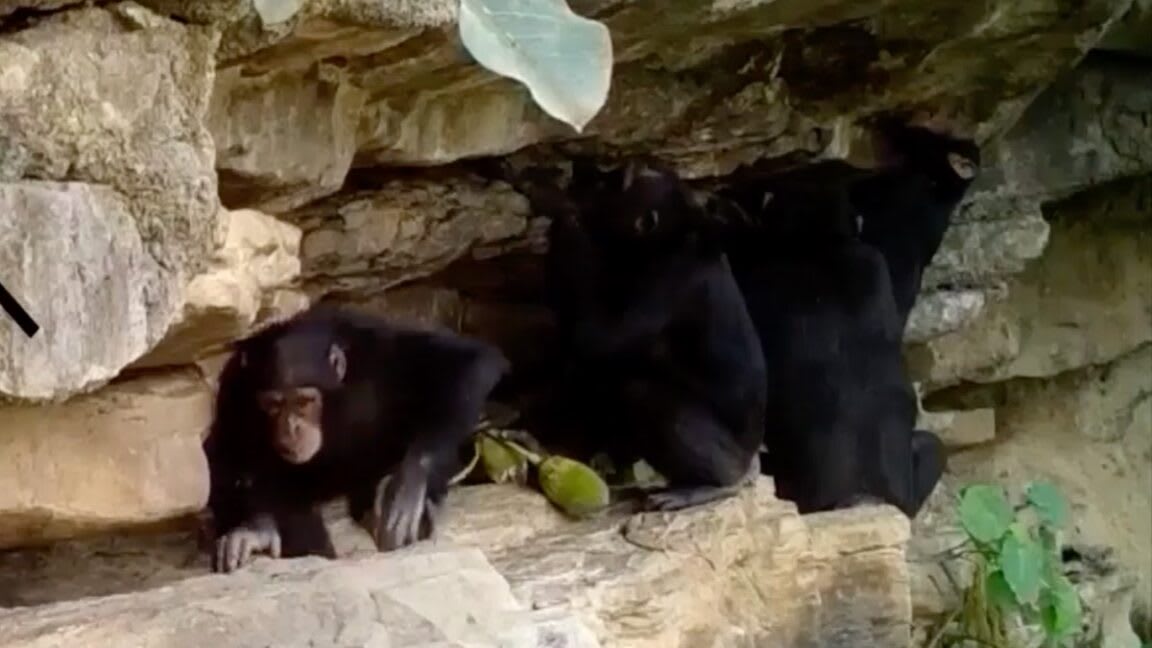
Researchers have discovered that chimpanzees actively teach their offspring to use tools through demonstration and supervised practice. This social learning process allows young chimps to master complex foraging techniques for accessing difficult-to-reach food sources.
The Mechanics of Primate Pedagogy
Recent findings published in the journal Frontiers in Psychology have shed new light on the cognitive sophistication of chimpanzees, specifically regarding how they transmit survival skills to the next generation. The study reveals that chimpanzee tool use is not merely a product of random trial and error or simple observation, but rather a structured form of social learning. Adults engage in a deliberate process where they model the necessary motions for tool use and subsequently hand the implements directly to their infants, facilitating a hands-on learning experience.
The Role of Tool Transfer in Survival
At the core of this behavior is the concept of 'tool transfer.' According to co-author Andreu Sánchez-Megías of the University of Barcelona and the Jane Goodall Institute Spain, this active passing of implements is essential for accessing food sources that would otherwise be beyond the reach of an inexperienced juvenile. By providing the tools directly to the young, adults minimize the difficulty of the learning curve, allowing the offspring to practice in a controlled and supported environment.
Defining Primate 'Teaching'
This research challenges traditional definitions of teaching in the animal kingdom. While many species exhibit observational learning, the chimpanzee's behavior—which includes demonstration, tool transfer, and supervised practice—suggests a higher level of intentionality. By actively intervening in the learning process, adult chimps are effectively acting as mentors, ensuring that the necessary 'technology' for foraging is passed down successfully within their social groups.
Evolutionary Implications
The implications of these findings extend far into our understanding of evolutionary biology and the roots of human culture. The ability to pass down complex, learned behaviors—often referred to as cumulative culture—is a hallmark of human development. Finding evidence of similar pedagogical structures in our closest living relatives suggests that the capacity for social teaching may have deeper evolutionary roots than previously acknowledged, emerging long before the rise of modern humans.
Future Research Directions
Moving forward, these insights open new avenues for primatologists to study the nuances of social learning across different chimpanzee populations. Understanding how these groups vary in their teaching strategies could reveal how environmental pressures influence the complexity of learned behaviors. As we continue to document these sophisticated interactions, the boundary between human and non-human cognitive capabilities continues to narrow, reinforcing the importance of protecting these complex social structures in the wild.