Here’s Why HSBC Doubled The PT on Intel (INTC)
Source Entity
Yahoo Finance
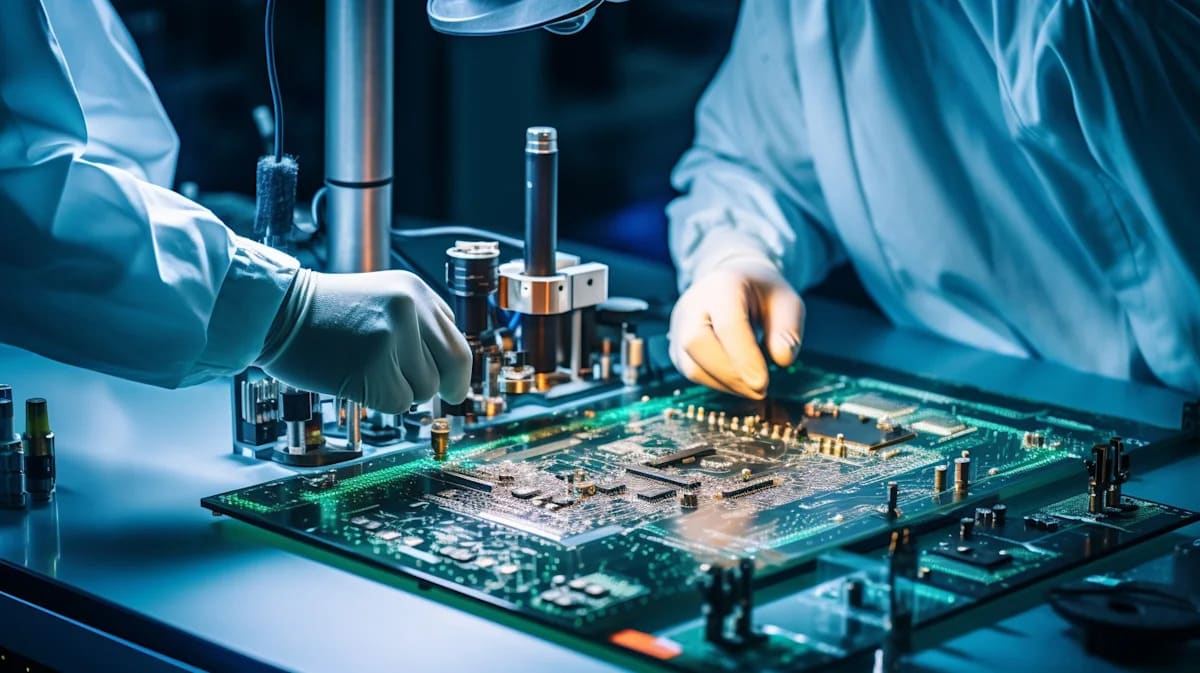
HSBC has significantly increased its price target for Intel Corporation (INTC), doubling its previous outlook. This bullish move comes as Intel's stock has shown resilience, gaining 5.14% over the last month even as the broader semiconductor industry experienced a sell-off.
HSBC's Bullish Pivot: Analyzing the Doubled Price Target for Intel (INTC)
In a surprising move that diverges from the current volatility of the chip market, HSBC has doubled its price target (PT) for Intel Corporation (NASDAQ:INTC). This aggressive upgrade signals a strong confidence in Intel's long-term recovery and its ability to generate high returns for investors. While the broader semiconductor sector has faced a significant sell-off—driven by concerns over AI over-valuation and cyclical demand—Intel has managed to buck the trend, posting a 5.14% gain over the past month. This divergence suggests that institutional investors are beginning to price in a turnaround that goes beyond mere market sentiment.
Resilience Amidst Sector Volatility
The fact that Intel is gaining ground while its peers are retreating is a critical indicator of a shift in investor perception. Typically, semiconductor stocks move in tandem due to their shared exposure to raw material costs and global consumer electronics demand. However, Intel's recent performance indicates that the market is decoupling the company's valuation from the general 'AI hype' cycle that has fueled Nvidia and AMD. By maintaining a positive trajectory during a sector-wide dip, Intel is demonstrating a level of stability that HSBC likely viewed as an undervalued entry point, leading to the drastic increase in the price target.
The Strategic Shift to Foundry Services
To understand why a major financial institution like HSBC would double its price target, one must look at Intel's strategic pivot toward the 'IDM 2.0' model. For years, Intel struggled with manufacturing delays and the loss of market share to fabless designers. However, the company's aggressive push to become a world-class foundry—manufacturing chips for other companies—represents a fundamental change in its business model. If Intel can successfully execute its 18A process node and attract external clients, it transforms from a product company into a critical infrastructure provider for the entire tech industry, justifying a much higher valuation multiple.
Historical Context and Competitive Pressure
Historically, Intel dominated the x86 architecture market with an iron grip. However, the last decade saw a steady erosion of this dominance due to the rise of ARM-based processors and the agility of AMD. The current bullishness from HSBC reflects a belief that Intel has hit its bottom and is now in a phase of structural rebuilding. The doubling of the PT suggests that the 'worst-case scenarios'—such as total loss of data center dominance—are already priced in, and any successful execution of their roadmap will lead to exponential growth.
Geopolitical Implications and Future Trends
Beyond the balance sheet, Intel's trajectory is deeply intertwined with global geopolitics. As the United States pushes for 'chip sovereignty' to reduce reliance on Taiwan (TSMC), Intel is the primary domestic beneficiary of the CHIPS Act and other government incentives. HSBC's outlook likely factors in this systemic support. In the coming years, we can expect Intel to leverage this geopolitical advantage to secure long-term government contracts and strategic partnerships, further stabilizing its revenue streams against the volatility of the consumer PC market.
Conclusion: A High-Stakes Recovery
In summary, HSBC's decision to double the price target for Intel is a calculated bet on the company's operational turnaround and its strategic importance to the US economy. While the semiconductor sector remains turbulent, Intel's recent 5.14% growth serves as a proof-of-concept for its resilience. If the company can transition successfully into a foundry powerhouse while maintaining its core CPU business, the current price targets may not only be met but exceeded, marking one of the most significant corporate recoveries in the technology sector.