‘This is merely the beginning’: Congress warns Gyanesh Kumar after INDIA bloc protest
Source Entity
PRIYANKA JAISWAL
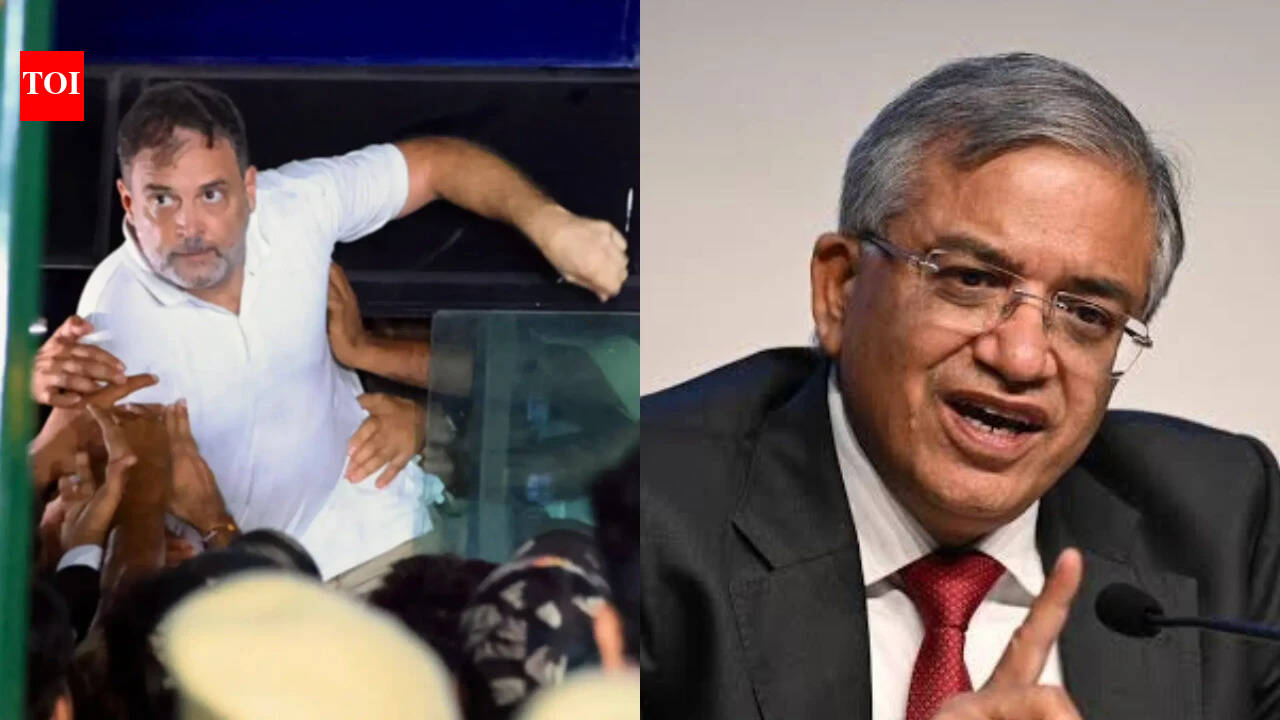
INDIA bloc MPs led by Rahul and Priyanka Gandhi staged a protest march toward the Election Commission of India. They demanded the resignation of CEC Gyanesh Kumar, citing concerns over the Special Intensive Revision exercise and alleged bias.
Opposition Escalates Standoff with Election Commission
On Tuesday, a significant political confrontation unfolded in the heart of Delhi as members of the INDIA bloc, including prominent leaders like Mallikarjun Kharge, Rahul Gandhi, and Priyanka Gandhi Vadra, marched from Parliament House toward the Election Commission of India (ECI) headquarters. The protest, which culminated in a sit-in on Parliament Street, represents a major escalation in the ongoing friction between the Opposition and the nation's electoral body.
The Core Grievances and Protests
The march was primarily driven by deep-seated concerns regarding the Special Intensive Revision (SIR) exercise, a procedural process that the Opposition claims is being mishandled to undermine electoral integrity. By carrying cutouts of Chief Election Commissioner (CEC) Gyanesh Kumar depicted in an RSS uniform, the protesters explicitly accused the ECI of partisan bias, chanting slogans such as “BJP hai CEC hai” and “Democracy not for sale.” This public display of defiance underscores the Opposition’s deteriorating trust in the institutional neutrality of the Election Commission.
Security and Institutional Friction
The protest encountered heavy security deployment, with police barricading the area between NITI Aayog and Akashvani Bhavan to prevent the MPs from reaching the ECI headquarters. The decision to stop the legislators and their subsequent detention by Delhi Police highlights the tension between the right to protest and the state's security protocols near sensitive government zones. This physical standoff serves as a physical manifestation of the broader ideological divide currently paralyzing parliamentary discourse.
Implications for Electoral Integrity
At the center of this controversy is the demand for the resignation of CEC Gyanesh Kumar. By targeting the CEC directly, the INDIA bloc is signaling that they view current electoral administrative processes as an existential threat to democratic competition. This rhetoric suggests that the Opposition intends to make the functioning of the ECI a central pillar of their political campaign, potentially leading to increased scrutiny of future electoral rolls and administrative decisions.
Future Trends and Political Fallout
The detention of these legislators and the public nature of the protest suggest that the Opposition is moving toward a strategy of non-cooperation and intensified street-level mobilization. As the INDIA bloc seeks to frame the ECI’s actions as inherently biased, the upcoming election cycles may be characterized by heightened litigation and persistent challenges to electoral outcomes. This trajectory indicates a period of sustained institutional instability, where the legitimacy of election management becomes a recurring point of political contention.
Multiple Citing Sources