Barricade stunt, 9-hour dharna and detentions: All that happened at oppn's CEC protest
Source Entity
ROHITASHWA RANJAN
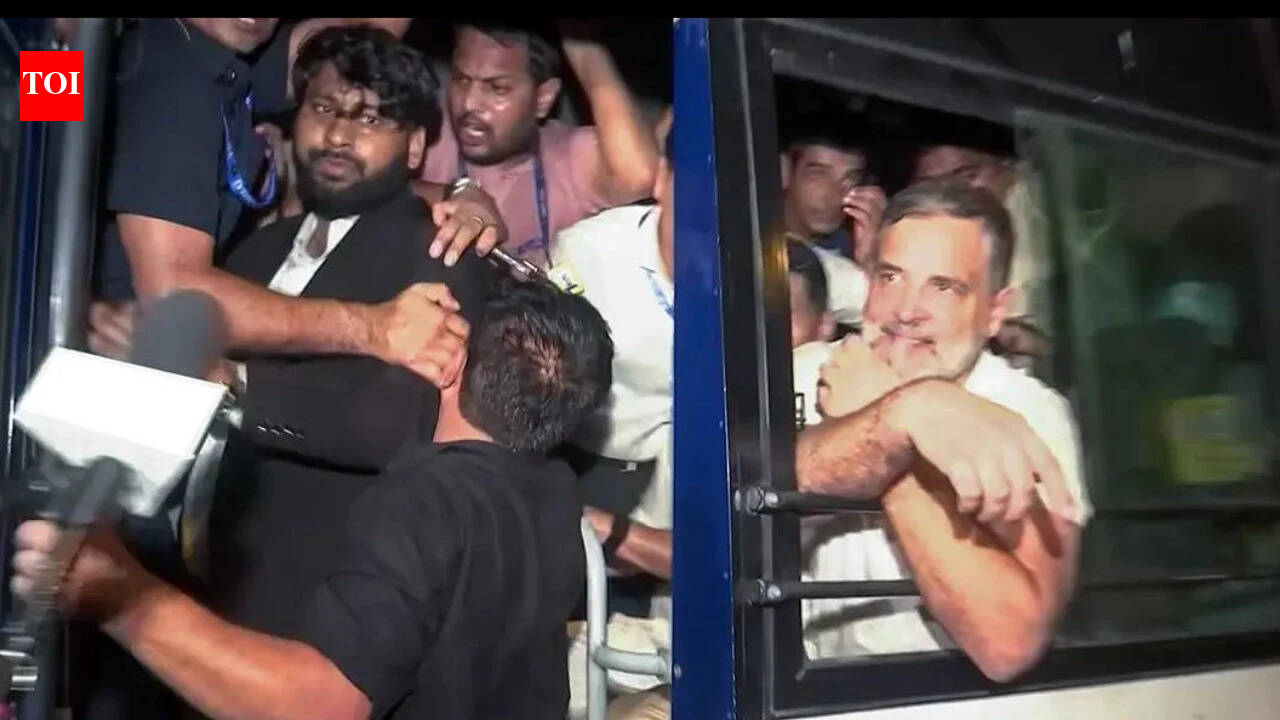
INDIA bloc MPs, led by Rahul and Priyanka Gandhi, marched to the Election Commission to demand CEC Gyanesh Kumar's resignation. The protest, centered on concerns over the Special Intensive Revision exercise, resulted in a sit-in and subsequent police detention.
Opposition Escalates Tensions with Election Commission Protest
In a significant escalation of political friction, leaders of the INDIA bloc, including Leader of Opposition Rahul Gandhi and Congress MP Priyanka Gandhi Vadra, organized a high-profile march toward the Election Commission of India (ECI) headquarters in Delhi. The protest, which saw heavy police barricading and security deployments near Parliament and the ECI office, culminated in a sit-in on Parliament Street after authorities blocked the demonstrators near the NITI Aayog building.
The Core Grievances and Symbols of Dissent
The primary catalyst for this demonstration was the opposition’s intense dissatisfaction with the ongoing Special Intensive Revision (SIR) of electoral rolls. By marching to the ECI, the coalition aimed to voice systemic concerns regarding the integrity of current electoral processes. The visual nature of the protest was striking, with MPs carrying cutouts of Chief Election Commissioner (CEC) Gyanesh Kumar depicted in an RSS uniform, signaling the opposition's firm belief that the current leadership of the ECI is not maintaining the neutrality expected of a constitutional body.
Rhetoric and Demands for Accountability
The slogans raised by the protesting MPs, such as “BJP hai CEC hai” and “Democracy not for sale,” underscore a deep-seated narrative within the INDIA bloc that the ECI has become an extension of the ruling party's agenda. Rahul Gandhi’s public post, “Gyanesh it's done bro,” served as a direct and provocative call for the CEC to resign, framing the protest not merely as a policy disagreement but as a fundamental crisis of confidence in the office of the Chief Election Commissioner.
The Role of Law Enforcement and Public Order
The presence of heavy security in and around Sansad Marg highlights the volatile nature of the current political climate in the national capital. The fact that the march was halted by the Delhi Police between NITI Aayog and Akashvani Bhavan reflects the government's stance on maintaining strict security zones around critical constitutional institutions. The subsequent detention of the protesting legislators by police suggests that the state views these demonstrations as a disruption to public order, rather than a protected form of political dissent.
Broader Implications for Indian Democracy
This confrontation marks a worrying trend in the relationship between India’s primary opposition coalition and its independent institutions. When the legitimacy of the ECI is openly challenged by the Leader of Opposition, it raises profound questions about the future of electoral trust in India. The reliance on public protests and sit-ins indicates that the opposition feels its parliamentary grievances regarding the SIR process have been ignored, forcing a shift to street-level activism.
Future Trends and Political Outlook
Looking forward, the INDIA bloc appears prepared to continue its pressure campaign against the ECI, likely focusing on the technicalities of the Special Intensive Revision process as a platform to mobilize voters. This protest is unlikely to be an isolated incident; rather, it suggests that the opposition will continue to leverage public demonstrations to challenge the perceived partisan nature of constitutional offices. The government’s response—characterized by police intervention—sets the stage for a prolonged period of institutional friction as the nation approaches future electoral milestones.
Multiple Citing Sources