Priyanka Gandhi Released Shortly After Being Detained During INDIA Bloc MPs' March To ECI
Source Entity
Latest News: Todays Latest News Headlines from India & World | Hindustan Times | Hindustan Times
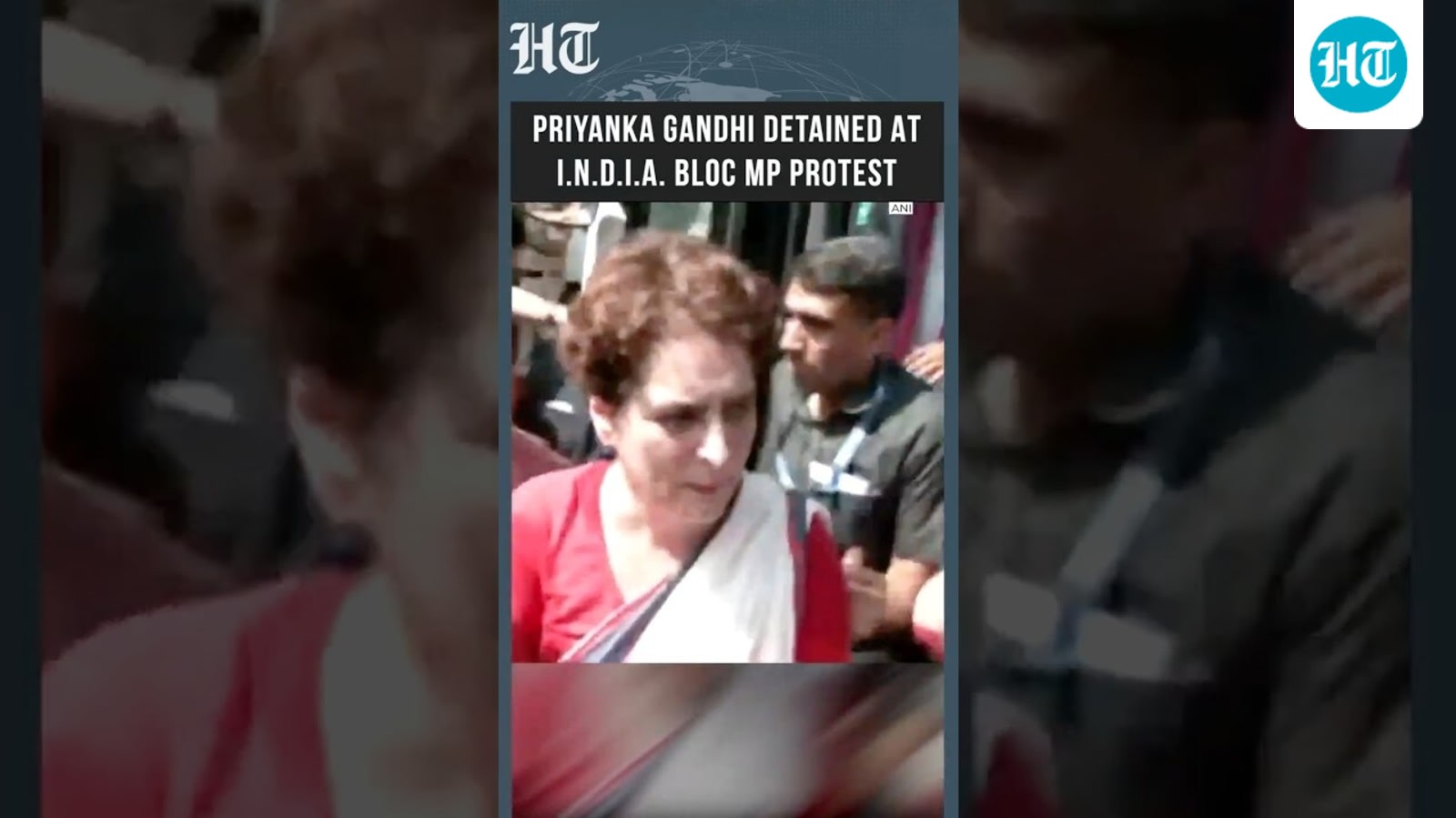
INDIA bloc MPs, led by Rahul and Priyanka Gandhi, staged a protest march toward the Election Commission of India to demand the Chief Election Commissioner's resignation. The demonstration, centered on concerns over electoral integrity and the Special Intensive Revision exercise, resulted in a standoff with police near NITI Aayog.
The INDIA Bloc Standoff: A Challenge to Electoral Oversight
On Tuesday, the political atmosphere in New Delhi reached a boiling point as Members of Parliament from the INDIA bloc, spearheaded by Leader of the Opposition Rahul Gandhi and Congress MP Priyanka Gandhi Vadra, organized a high-profile march toward the Election Commission of India (ECI) headquarters. This demonstration was not merely a symbolic gesture but a direct confrontation regarding the perceived impartiality of the electoral body. The marchers were met with heavy security deployment, including extensive barricading, which effectively halted their progress near the NITI Aayog office.
The Core Grievances: SIR and Institutional Trust
The protest was explicitly fueled by the INDIA bloc's opposition to the Special Intensive Revision (SIR) exercise, a process they argue compromises the integrity of electoral rolls. By marching to the ECI, the opposition sought to voice systemic concerns regarding how electoral processes are currently being managed. The presence of senior leadership underscores the gravity with which the opposition views these procedural changes, framing them as a threat to the democratic foundation of the nation.
Symbolic Protest and Rhetorical Escalation
The demonstration featured highly charged symbolic elements, most notably the use of placards depicting Chief Election Commissioner (CEC) Gyanesh Kumar in an RSS uniform. This imagery was designed to allege a political bias within the constitutional body. Slogans such as “BJP hai CEC hai” and “Democracy not for sale” were aimed at eroding public confidence in the neutrality of the ECI, suggesting that the commission is operating in alignment with the ruling party's interests rather than as an independent arbiter.
The Police Standoff and Civil Disobedience
When confronted by a massive police presence on Parliament Street, the MPs chose to sit on the road in a formal dharna. This act of civil disobedience in the heart of Delhi's administrative zone served to amplify their message, forcing the issue into the national spotlight. The decision to halt the march between NITI Aayog and Akashvani Bhavan prevented the delegation from reaching the ECI gates, yet the resulting blockade provided the visual theater necessary to ensure the protest dominated the news cycle.
Digital Warfare and Future Implications
The protest extended into the digital realm, with Rahul Gandhi taking to social media to call for the resignation of the CEC. This dual-track strategy—combining physical street-level protest with targeted online messaging—is a hallmark of the current opposition's political tactics. By directly addressing the CEC, the INDIA bloc is signaling a long-term campaign to challenge the ECI’s autonomy. The events of this Tuesday suggest a deepening rift between the opposition and constitutional authorities, setting the stage for continued institutional friction as India approaches future electoral milestones.
Multiple Citing Sources
Verification Required?