India, China hold high-level talks in Arunachal sector on border management, LAC issues: MEA
Source Entity
India Latest News: Top National Headlines Today & Breaking News | The Hindu
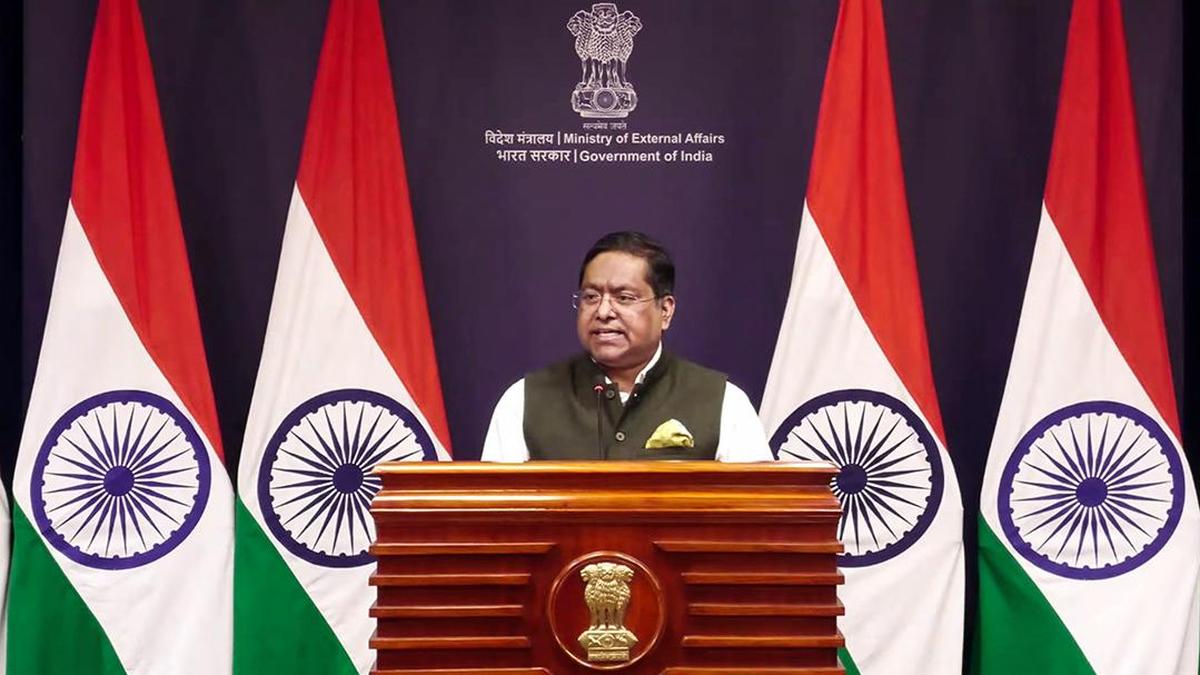
India and China have conducted high-level military talks in the Arunachal Pradesh sector to manage border tensions and address troop movements. While both nations describe the situation as generally stable, China continues to assert territorial claims over the region.
Diplomatic and Military Engagement Amid LAC Tensions
In late November 2026, India and China engaged in significant high-level military dialogues aimed at de-escalating tensions along the Line of Actual Control (LAC) in the Arunachal Pradesh sector. These discussions, which included a second round of Corps Commander-level talks concluded on November 24, represent a critical attempt by both nations to manage the volatile border situation. The Ministry of External Affairs (MEA) confirmed that these talks focused on border management and addressing outstanding issues that have arisen due to recent reports of aggressive military posturing, particularly in the Upper Subansiri region.
The Strategic Importance of the Arunachal Sector
The Arunachal Pradesh frontier remains one of the most sensitive points of contention in the bilateral relationship. The region has seen repeated military friction, necessitating frequent flag talks between senior commanders, including sessions held as recently as September. By engaging in consistent dialogue, both New Delhi and Beijing are attempting to utilize established diplomatic and military mechanisms to prevent localized friction from spiraling into a broader conflict, acknowledging that the current environment requires constant, high-level communication to maintain stability.
Conflicting Narratives and Territorial Claims
Despite the collaborative nature of these talks, the underlying geopolitical divide remains stark. While China’s Defense Ministry spokesperson, PLA Senior Colonel Chen Xi, publicly characterized the border situation as “generally stable” on November 26, this rhetoric was immediately tempered by a reiteration of China’s non-recognition of Arunachal Pradesh. Beijing continues to refer to the territory as Zangnan, a claim that India consistently and firmly rejects. This persistent dissonance suggests that while military commanders may find tactical consensus to prevent skirmishes, the fundamental territorial dispute remains a major hurdle to long-term peace.
External Factors and Defense Cooperation
The complexity of the India-China relationship is further compounded by broader strategic alignments. Recent reports have highlighted concerns regarding India’s deepening defense cooperation with Japan, which China has openly criticized. This indicates that Beijing views India's regional security partnerships through a lens of strategic competition, adding another layer of friction to the border management discourse. Furthermore, the MEA has had to address sensitive reports regarding the potential use of China-sourced satellite data by third parties to monitor Indian troop movements, highlighting the role of modern technology in border surveillance and regional security.
Future Trends and Conclusion
Looking ahead, the reliance on Corps Commander-level talks is expected to continue as the primary tool for crisis management. The ability of both nations to compartmentalize their territorial disagreements while maintaining a “generally stable” border will be the defining factor for regional security in 2027 and beyond. While both sides appear committed to preserving peace and tranquility through established channels, the combination of aggressive posturing in specific sectors like Upper Subansiri and conflicting sovereignty claims ensures that the situation remains fragile. Future progress will likely depend on whether both powers can translate these high-level talks into tangible, on-the-ground de-escalation measures.
Multiple Citing Sources
Verification Required?