40 years ago July 16, 1986: Chinese incursion
Source Entity
The Indian Express
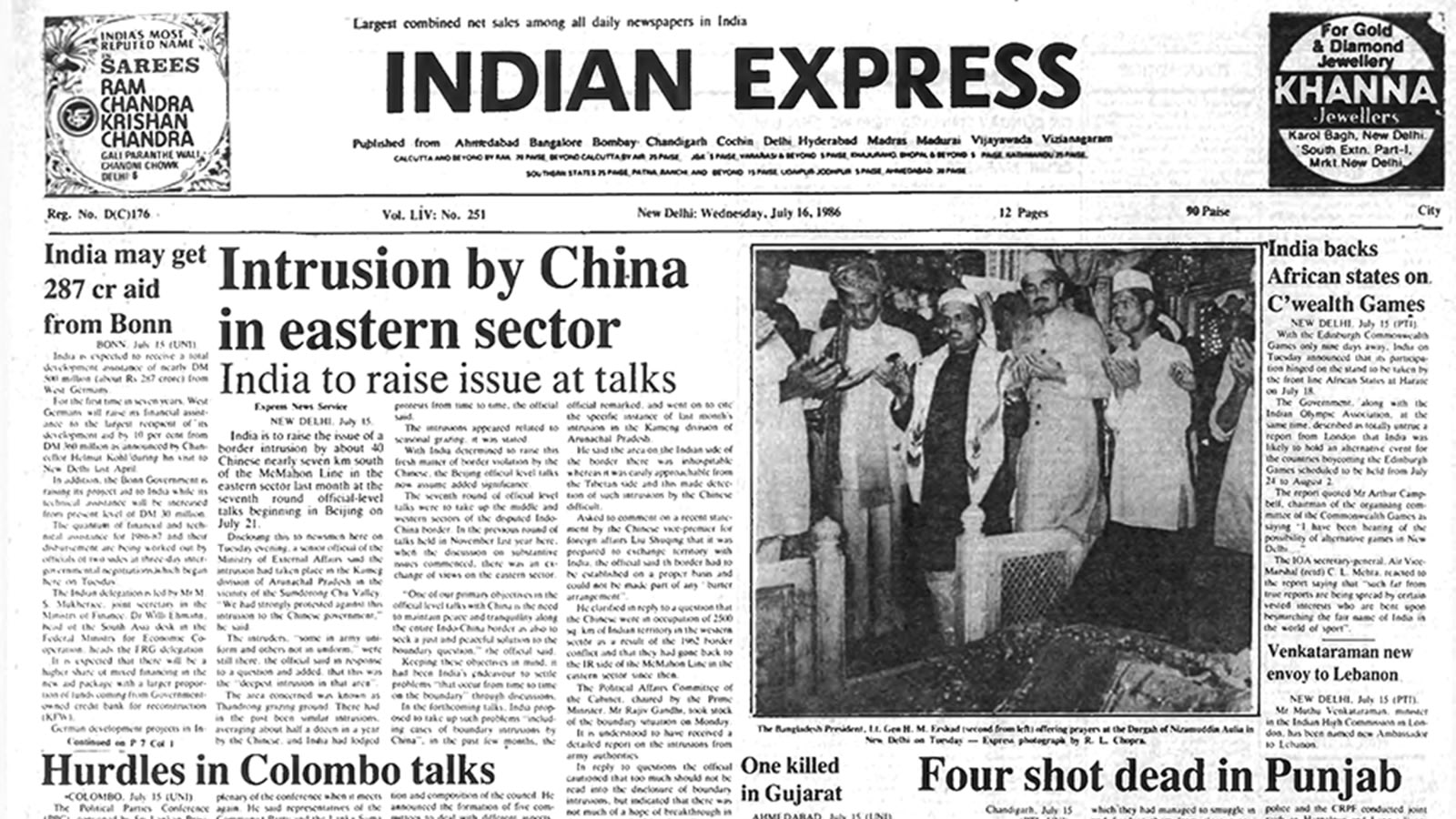
In July 1986, India raised a diplomatic protest regarding a border intrusion where approximately 40 Chinese troops crossed nearly 7km south of the McMahon Line in the eastern sector, addressing the matter during the seventh round of official-level talks.
Analysis of the 1986 India-China Border Incursion
Introduction to the July 1986 Incident
On July 16, 1986, the geopolitical tensions between India and China were highlighted by a significant border intrusion in the eastern sector. Reports indicated that approximately 40 Chinese personnel had penetrated nearly 7 kilometers south of the McMahon Line, a boundary that has remained a point of contention for decades. This specific event was not merely a localized skirmish but a diplomatic flashpoint that forced the Indian government to utilize official channels to seek a resolution, specifically during the seventh round of official-level talks held in Beijing.
The Strategic Significance of the McMahon Line
To understand the gravity of a 7km intrusion, one must examine the historical context of the McMahon Line. Established during the Simla Convention of 1914, the line serves as the effective boundary between China and India in the eastern sector. However, China has historically refused to recognize this boundary, viewing it as an imperialist imposition. When Chinese troops move south of this line, it is perceived by India as a direct violation of territorial sovereignty and an attempt to unilaterally alter the status quo on the ground. The 1986 incursion represented a tangible breach of this sensitive demarcation.
Diplomatic Recourse and the Official-Level Talks
Rather than escalating the incident into a military confrontation, India opted for diplomatic engagement, raising the issue during the seventh round of official-level talks. This approach underscores the strategic patience India employed during the mid-1980s to prevent a repeat of the 1962 conflict. These talks were designed to create a mechanism for conflict resolution and to maintain peace along the Line of Actual Control (LAC). By bringing the intrusion to the negotiating table, India aimed to signal its awareness of the breach while providing China a diplomatic exit to withdraw its forces without losing face.
Patterns of Border Intrusion and 'Salami Slicing'
Looking at the 1986 event through a modern lens, this intrusion can be seen as an early example of what analysts now call 'salami slicing'—the practice of making small, incremental territorial gains that are individually too minor to trigger a full-scale war but collectively result in significant territorial shifts. The placement of 40 troops 7km inside Indian-claimed territory served as a probe to test India's reaction time, military readiness, and diplomatic resolve in the eastern sector, a pattern that has recurred in various forms over the following four decades.
Broader Regional Implications
This incident occurred during a period of complex Cold War dynamics in Asia. The border stability between India and China was not only a bilateral concern but had implications for regional security and the balance of power. Any instability along the McMahon Line could have shifted India's strategic focus, potentially affecting its relations with other neighbors or its internal security priorities. The 1986 incursion reinforced the necessity for India to maintain a robust military presence in the eastern sector while simultaneously pursuing a policy of diplomatic engagement.
Historical Trajectory and Future Trends
Comparing the 1986 incident to more recent clashes, such as those in the Galwan Valley in 2020, it is evident that the nature of border disputes has evolved from small-scale intrusions to more violent confrontations. While the 1986 event was handled through 'official-level talks' with a focus on diplomatic repatriation, modern disputes are characterized by higher militarization and the use of advanced surveillance technology. The 1986 event serves as a historical reminder that the eastern sector has long been a volatile zone where territorial ambiguity leads to periodic friction.
Conclusive Summary
The July 1986 Chinese incursion south of the McMahon Line was a critical moment of tension that tested the diplomatic frameworks established between New Delhi and Beijing. By addressing the intrusion of 40 troops through the seventh round of official talks, India prioritized stability over escalation. However, the event highlighted the inherent fragility of the border agreement and set a precedent for the ongoing territorial disputes that continue to define the complex and often adversarial relationship between the two Asian giants.