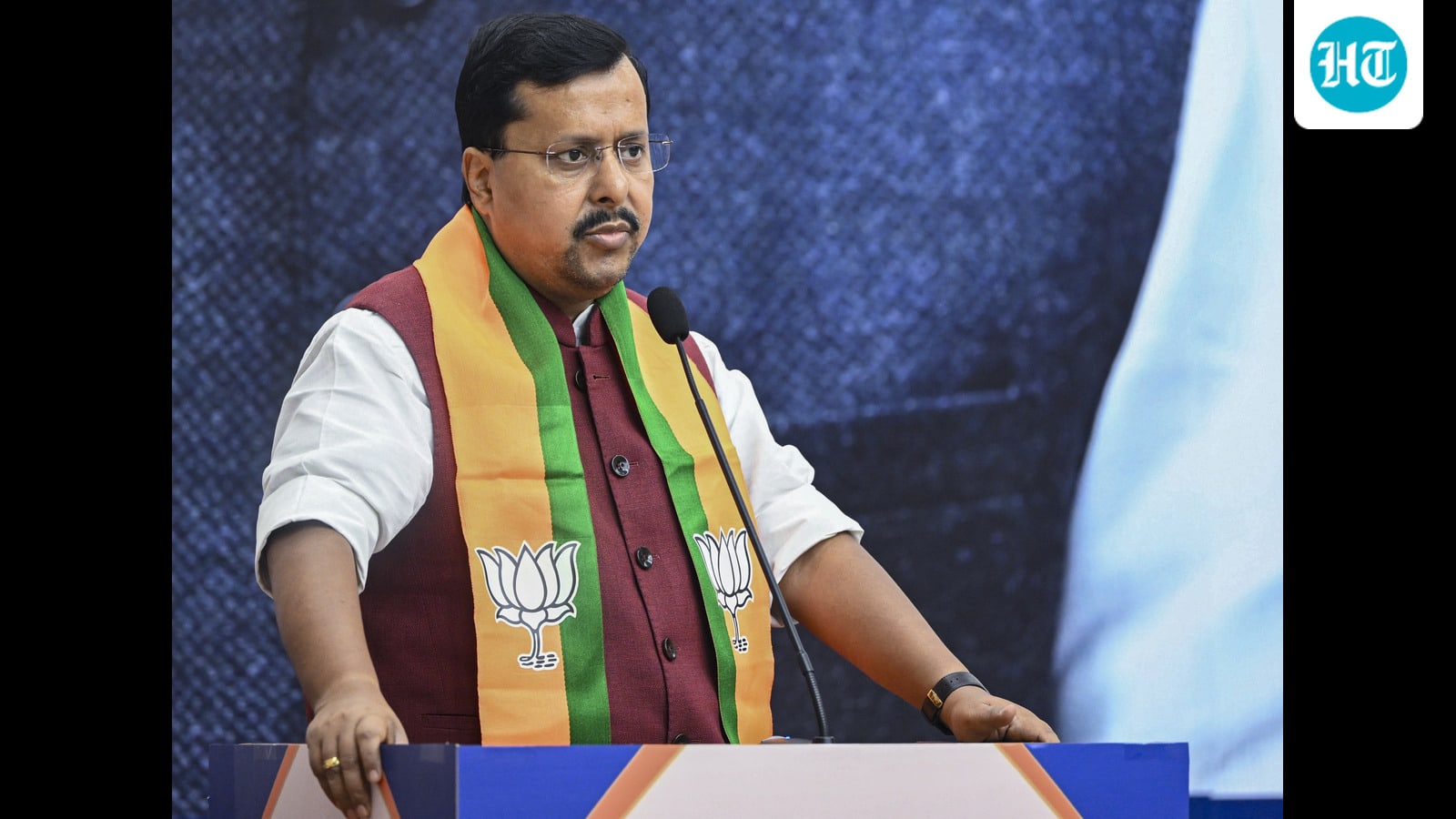
Nitin, Yogi, Sarma to address event marking 25 years of Modi’s public service
Source Entity
Latest News: Todays Latest News Headlines from India & World | Hindustan Times | Hindustan Times
The Indian Union Cabinet has approved the establishment of the Integrated Transport and Logistics Authority (ITLA) to unify planning across roads, rail, ports, and aviation. This apex body will oversee a long-term National Transport Master Plan and appraise infrastructure projects exceeding ₹500 crore.
A New Era for Indian Infrastructure: The ITLA Initiative
The Union Cabinet's recent approval of the Integrated Transport and Logistics Authority (ITLA) marks a transformative shift in how India approaches its infrastructure development. By consolidating planning for roads, railways, ports, civil aviation, and urban mobility under a single, unified framework, the government aims to move away from fragmented, mode-specific growth toward a cohesive, multi-modal national network.
Strategic Objectives and the Master Plan
At the core of the ITLA’s mandate is the creation of a National Transport Master Plan with a horizon of 10 years or more. This long-term vision is designed to ensure that national development is not merely reactionary but strategically aligned. By requiring that short-term five-year sectoral plans and annual ministerial plans be benchmarked against this master plan, the government seeks to eliminate redundancies and optimize capacity utilization across diverse transport sectors.
Economic Implications and Logistics Efficiency
Union Railway Minister Ashwini Vaishnaw highlighted the vital link between GDP growth and logistics demand, noting that for every 7% increase in GDP, logistics requirements typically surge by 10%. The ITLA serves as a critical intervention to meet this demand. By integrating data across all major transport modes, the authority will provide a clearer picture of bottlenecks and efficiency gaps, ultimately reducing the cost of logistics—a long-standing challenge for Indian industry and a key factor in global competitiveness.
Governance and Project Appraisal
Functioning as a Special Purpose Vehicle, the ITLA will act as an apex body for technical appraisal. Any government infrastructure project with a valuation of ₹500 crore or more will now undergo rigorous scrutiny by the ITLA to ensure it fits within the larger national, multi-modal strategy. While financial appraisal remains within the purview of existing financial structures, the technical oversight by ITLA ensures that high-value investments contribute directly to national connectivity goals.
A Broader Context of Governance
This institutional evolution arrives at a significant political juncture, coinciding with Prime Minister Narendra Modi’s 25 years in executive leadership. The establishment of ITLA reflects a broader administrative philosophy that emphasizes long-term vision, execution-oriented governance, and the integration of technology and data to drive national progress. It underscores a shift from short-term electoral cycles to sustained, decades-long infrastructure planning.
Future Trends and Outlook
Looking ahead, the success of the ITLA will likely depend on its ability to transcend ministerial silos and foster inter-agency cooperation. If effectively implemented, this model could serve as a blueprint for other developing nations seeking to modernize their infrastructure. By prioritizing multi-modal connectivity, India is positioning itself to handle the complexities of a modern, high-growth economy, ensuring that its transport network remains a catalyst for, rather than a constraint on, national development.
Multiple Citing Sources
Verification Required?