From Ajmer to every tier 2 city: Why India's experience economy is moving beyond metros
Source Entity
Latest News: Today's Latest News Headlines from India & World | Hindustan Times | Hindustan Times
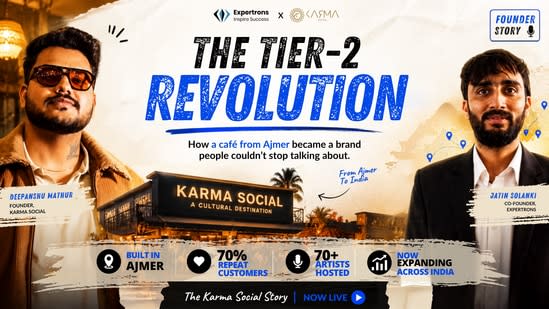
India's experience economy is shifting focus from major metropolitan hubs to Tier 2 cities, exemplified by a successful model in Ajmer that boasts a 70% repeat customer rate and emphasizes deep local engagement.
The Decentralization of Desire: India's Experience Economy Moves to Tier 2 Cities
India is currently witnessing a fundamental shift in consumer behavior, transitioning from a product-centric marketplace to an experience-driven economy. While this trend was initially concentrated in 'Tier 1' metros like Mumbai, Delhi, and Bangalore, recent data and market movements indicate a strategic pivot toward Tier 2 cities. The core of this evolution is the realization that aspirational spending is no longer the exclusive domain of the urban elite; rather, it is becoming a hallmark of the burgeoning middle class in smaller urban centers. This shift is not merely about geographical expansion but about a psychological change in how consumers in these regions perceive value, luxury, and leisure.
The Ajmer Blueprint: A Case Study in Loyalty
The success observed in Ajmer serves as a critical proof-of-concept for this expansion. A standout metric—the 70% repeat customer rate—is exceptionally high for the experience sector, where novelty often wears off quickly. This level of retention suggests that the model employed in Ajmer has successfully moved beyond the 'curiosity phase' and has integrated itself into the lifestyle of the local population. By focusing on high-quality, repeatable experiences rather than one-off gimmicks, the business has tapped into a sustainable revenue stream. This high loyalty rate indicates that there is a significant, underserved demand for curated experiences in Tier 2 cities that can match the quality of metropolitan offerings while remaining culturally resonant.
The Economic Engine of Tier 2 Cities
The migration of the experience economy beyond metros is fueled by several macroeconomic factors. Increased disposable income in smaller cities, coupled with the rapid penetration of digital payment systems like UPI and high-speed internet, has lowered the barrier to entry for experiential businesses. Historically, residents of Tier 2 cities had to travel to metros to access high-end leisure or specialized services. Now, the 'reverse migration' of services is occurring. As these cities develop better infrastructure and a more affluent professional class, they are becoming fertile ground for businesses that offer more than just a commodity, providing instead a sense of status and emotional fulfillment.
The Criticality of Local Engagement
A key takeaway from the provided context is the emphasis on 'local engagement.' One of the primary reasons many metro-centric brands fail when expanding to smaller cities is the attempt to 'copy-paste' an urban identity onto a local population. The success in Ajmer highlights that the experience economy in Tier 2 cities requires a hyper-localized approach. This means tailoring the aesthetics, the communication style, and the nature of the experience to align with local customs and sensibilities. When a business engages locally, it ceases to be an 'outsider' brand and becomes a community hub, which is likely the driver behind the impressive 70% customer retention rate.
Broader Implications and Future Trends
Looking forward, this trend is likely to catalyze a wider economic ripple effect across India. As the experience economy scales across more Tier 2 cities, we can expect a surge in local entrepreneurship and job creation in the hospitality, arts, and service sectors. This decentralization helps mitigate the 'brain drain' from smaller cities to metros, as high-quality employment opportunities emerge locally. We are likely to see the rise of 'experiential clusters' where cities are branded not just by their industrial output, but by the unique leisure experiences they offer, potentially boosting domestic tourism between Tier 2 cities.
Conclusion
The expansion of the experience economy from Ajmer to other Tier 2 cities marks a democratization of lifestyle consumption in India. By prioritizing local engagement and fostering deep customer loyalty, businesses are proving that the appetite for curated experiences is universal, regardless of city tier. This movement signals a more balanced economic growth trajectory for India, where the quality of life and leisure is no longer restricted to a handful of mega-cities, but is spread across the diverse urban landscape of the country.
Verification Required?