10 former CJIs inaugurate India's first Chief Justices of India Museum in JGU University, Sonipat
Source Entity
Latest News: Todays Latest News Headlines from India & World | Hindustan Times
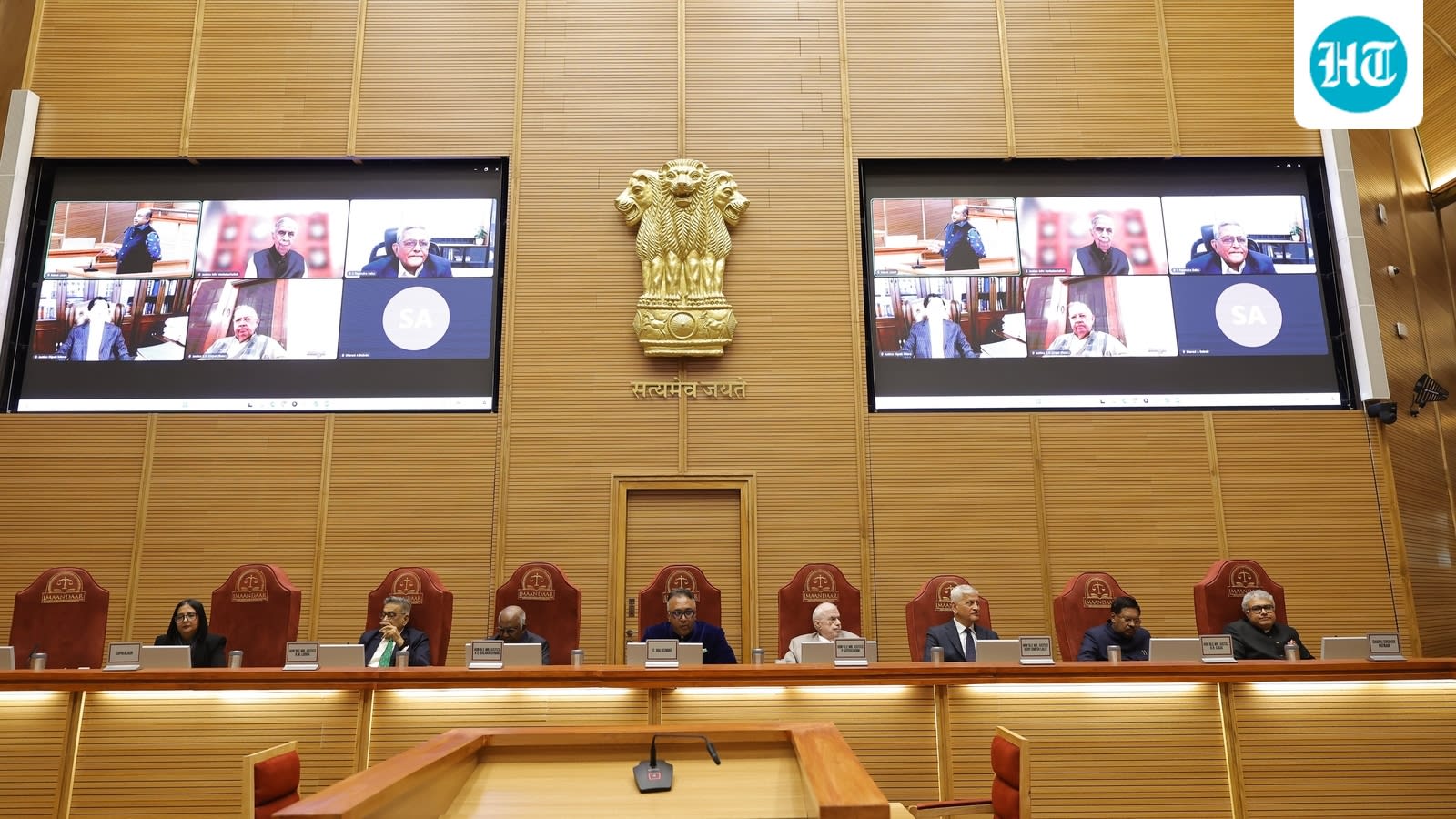
Ten former Chief Justices of India inaugurated the 'Guardians of the Republic' museum at O.P. Jindal Global University in Sonipat. The facility honors the judiciary with five galleries and over 280 busts of Supreme Court judges.
A Landmark Tribute to the Indian Judiciary
In a historic gathering marking the eve of Constitution Day, ten former Chief Justices of India (CJIs) united at the O.P. Jindal Global University (JGU) in Sonipat, Haryana, to inaugurate the nation’s first museum dedicated exclusively to the Chief Justices of India. Titled "Guardians of the Republic," this ambitious project serves as a monumental repository of India's legal heritage, symbolizing the enduring legacy of the Supreme Court and its pivotal role in upholding the constitutional framework of the world's largest democracy.
Architectural and Curatorial Significance
The museum is meticulously structured into five distinct galleries, each designed to provide a comprehensive look at the evolution of India’s apex court. The centerpiece of the collection is an impressive array of over 280 busts representing the judges who have served on the Supreme Court bench throughout the nation's history. By housing these artifacts in an academic setting like JGU, the museum bridges the gap between historical legal scholarship and modern legal education, providing students and researchers with a tangible connection to the figures who have shaped Indian jurisprudence.
The Presence of Legal Stalwarts
The inauguration ceremony saw a rare convergence of judicial wisdom, with former CJIs M N Venkatachaliah, B N Kirpal, S Rajendra Babu, K G Balakrishnan, P Sathasivam, R M Lodha, Dipak Misra, S A Bobde, U U Lalit, and B R Gavai participating either in person or virtually. Their collective presence underscores the gravity of the initiative. These figures, who have presided over some of the most complex legal challenges in independent India, represent the continuity and resilience of the Indian judicial system through decades of political and social change.
Contextualizing the 'Guardians of the Republic'
Naming the museum "Guardians of the Republic" is a deliberate nod to the Supreme Court's function as the ultimate interpreter of the Constitution. Since its inception, the Court has acted as the final arbiter in disputes between the state and the citizen, and between various arms of the government. By cataloging the contributions of the judges who have occupied the highest office in the land, the museum provides a narrative of how the judiciary has adapted to the shifting socio-political landscape while maintaining its commitment to the rule of law.
Educational Integration and Future Trends
Beyond its function as a memorial, the museum is integrated into the broader academic ecosystem of JGU, which also recently expanded its curriculum with new master's degree courses launched by the Lok Sabha Speaker and the Law Minister. This suggests a trend toward 'experiential legal education,' where academic institutions are increasingly integrating physical history and institutional memory into their pedagogical models. As the legal profession evolves in the 21st century, such institutions will likely serve as vital hubs for training the next generation of jurists by keeping the history of the institution at the forefront of their development.
Conclusion
The inauguration of the Chief Justices of India Museum is a significant milestone in India's cultural and legal history. It transforms the memory of the judiciary from purely archival documents into a visible, accessible, and permanent public display. By anchoring the history of the Supreme Court within a premier educational institution, the "Guardians of the Republic" museum ensures that the legacy of those who have interpreted the Constitution remains an active, inspirational element of India’s ongoing democratic journey.
Verification Required?