HT EXPLAINER | India’s first hydrogen train: All you need to know
Source Entity
Latest News: Today's Latest News Headlines from India & World | Hindustan Times | Hindustan Times
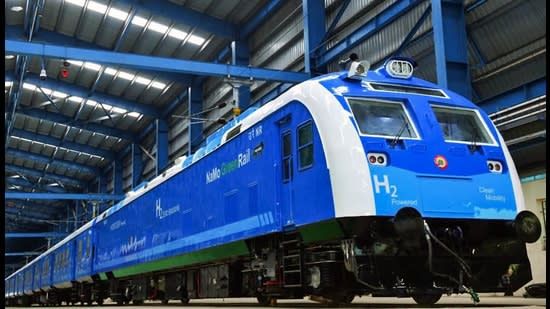
India has launched its first hydrogen-powered train, starting its maiden journey from Jind railway station on July 17. This move places India among an elite group of nations, including Japan and Germany, advancing sustainable rail transport.
India's Leap into Green Rail: The Dawn of Hydrogen-Powered Transport
India has marked a historic milestone in its transportation infrastructure with the launch of its first hydrogen-powered train. Starting its maiden journey from the Jind railway station at 9 am on July 17, the 10-coach train (numbered 74010) represents a pivotal shift in how the nation envisions the future of mobility. This initiative is not merely a technical trial but a strategic move toward decarbonizing one of the world's largest railway networks, signaling a transition from carbon-heavy diesel engines to zero-emission alternatives.
The Technology Behind the Transition
At the heart of this innovation is the hydrogen fuel cell. Unlike traditional diesel locomotives that emit greenhouse gases and particulate matter, hydrogen trains generate electricity through a chemical reaction between hydrogen and oxygen, with the only byproduct being pure water vapor. By utilizing this technology, the 10-coach train 74010 eliminates direct tailpipe emissions, significantly reducing the environmental footprint of rail travel. This technological shift is critical for the Indian Railways, which has long sought to modernize its fleet to meet stringent environmental standards while maintaining high operational efficiency.
Strategic Alignment and Global Standing
By introducing hydrogen-powered rail, India joins a prestigious and select group of nations, including Japan, Germany, the United States, and China. This placement is significant as it demonstrates India's capability to implement cutting-edge green technology on a commercial scale. The launch aligns closely with the National Green Hydrogen Mission, which aims to make India a global hub for the production, usage, and export of green hydrogen. The Jind maiden journey serves as a proof-of-concept that can be scaled across various zones of the Indian rail network, potentially replacing thousands of diesel engines over the coming decades.
Infrastructure Challenges and Future Scaling
Despite the excitement of the maiden voyage, the transition to a hydrogen-based fleet presents substantial infrastructural challenges. Hydrogen requires specialized storage tanks and high-pressure refueling stations, which are currently far less common than diesel depots or electric overhead lines. For the Jind project to evolve into a nationwide standard, India will need to invest heavily in "Hydrogen Hubs"—integrated ecosystems where green hydrogen is produced via electrolysis and distributed to railway stations. The success of train 74010 will likely dictate the pace of these investments, as the government evaluates the cost-benefit ratio of hydrogen versus full electrification.
Environmental Implications and Net-Zero Goals
This move is a cornerstone in India's broader commitment to achieving Net Zero emissions. The railway sector is a massive contributor to the nation's energy consumption; therefore, shifting to hydrogen offers a scalable path to reduce the carbon intensity of freight and passenger movement. Beyond the immediate reduction in CO2, the use of hydrogen trains improves local air quality in railway hubs and reduces noise pollution, contributing to a more sustainable urban environment. This transition is expected to catalyze further research into fuel cell efficiency and hydrogen storage materials within the Indian scientific community.
Conclusion: A Blueprint for Sustainable Mobility
In summary, the launch of India's first hydrogen train from Jind is more than a symbolic start; it is a blueprint for the future of sustainable transit. By integrating hydrogen technology into its rail system, India is not only reducing its reliance on fossil fuels but is also positioning itself as a leader in the global green energy revolution. As the 10-coach train 74010 begins its operations, it paves the way for a cleaner, quieter, and more efficient railway network that will define the next century of Indian transport.
Verification Required?