‘Moving towards Atmanirbhar Bharat’: Rajnath Singh hails handover of aircraft, helicopters by HAL to IAF and PHL
Source Entity
Latest News: Todays Latest News Headlines from India & World | Hindustan Times | Hindustan Times
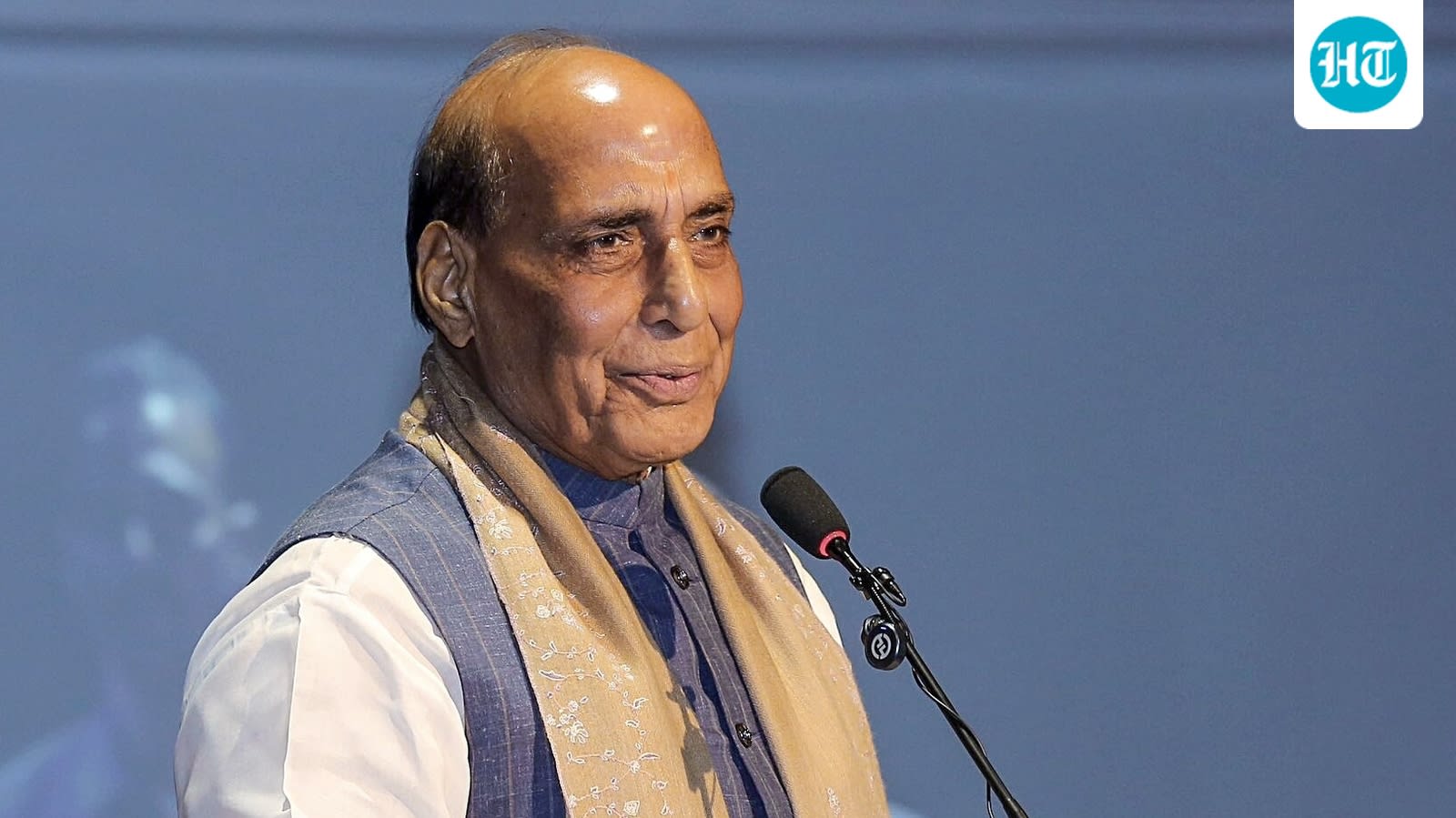
Defence Minister Rajnath Singh oversaw the handover of HAL-manufactured LCA trainers and Dhruv NG helicopters, marking a significant step toward India's Atmanirbhar Bharat initiative. While the aerospace sector celebrates these indigenous milestones, challenges remain regarding radar and missile integration for the Tejas Mk1A program.
Strengthening India’s Aerospace Sovereignty
In a significant development for India’s defense sector, Defence Minister Rajnath Singh presided over a ceremony in Bengaluru marking the handover of indigenously manufactured aircraft and helicopters by Hindustan Aeronautics Limited (HAL). This event, which included the presence of Civil Aviation Minister K. Rammohan Naidu, highlights the nation’s accelerating trajectory toward the 'Atmanirbhar Bharat' (Self-Reliant India) vision. By transitioning from a reliance on foreign imports to domestic production, India is systematically enhancing its aerospace self-confidence and operational independence.
Advancements in Military and Civil Aviation
The ceremony featured two critical technological milestones. First, HAL handed over two Light Combat Aircraft (LCA) trainers to the Indian Air Force (IAF), fulfilling the requirements of the Final Operational Clearance (FOC) contract. These twin-seater platforms are essential for the IAF’s training pipeline, allowing pilots to transition seamlessly into frontline fighter operations. Simultaneously, the induction of four Dhruv Next Generation (NG) helicopters into Pawan Hans Limited (PHL) marks a pivotal moment for civil aviation, demonstrating that HAL’s indigenous designs are capable of meeting both stringent military standards and commercial civil requirements.
The Strategic Importance of Indigenous Manufacturing
Defence Minister Rajnath Singh emphasized that these handovers represent more than just routine procurement; they signify a strategic shift in India’s manufacturing ecosystem. By designing and developing platforms like the Dhruv NG and the LCA trainer domestically, India reduces its exposure to global supply chain vulnerabilities. This shift is critical for long-term national security, as it ensures that the IAF has a reliable, homegrown maintenance and upgrade path for its primary training and combat assets, free from the constraints of foreign geopolitical interests.
Navigating Technical Challenges in Production
Despite these achievements, the path to full indigenization is not without its hurdles. HAL Chairman and Managing Director Ravi K. recently acknowledged that while 27 airframes of the advanced Tejas Mk1A are ready, the delivery of the first batch to the IAF is currently delayed. The core issues stem from complex technical integrations, specifically involving the Active Electronically Scanned Array (AESA) radar and missile systems. While GE Aerospace has supplied the necessary engines, these sophisticated integration tasks require extensive testing to meet the IAF's rigorous combat readiness standards.
Future Outlook and Conclusion
Looking ahead, the successful integration of radar and missile systems on the Tejas Mk1A airframes will be a litmus test for India's maturing aerospace industry. The ability to resolve these high-tech bottlenecks will determine the speed at which the remaining 180 planned aircraft can be deployed. Ultimately, the recent handovers serve as a testament to India's growing industrial capacity, proving that while challenges in advanced combat integration persist, the foundational infrastructure for a self-reliant defense sector is firmly in place and operational.
Verification Required?