Changing climate demands stronger water monitoring, early warnings: CR Patil
Source Entity
Latest News: Todays Latest News Headlines from India & World | Hindustan Times | Hindustan Times
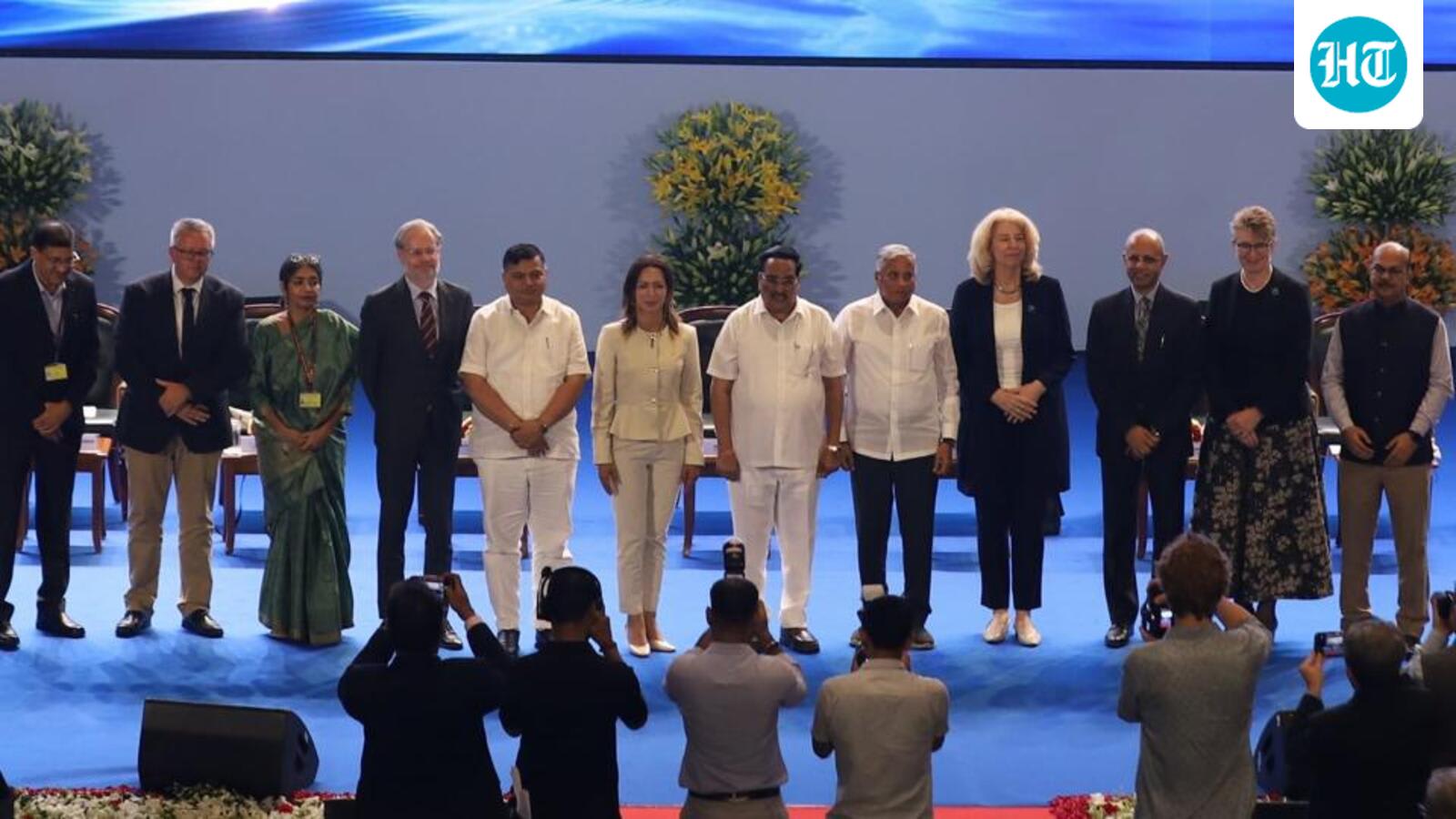
The 9th India International Water Week 2026 focuses on climate-resilient water management amidst global climate instability. Union Minister CR Patil emphasized the urgent need for advanced monitoring, early warning systems, and transboundary cooperation.
Addressing the Global Water Crisis: The 9th India International Water Week
Water serves as the fundamental thread connecting ecosystems, economies, and human survival. As the 9th India International Water Week (IIWW) convenes in New Delhi from September 22-26, 2026, the global community faces a stark reality: the climate crisis is rendering the traditional water cycle increasingly erratic. Organized by the Ministry of Jal Shakti, this summit underscores that water resources, which traverse administrative boundaries and sustain diverse communities, require a unified, cross-border approach to management.
The Urgency of Climate Resilient Management
The central theme of the 2026 summit, 'Climate Resilient Water Management,' reflects an urgent pivot toward adaptation. As highlighted by Union Jal Shakti Minister CR Patil, climate change is no longer a future threat but a present driver of instability. From the fragile ecosystems of the Himalayas to arid agricultural plains, the alteration of precipitation patterns—characterized by both excessive rainfall and severe droughts—demands a robust, science-led strategy to protect future water security.
Integrating Science and Early Warning Systems
A critical takeaway from Minister Patil’s inaugural address is the necessity for better science and enhanced monitoring. The unpredictability of the hydrological cycle means that historical data is becoming less reliable for future planning. By prioritizing timely early warning systems, nations can better prepare for extreme weather events, effectively mitigating the risks of floods and water scarcity before they reach catastrophic levels.
Transboundary Cooperation and Shared Responsibility
Because rivers and aquifers do not adhere to political borders, the IIWW serves as a vital platform for international dialogue. The discussions scheduled, ranging from river-basin management to wastewater reuse, emphasize that water is a shared responsibility. The summit aims to foster collaboration, acknowledging that one nation's water security is inextricably linked to the management practices of its neighbors.
Future Trends and Policy Implications
Looking ahead, the focus on 'environmental flows' and 'wastewater reuse' points toward a circular water economy. Future trends in water management will likely rely heavily on technological integration, where real-time data informs policy decisions. By shifting from reactive disaster response to proactive, climate-resilient planning, India and the global community aim to stabilize the water cycle for future generations, ensuring that the rain falling today remains a reliable resource for tomorrow.
Verification Required?