Toyota orders workers to train humanoid robots but says humans won't be replaced
Source Entity
Jeremy Hsu
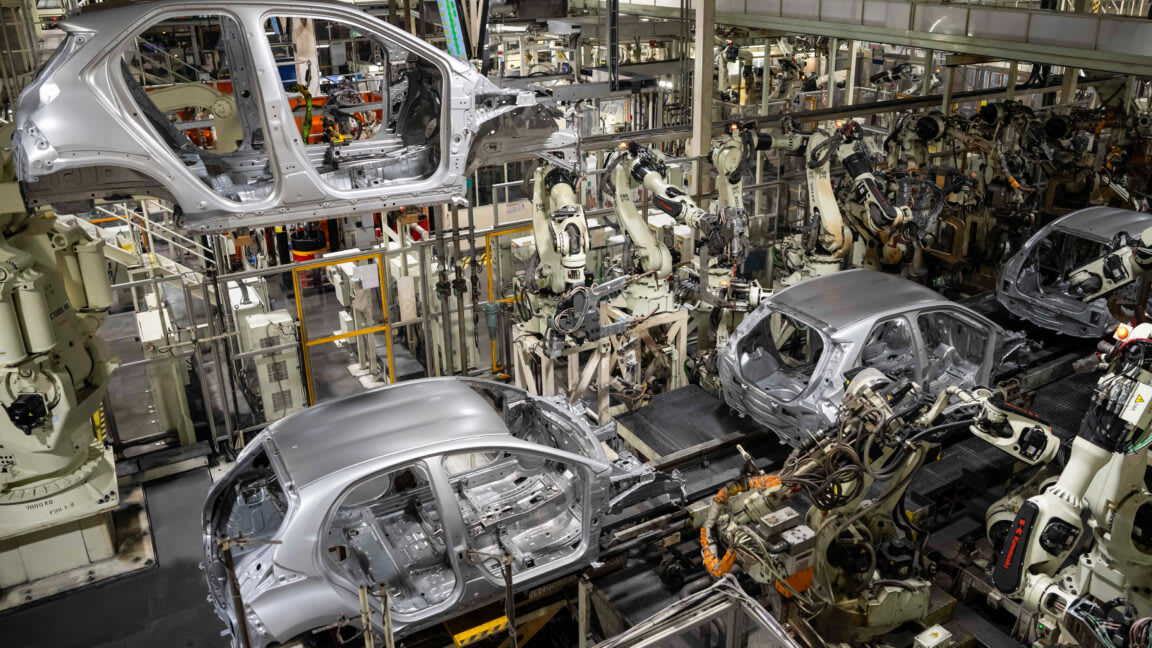
Toyota is integrating humanoid robots into its manufacturing processes to enhance efficiency while maintaining human oversight. The company plans to invest $6.42 billion annually starting in 2028 to deploy 400,000 robots across its facilities.
The Future of Automotive Manufacturing: Toyota’s Humanoid Integration
Toyota is embarking on a transformative journey in industrial automation, signaling a paradigm shift in how global automakers approach factory floor labor. By tasking current employees with the training of humanoid robots, the company is bridging the gap between traditional manual labor and advanced artificial intelligence. This strategy, centered around the deployment of ELEY humanoid robots, reflects a broader industry trend where the objective is not to eliminate the human workforce, but to augment their capabilities through sophisticated, mobile robotic systems.
A Massive Financial Commitment to Automation
Starting in 2028, Toyota plans to commit $6.42 billion annually toward the modernization of its production facilities. This massive capital expenditure underscores the company's long-term vision for the automotive sector. By targeting a total deployment of 400,000 robots—150,000 within their own primary automotive plants and 250,000 across associated component and material facilities—Toyota is positioning itself to lead the global race in industrial robotics, ensuring that the supply chain remains resilient and technologically advanced.
Human-Robot Collaboration: The 'Training' Model
Central to this initiative is the collaborative nature of the rollout. Unlike historical automation models that relied on static, caged machinery, Toyota’s ELEY robots are designed to learn directly from human workers. By observing and mimicking the movements and techniques of experienced staff, these robots are being trained to perform complex tasks that require dexterity and adaptability. This hands-on training phase is essential for ensuring that the robots can operate effectively within dynamic assembly line environments.
Debunking the Replacement Myth
Despite the scale of this technological leap, Toyota executives have explicitly stated that this initiative is not intended to replace humans. Instead, the strategy focuses on human-robot synergy. By offloading repetitive or physically taxing tasks to the ELEY robots, human workers can focus on higher-level problem-solving, quality control, and system management. This collaborative approach aims to preserve the essential human element in manufacturing while drastically increasing overall output and efficiency.
Broader Implications and Future Trends
This move by Toyota sets a significant precedent for the automotive industry. As manufacturers worldwide face labor shortages and the increasing need for precision, the ability to rapidly train humanoid robots will likely become a competitive necessity. As these robots become more integrated, we can expect to see a evolution in factory floor design, where human-centric safety protocols and AI-driven robotics coexist seamlessly. This shift will likely influence future labor markets, emphasizing technical skill and the ability to manage robotic workforces over purely manual production roles.