Gill may miss Cardiff, leaving Shreyas to prove India's ODI transition is more than a carefully managed arrangement
Source Entity
Latest News: Today's Latest News Headlines from India & World | Hindustan Times | Hindustan Times
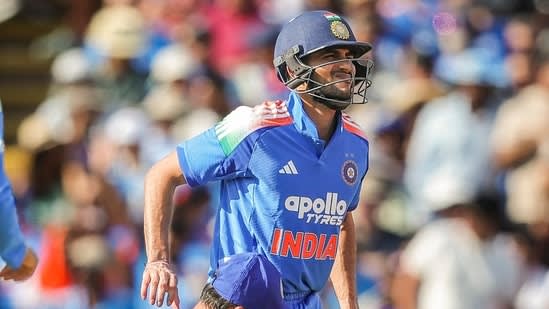
With Shubman Gill doubtful for the upcoming match in Cardiff, Shreyas Iyer faces a critical opportunity to prove his role and the viability of India's ODI transition strategy as the team seeks to balance the influence of veterans Rohit Sharma and Virat Kohli with a new generation of talent.
The Cardiff Litmus Test: India's ODI Transition Under Scrutiny
The impending match in Cardiff arrives at a pivotal juncture for the Indian One Day International (ODI) squad. The uncertainty surrounding Shubman Gill's availability has transformed a standard fixture into a high-stakes examination of India's long-term batting strategy. For years, the Indian top order has been defined by the unparalleled consistency of Rohit Sharma and Virat Kohli. However, as the team looks toward the next World Cup cycle, the transition to a younger core has become a primary objective for the management. The potential absence of Gill—often viewed as the primary heir to the top-order throne—shifts the spotlight directly onto Shreyas Iyer.
The Vacuum Left by Shubman Gill
Shubman Gill has rapidly ascended to become the centerpiece of India's 'future-proofing' strategy. His technical proficiency and ability to anchor an innings make him the ideal bridge between the veteran era and the next generation. When Gill is in the lineup, there is a perceived safety net that allows the team to maintain a balance of aggression and stability. His doubtful status for the Cardiff game creates a tactical void that cannot be filled by a simple like-for-like replacement. This absence forces the team to rely on the middle-order depth, specifically Shreyas Iyer, to provide the necessary stability that Gill usually offers at the top.
Shreyas Iyer and the 'Managed Arrangement'
For Shreyas Iyer, this match represents more than just a chance to score runs; it is a challenge to the narrative that India's transition is a 'carefully managed arrangement.' There is a prevailing critique among analysts that the transition has been too cautious, with the team structure remaining overly dependent on the gravity of Rohit and Kohli. By stepping up in Gill's absence, Iyer has the opportunity to demonstrate that the younger players are not merely supporting actors in a veteran-led drama, but are capable of taking ownership of the game's trajectory. If Iyer can dominate the Cardiff fixture, it validates the belief that the transition is organic and robust rather than a superficial adjustment.
The Shadow of the Veterans
Analyzing the broader context, the influence of Rohit Sharma and Virat Kohli remains the defining characteristic of the Indian ODI setup. While their presence provides unmatched leadership and run-scoring capability, it can inadvertently stifle the growth of younger players who may feel pressured to play a secondary role. The 'managed arrangement' mentioned in the reports refers to this delicate balancing act: ensuring the team wins now using the veterans, while simultaneously carving out space for Iyer and Gill to develop their leadership on the pitch. The Cardiff match serves as a rare window where the traditional hierarchy is disrupted, allowing the 'transition' players to operate without the safety blanket of a full-strength top order.
Strategic Implications and Future Trends
Looking forward, the outcome of the Cardiff match will likely influence how the selectors approach the batting order for the remainder of the season. If the transition proves successful in the absence of Gill, it provides the management with the confidence to experiment more aggressively with the lineup. We may see a shift toward a more flexible batting order where roles are defined by match situations rather than seniority. Furthermore, this event underscores a growing trend in international cricket where teams are moving away from rigid 'slots' toward a more fluid approach to innings construction, a shift that Iyer is well-positioned to lead.
Conclusion: A Defining Moment for the New Guard
In summary, the Cardiff match is a microcosmic view of the larger struggle facing the Indian ODI team: the transition from an era of legendary dominance to a new, unproven era. The potential absence of Shubman Gill removes a key pillar of the current strategy, placing the burden of proof on Shreyas Iyer. Whether this results in a successful demonstration of depth or exposes a fragility in the transition plan will determine how India structures its path toward the next global tournament. For Iyer, it is a defining examination; for India, it is a necessary test of their evolution.
Verification Required?