Riding Elon Musk’s Falcon 9 to space, how a Made-in-Gujarat satellite will help India
Source Entity
Ritu Sharma
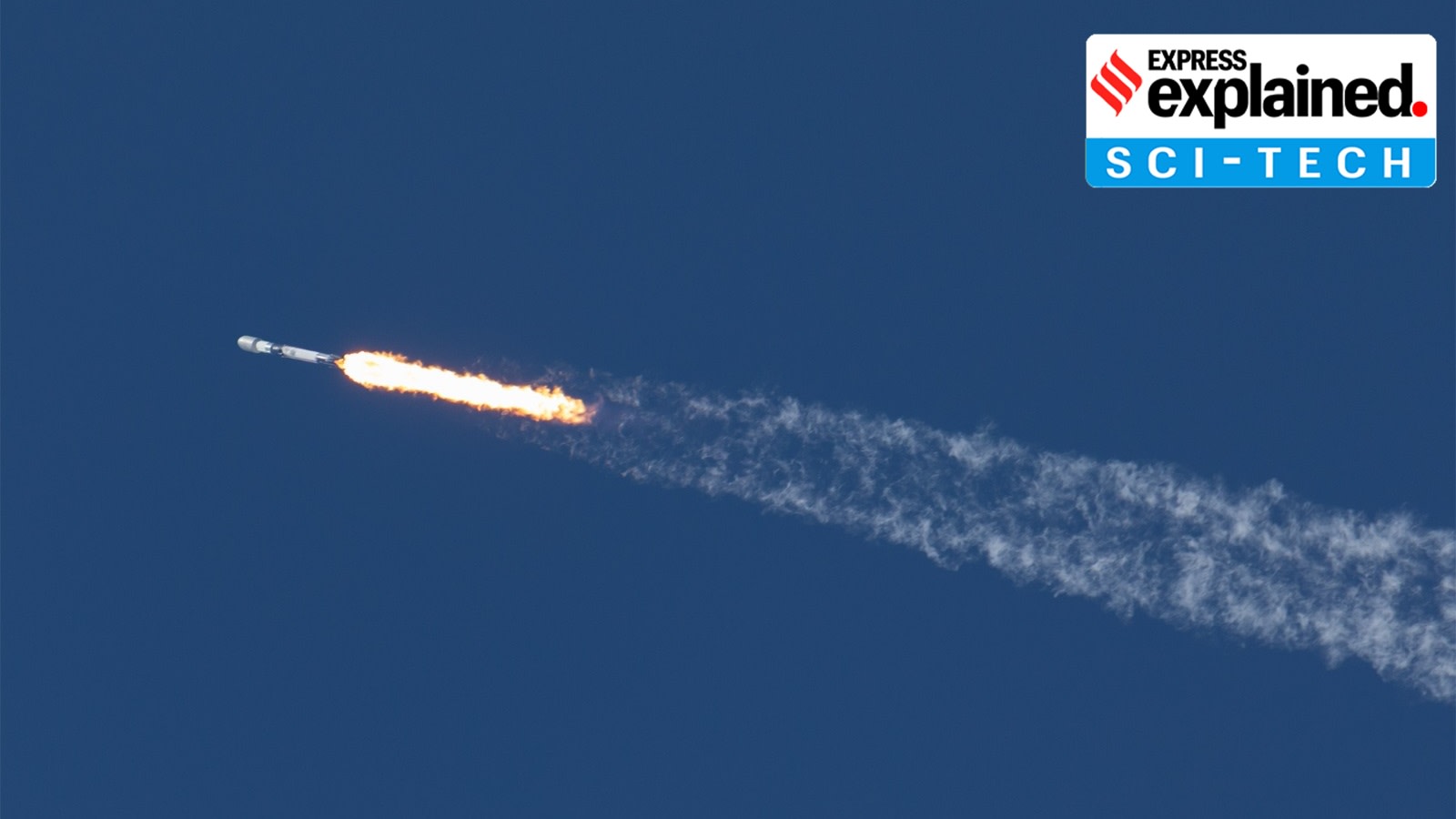
A SpaceX Falcon 9 rocket successfully launched the Transporter-18 mission, carrying India's first commercial private thermal-imaging payload, TAPAS-1. Developed in Gujarat, this satellite marks a significant milestone for India's private space sector and its growing presence in LEO.
India’s Private Space Sector Takes Flight
In a landmark moment for the Indian aerospace industry, the Transporter-18 mission successfully deployed a suite of small satellites into Lower Earth Orbit (LEO) via a SpaceX Falcon 9 rocket. Launched from the Space Launch Complex 4E at Vandenberg Space Force Base, this mission highlights the accelerating pace of global commercial space activity. For India, the mission serves as a critical proof-of-concept for its burgeoning private space ecosystem, demonstrating that domestic innovation can leverage international launch vehicles to reach orbit efficiently.
The Significance of TAPAS-1
At the heart of this achievement is TAPAS-1, a thermal-imaging payload developed by an Ahmedabad-based firm in Gujarat. As India’s first commercial private thermal-imaging satellite component, it represents a departure from the traditional state-led model dominated by ISRO. By focusing on thermal imaging, this technology provides high-value data capable of monitoring heat signatures, which has profound implications for agricultural monitoring, urban planning, and environmental disaster management.
SpaceX and the Rideshare Economy
This launch was part of a historic 'triple-header' of launches executed by Elon Musk’s SpaceX within a mere 13-hour window. The Transporter-18 mission utilized a rideshare model, allowing 130 separate payloads to share the cost and logistics of a single launch. This democratization of access to space is essential for smaller startups in nations like India, as it drastically lowers the financial barrier to entry, enabling private entities to test and operate hardware in orbit without the need for bespoke launch contracts.
Technological Integration in LEO
Operating in Lower Earth Orbit, TAPAS-1 benefits from the proximity to Earth, which allows for higher-resolution thermal data collection compared to geostationary alternatives. The success of this mission validates the engineering capabilities of Gujarat’s tech sector. As these private payloads become more common, we can expect a shift in how India approaches satellite data markets, moving toward a data-as-a-service model that prioritizes commercial utility alongside traditional governmental research.
Future Trends and Strategic Implications
The successful deployment of TAPAS-1 signifies a maturing relationship between international launch providers and Indian private enterprise. As SpaceX continues to set records for launch cadence, Indian startups are positioning themselves to utilize these reliable launch windows to scale their operations. The future of this sector will likely see increased collaboration, where Indian-designed payloads become a standard feature on international rideshare missions, bolstering the country's footprint in the global space economy.
Conclusion
The launch of TAPAS-1 is more than just a successful deployment; it is a signal of the changing dynamics in the space industry. By successfully integrating a Gujarat-developed payload into a global commercial mission, India has demonstrated its readiness to compete and collaborate on the international stage. As technical proficiency grows, the reliance on private infrastructure will likely catalyze further advancements, ensuring that India remains at the forefront of the commercial space revolution.