Watch: Paratrooper makes unique tandem jump with combat canine, handler
Source Entity
SUBHADRA SRIVASTAVA
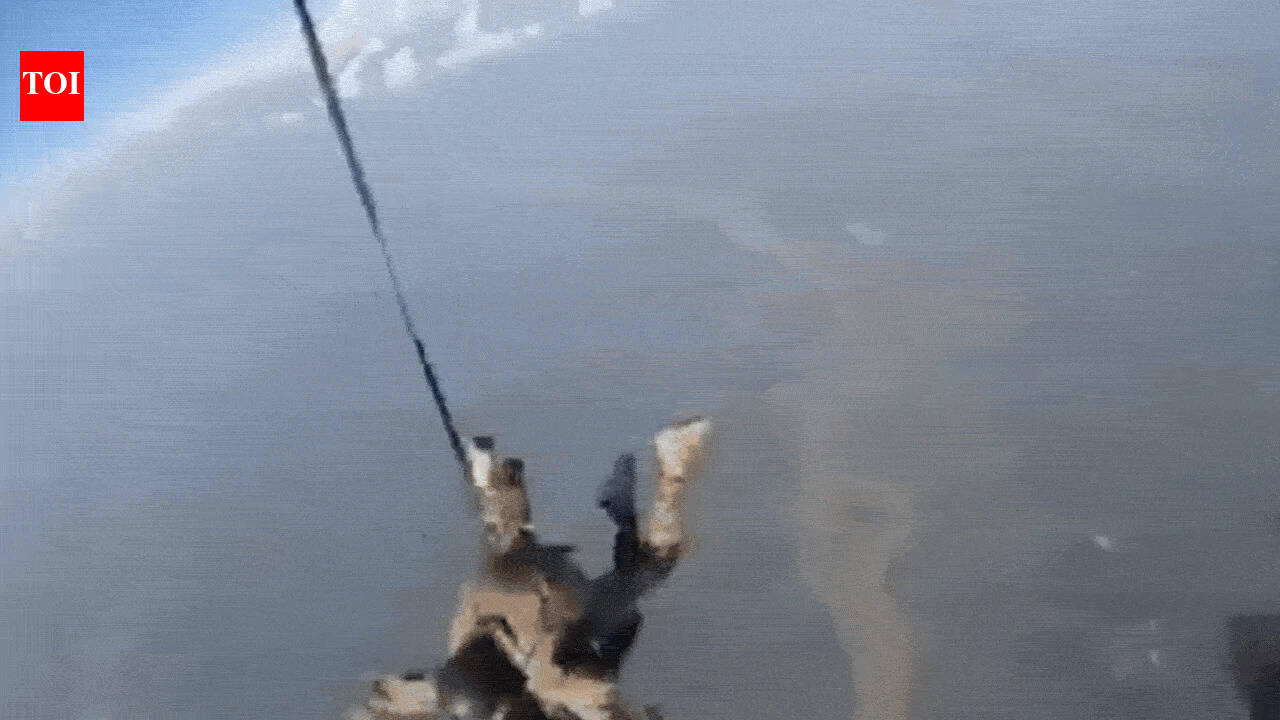
An Indian Army paratrooper successfully executed a tandem parachute jump with a combat canine and handler at the Behat Drop Zone. This rare exercise highlights the advanced operational readiness and tactical integration of military working dogs in airborne missions.
Airborne Integration: The Evolution of Canine Combat Readiness
The recent tandem parachute jump conducted by an Indian Army paratrooper, accompanied by a combat canine and its handler at the Behat Drop Zone, represents a significant milestone in specialized military training. This exercise, documented by the Army’s Central Command under the banner of 'Surya Warrior,' showcases the increasing sophistication of tactical maneuvers involving military working dogs (MWDs). By integrating canines into high-altitude, low-opening (HALO) or static-line tandem operations, the military is expanding the versatility of its airborne units.
Tactical Significance of Canine Airborne Deployment
Combat canines are indispensable assets in modern warfare, providing unmatched olfactory capabilities for explosive detection, tracking, and threat neutralization. The primary challenge in deploying these animals via parachute lies in ensuring their safety and stability during the descent. The use of a tandem setup—where the dog is securely harnessed to a handler—allows the unit to remain cohesive upon landing. This proficiency ensures that the team can immediately pivot to operational tasks, such as reconnaissance or patrol, upon reaching the ground.
The 'Surya Warrior' Doctrine and Operational Precision
Under the Surya Command, the Indian Army has prioritized combat readiness through rigorous, high-stakes training exercises. The video footage released on social media platforms highlights the precision required for such a maneuver, particularly with the team carrying a full combat load. This demonstrates that the jump is not merely a training novelty but a validation of equipment and procedure designed for real-world deployment scenarios where rapid insertion into hostile or remote territory is required.
Psychological and Physiological Conditioning
Training a combat canine for an airborne jump requires extensive physiological and psychological conditioning. Canines must be acclimated to the noise of aircraft, the sensation of flight, and the pressure changes associated with altitude. The success of this tandem jump proves that the Indian Army has established the necessary protocols to manage the stress and physical requirements of these animals, ensuring they remain calm and effective operational partners even during extreme maneuvers.
Broader Strategic Implications
This development aligns with global military trends where the role of specialized K9 units is becoming increasingly central to special operations. As modern battlefields become more complex, the ability to deploy a complete, self-contained unit—including a canine asset—via air insertion provides commanders with superior tactical flexibility. The 'Paws in the Sky' initiative serves as a force multiplier, signaling that the Indian Army is investing in the seamless integration of biological and human assets.
Future Trends in Specialized Airborne Operations
Looking ahead, it is likely that the Indian Army will continue to refine these tandem jumping techniques to increase the frequency and complexity of such deployments. As technology advances, we may see the implementation of specialized canine parachuting gear and improved communication systems between the handler and the dog during flight. This successful exercise at Behat DZ serves as a foundational step toward a future where canine-integrated airborne insertions become a standard component of elite military operations.