Nepal flood death toll crosses 1,400; over 6,000 still missing
Source Entity
Latest News: Todays Latest News Headlines from India & World | Hindustan Times | Hindustan Times
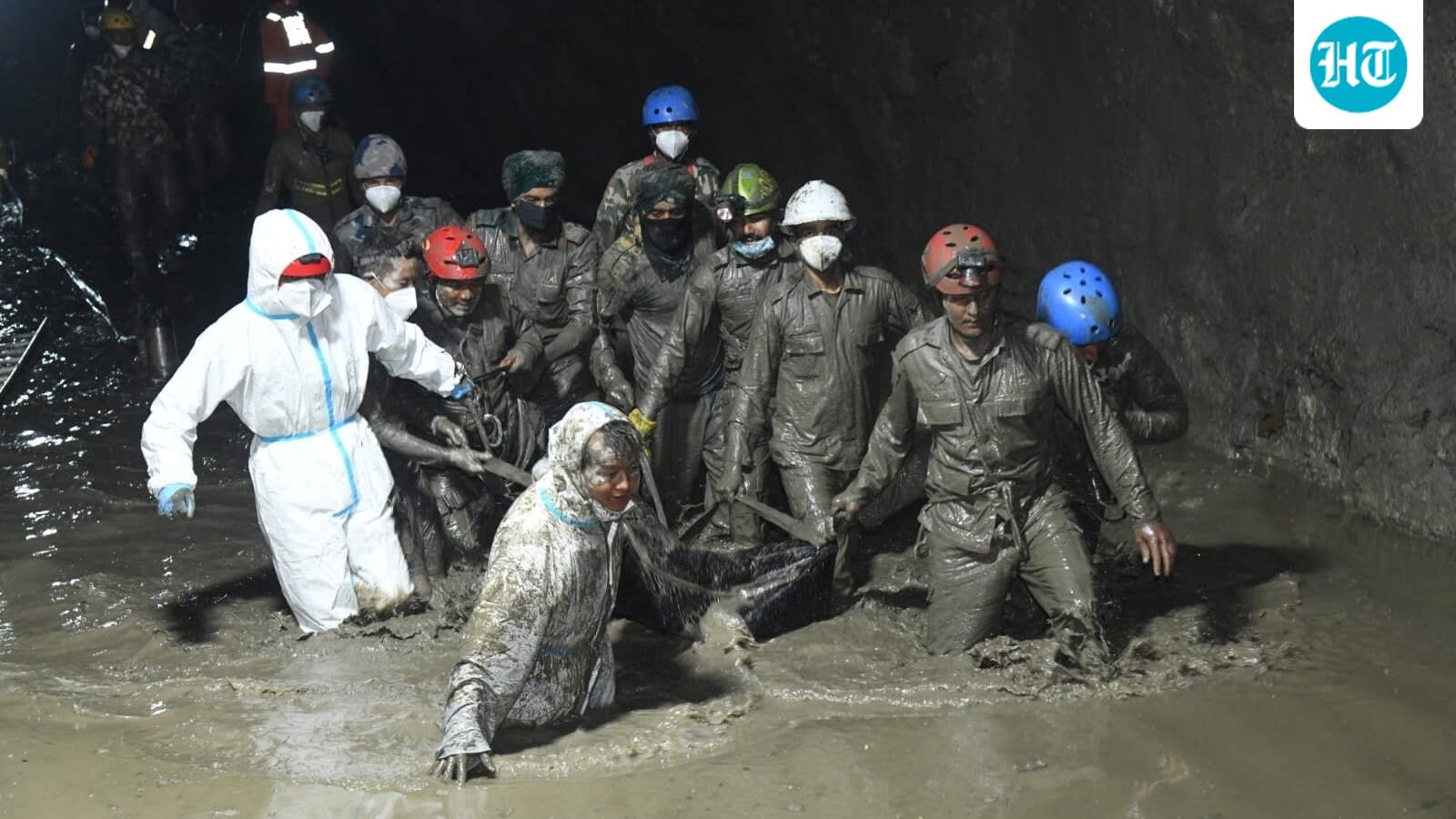
A catastrophic ice-rock avalanche near the Nepal-Tibet border has claimed over 1,400 lives, with more than 6,000 people still missing. Scientific studies attribute the disaster to a compound crisis of climate change and geological instability.
The Catastrophic Nepal-Tibet Flood Crisis
The devastating flash floods that struck the Nepal-Tibet border region on August 26 have resulted in a staggering human toll, with confirmed deaths surpassing 1,400. As recovery operations continue, the crisis has deepened, with Nepali officials revising the number of missing persons to over 6,150. Across the border in China, the impact has also been severe, with 43 confirmed fatalities and more than 500 individuals still unaccounted for, marking this as one of the most significant natural disasters in the region's recent history.
The Geological Catalyst: An Avalanche of Massive Scale
Scientific investigations into the disaster, including a study by international researchers, have identified the primary trigger as an unprecedented ice-rock avalanche from the Langtang Lirung peak. The collapse involved an estimated 110 million cubic meters of rock and ice, tearing a 2.2 square kilometer section from the mountain's northern face. This mass fell from an elevation of 5,150 meters, descending 1,400 meters into the valley below with force equivalent to filling 300 football fields with debris 50 meters deep.
A Compound Crisis: The Role of Climate Change
Experts from the World Weather Attribution (WWA) group have characterized the event as a 'compound crisis' rather than a singular weather incident. The disaster was preconditioned by a combination of rising global temperatures, the thinning of glaciers, and the thawing of permafrost. Dr. Friederike Otto of Imperial College London emphasized that there is 'absolutely no doubt' that human-induced climate change played a critical role in destabilizing the mountain face, creating the conditions necessary for such a massive structural failure.
Humanitarian Impact and Rescue Efforts
While rescue teams have successfully located and aided over 13,700 individuals, the sheer scale of the terrain and the destruction caused by the debris flow have hindered recovery efforts. The search for the 6,150 missing persons remains a harrowing logistical challenge, as the floodwaters destroyed infrastructure across northern and central Nepal, leaving many communities isolated and vulnerable.
Future Implications for Himalayan Regions
The intersection of geological instability and rapid climate change poses an existential threat to Himalayan communities. This event highlights the urgent need for enhanced monitoring of high-altitude glacial landscapes, which are becoming increasingly volatile as temperatures rise. The disaster serves as a sobering case study on how pre-existing geological weaknesses, when exacerbated by environmental shifts, can lead to humanitarian catastrophes of this magnitude.
Conclusion
The tragedy in Nepal is a stark reminder of the unpredictable nature of climate-linked geological disasters. As the recovery efforts persist and the death toll remains a sobering figure, the focus must shift toward understanding the long-term implications of these compound events. Protecting vulnerable populations in the shadow of the Himalayas will require not only immediate disaster response but a global commitment to addressing the climatic drivers that are fundamentally altering these mountain ecosystems.
Verification Required?