Railway ticket booking: What happens when you pay more than Rs 2,000 via UPI from October 15?
Source Entity
Anish Mondal
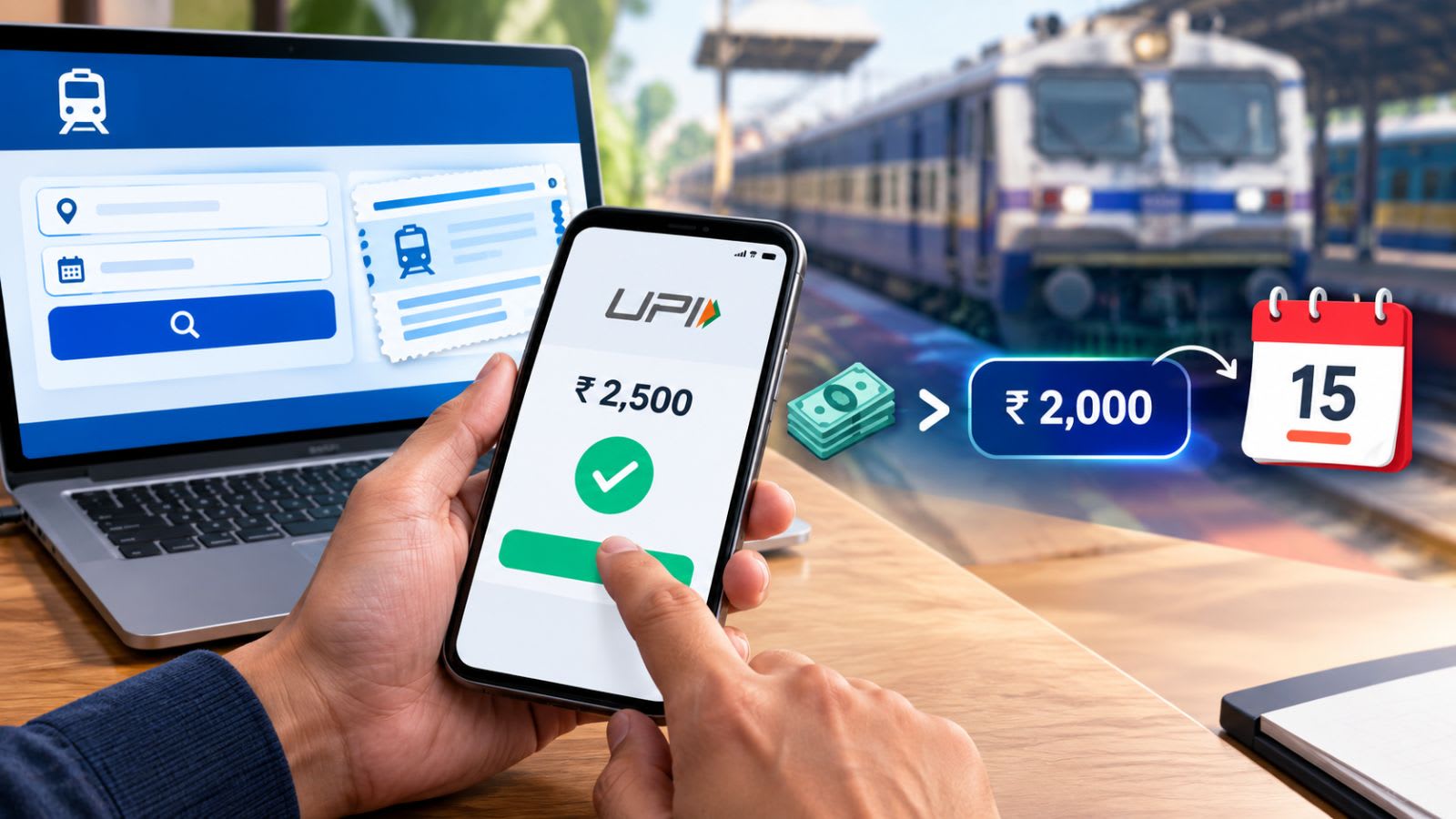
Starting October 15, 2026, Indian Railways will implement a flat Rs 5 charge on UPI transactions exceeding Rs 2,000. Crucially, the railways will absorb this cost, ensuring passengers are not burdened by additional fees.
Understanding the New UPI Fee Structure for Indian Railways
Starting October 15, 2026, the digital payment landscape for Indian Railways will undergo a significant adjustment. As part of a broader shift in the Unified Payments Interface (UPI) framework, a new merchant-side fee structure is being introduced. While typical transactions above Rs 2,000 for regular merchants will incur a 0.4 per cent fee, Indian Railways has secured a distinct classification that alters this calculation for its own ticketing operations.
The Flat Fee Calculation
Under the new guidelines, any railway ticket booking processed via UPI that exceeds the Rs 2,000 threshold will be subject to a flat fee of Rs 5 per transaction. This is a strategic deviation from the standard percentage-based model, which would have resulted in higher costs for expensive tickets. By opting for a flat rate, the railway authorities have created a predictable and manageable cost structure for high-value bookings.
Protecting the Passenger Experience
Perhaps the most important aspect of this policy update is the commitment to consumer protection. According to Saurabh Jain, the Senior Divisional Commercial Manager (Sr DCM) of the Kota Division, this Rs 5 charge will not be passed on to the passengers. Instead, the cost will be absorbed entirely on the merchant side—the Indian Railways itself. This decision ensures that the digital transformation of the ticketing process does not discourage users from choosing UPI as their preferred payment method.
Broader Implications of Digital Payments
This policy reflects the Indian government's ongoing push toward a cashless economy. By standardizing fees for high-value transactions while protecting the end-user, the Railways are balancing the need for sustainable digital infrastructure with the goal of maintaining high passenger satisfaction. This move is indicative of how large public institutions are adapting to the evolving costs associated with the UPI ecosystem.
Looking Toward the Future
As UPI continues to dominate the Indian digital payment space, the integration of specific merchant categories suggests a more granular approach to financial regulation. By exempting passengers from these new fees, the Railways are prioritizing ease of access and affordability. Moving forward, it is likely that other public utility services will adopt similar models to ensure that infrastructure costs do not impede the adoption of digital transaction technologies.
Conclusion
In summary, the changes effective October 15, 2026, represent a sophisticated approach to merchant-side transaction fees. By capping the cost at a flat Rs 5 and shielding the passenger from the expense, Indian Railways maintains its focus on user-friendly digital services while aligning with the updated national UPI framework.