Missing measure in India’s magnet mission
Source Entity
India Latest News: Top National Headlines Today & Breaking News | The Hindu
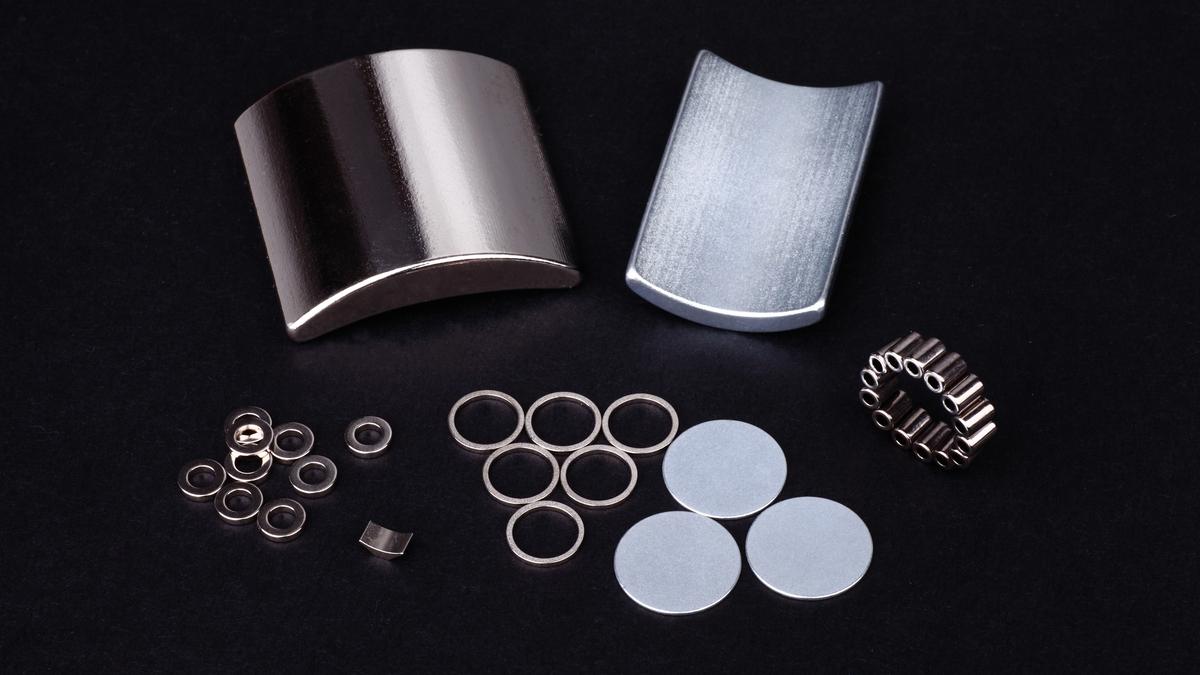
India's ambition to become a global manufacturing leader faces a critical hurdle in the supply chain for high-performance permanent magnets. Policy focus must shift beyond mere resource discovery to bridging the gap between raw materials and high-tech industrial application.
The Silent Engine of Industrial Ambition
India’s strategic vision to emerge as a global manufacturing powerhouse is currently tethered to a technological bottleneck that often escapes public discourse: the high-performance permanent magnet. While the nation focuses on grand initiatives like semiconductor fabrication and electric vehicle (EV) production, the fundamental building blocks—specifically rare-earth magnets—remain a point of systemic vulnerability. Much like the parable of the blind men and the elephant, current policy discussions often fragment the issue, focusing on isolated parts rather than the integrated, complex supply chain required to achieve industrial self-reliance.
The Strategic Role of Magnets
High-performance permanent magnets act as the 'silent operating system' for modern industrial acceleration. From the drive motors in EVs to the precision machinery required for advanced manufacturing, these components are indispensable. The current reliance on imports, particularly from China, underscores a dependency that threatens to undermine India’s 'Make in India' aspirations. The challenge lies not just in the existence of domestic rare-earth resources, but in the sophisticated processing and manufacturing capabilities required to transform raw materials into high-grade industrial components.
Beyond Resource Discovery
There is a prevailing misconception that finding rare-earth reserves is the primary solution to the import dilemma. However, the policy challenge is far more nuanced. India must address the 'in-between' phase: the industrial capacity to refine, alloy, and manufacture magnets at a scale and quality that can compete globally. Relying on raw material exports or simple extraction does not alleviate the strategic risk; it merely changes the nature of the dependency. True industrial autonomy requires the development of a domestic metallurgical and manufacturing ecosystem capable of producing Neodymium-Iron-Boron (NdFeB) magnets and their successors.
The Technological Hierarchy
While traditional materials such as Ferrite, Alnico, and Samarium-Cobalt magnets remain vital for legacy industrial applications, they are increasingly insufficient for the demands of 21st-century technology. The shift toward high-performance magnets is a prerequisite for energy efficiency and miniaturization in electronics. India’s inability to scale the production of these advanced magnets creates a structural barrier that could delay the rollout of indigenous EV platforms and precision manufacturing systems.
Future Trends and Policy Implications
Looking ahead, the global race for rare-earth independence will likely intensify, making the domestic production of permanent magnets a matter of national security. Future policy must incentivize private sector investment in magnet manufacturing facilities and foster research into alternative magnet chemistries that reduce reliance on highly concentrated supply chains. If India fails to bridge the gap between resource identification and advanced manufacturing, it risks remaining a spectator in the global industrial revolution, dependent on foreign entities for the very components that power its own technological infrastructure.
Verification Required?