SIMD in the 90s: Programming Intel's Pentium MMX
Source Entity
Hacker News
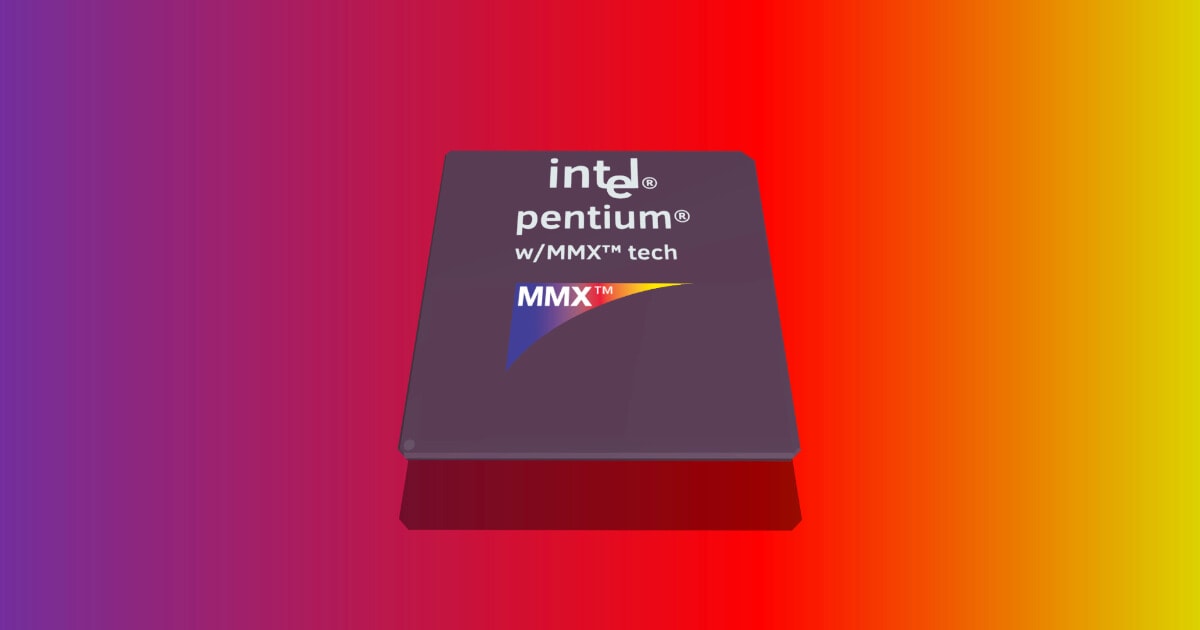
Intel's MMX technology in the late 1990s introduced SIMD capabilities to mainstream desktop CPUs, marking a pivotal shift in parallel processing. This innovation paved the way for modern instruction sets like AVX-512 and NEON, fundamentally changing how software handles data-intensive tasks.
The Legacy of Intel's MMX: A Paradigm Shift in Computing
In the late 1990s, the computing landscape was defined by the ubiquitous "Intel Inside Pentium with MMX" stickers that adorned millions of desktop towers. While MMX was heavily utilized as a marketing buzzword to differentiate Intel's hardware in a competitive market, it represented a significant architectural milestone: the introduction of Single Instruction, Multiple Data (SIMD) capabilities to the mainstream x86 platform. This technology allowed a single instruction to operate on multiple data points simultaneously, a revolutionary approach to improving performance for multimedia and signal processing tasks.
The Mechanics of SIMD
At its core, SIMD was designed to tackle the limitations of scalar processing. By enabling a CPU to perform the same operation on a vector of data, Intel fundamentally changed how developers approached code optimization. For students and engineers in the late 90s, mastering MMX was a rite of passage, forcing a shift in mental models from traditional sequential logic to parallel data processing. This early exploration of SIMD laid the groundwork for the highly complex instruction sets that dominate the industry today.
Evolution from MMX to Modern Architectures
The trajectory from Pentium MMX to current technologies like AVX-512, ARM's NEON, and SVE illustrates a continuous pursuit of throughput. While MMX was a rudimentary implementation, it established the market pressure required to evolve these instruction sets. Modern CPUs are no longer just scalar engines; they are sophisticated parallel processors that carry the historical baggage of retro-compatibility, a direct legacy of the design choices made during the MMX era.
The Impact on Modern Software Engineering
Today, the influence of SIMD extends far beyond desktop CPUs. It is the backbone of modern GPUs, which leverage thousands of cores to perform massive parallel calculations. The transition from the limited registers of the Pentium MMX era to the expansive vector units in contemporary processors has enabled the high-performance computing required for real-time graphics, machine learning, and complex scientific simulations.
Historical Context and Future Trends
Looking back at the Pentium MMX era provides essential context for understanding why modern hardware feels so complex. The "noise" of retro-compatibility mentioned in the development of modern extensions is a testament to Intel's long-standing strategy of maintaining legacy support while pushing for performance gains. As we look toward the future, the lessons learned from the limitations of MMX—such as register constraints and data alignment issues—continue to inform the design of energy-efficient and high-performance instruction sets, ensuring that the legacy of SIMD remains a cornerstone of computer architecture.