'Hormuz to remain closed until end of America's evils': Iran defiant as US continues strikes
Source Entity
TOI WORLD DESK
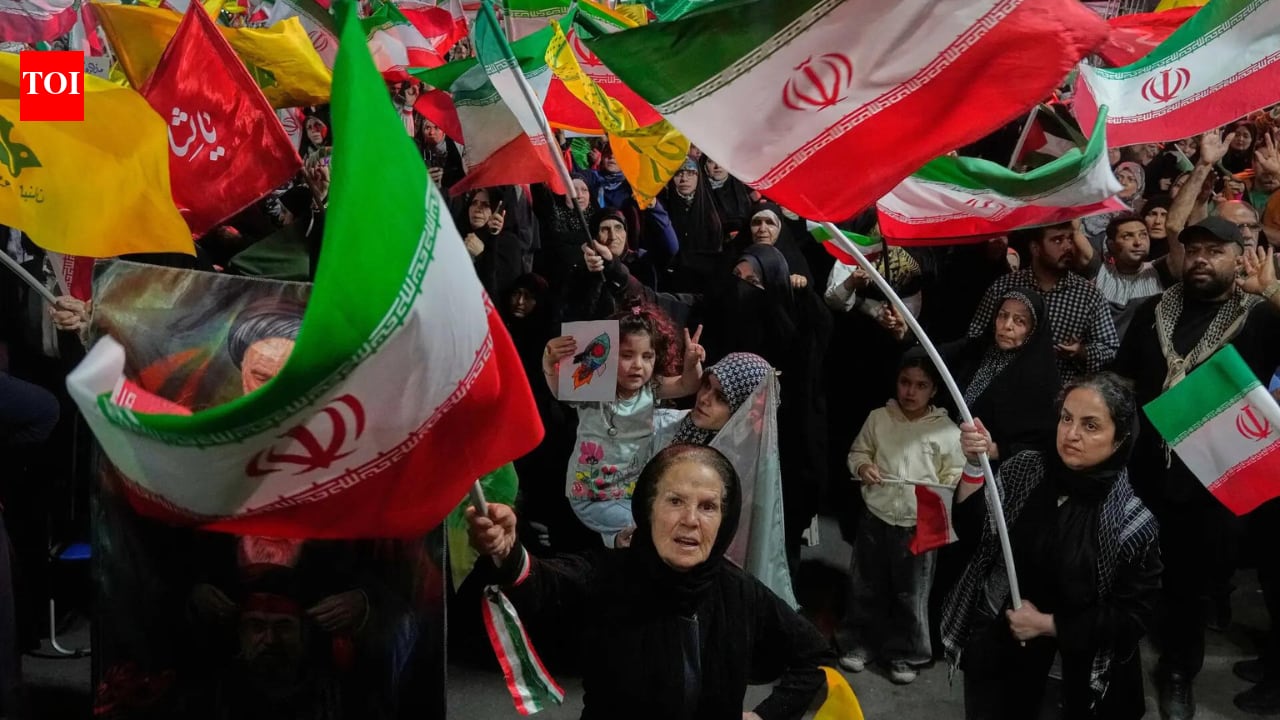
Iran's Revolutionary Guards have announced the closure of the Strait of Hormuz in response to US military strikes and a blockade of Iranian ports, stating the passage will remain closed until US interference ends.
Escalation in the Gulf: Iran's Defiance and the Strait of Hormuz Crisis
The geopolitical landscape of the Middle East has entered a phase of extreme volatility following the announcement by Iran's Revolutionary Guards that the Strait of Hormuz will remain closed. This drastic measure comes as a direct response to ongoing US military strikes and the reimposition of a blockade on Iranian ports. The rhetoric employed by the Iranian leadership, specifically the vow to maintain the closure until the "end of America's evils," signals a breakdown in diplomatic channels and a shift toward a high-stakes confrontation that threatens global stability.
The Strategic Significance of the Strait of Hormuz
To understand the gravity of this event, one must recognize that the Strait of Hormuz is arguably the most critical oil transit chokepoint in the world. It is the only sea passage from the Persian Gulf to the open ocean, through which a significant portion of the world's total oil consumption passes daily. By closing this waterway, Iran is not merely striking back at the United States but is effectively holding the global energy market hostage. Such a move creates an immediate supply shock, likely leading to a surge in crude oil prices and causing economic ripples across every continent, from industrial hubs in Asia to consumer markets in Europe and North America.
Analysis of the US Blockade and Iranian Response
The current crisis is a result of a tit-for-tat escalation cycle. The US decision to reimpose a blockade on Iranian ports represents a maximum-pressure strategy designed to cripple Iran's economic capabilities and force a change in political behavior. However, the Revolutionary Guards' response—closing the Strait—demonstrates that Iran is willing to engage in "asymmetric warfare." By targeting a global common resource (the shipping lane) rather than engaging in a direct conventional naval battle with the US fleet, Iran leverages global economic pressure to force the US to lift its blockade.
Historical Context of US-Iran Hostility
This confrontation does not exist in a vacuum but is the culmination of decades of systemic hostility. From the fallout of the 1979 revolution to the complexities of nuclear proliferation agreements and the ongoing proxy wars in the region, the US and Iran have long viewed each other as existential threats. The current cycle of strikes and blockades is a manifestation of this deep-seated mistrust. Historically, whenever the US has increased economic or military pressure on Tehran, Iran has responded by threatening or disrupting the flow of oil through the Gulf, using the Strait of Hormuz as its primary strategic lever.
Broader Implications for Global Trade and Security
Beyond oil, the closure of the Strait threatens the security of all maritime trade in the region. Insurance premiums for shipping vessels are likely to skyrocket, and the risk of accidental military engagements increases exponentially when naval assets from two superpowers are operating in such close proximity under high tension. Furthermore, this event may force other global powers, such as China and India—who are heavily dependent on Gulf oil—to intervene diplomatically or militarily to ensure their energy security, potentially turning a bilateral conflict into a multilateral crisis.
Conclusion and Future Outlook
In summary, the closure of the Strait of Hormuz is a high-risk gamble by the Iranian Revolutionary Guards intended to neutralize the impact of the US port blockade. While the US possesses superior conventional military power, the economic cost of a prolonged closure of the Strait may prove too high for the global community to bear. The situation will likely reach a tipping point where either a diplomatic compromise is brokered to lift the blockade and reopen the waterway, or the region slides into a full-scale maritime war. For now, the world remains in a state of precarious uncertainty as the two nations remain locked in a defiant standoff.