Iran launches 'eye-for-an-eye' operation after fresh US strikes | What we know
Source Entity
Latest News: Today's Latest News Headlines from India & World | Hindustan Times | Hindustan Times
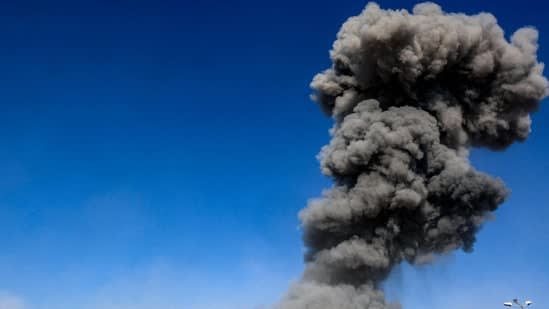
The IRGC said the strikes were carried out during the third phase of its "eye-for-an-eye" operation launched in response to US military action.
Escalation in the Middle East: Iran's 'Eye-for-an-Eye' Strategy
The announcement by the Islamic Revolutionary Guard Corps (IRGC) regarding the launch of the third phase of its "eye-for-an-eye" operation marks a critical juncture in the ongoing military friction between Iran and the United States. By framing the operation under a philosophy of direct reciprocity, Tehran is signaling that its military responses are not random acts of aggression but are calculated, proportional reactions to perceived US provocations. This specific terminology suggests a strategic intent to establish a deterrent framework where every US action is met with a corresponding Iranian counter-strike.
The Strategic Role of the IRGC
As the primary arm responsible for defending the Islamic Republic's ideological foundations and managing its external operations, the IRGC's leadership of this operation is significant. The IRGC typically employs asymmetric warfare tactics, utilizing a network of proxies and precision-guided munitions to project power without necessarily engaging in a full-scale conventional war. By overseeing the "eye-for-an-eye" campaign, the IRGC is asserting its dominance over Iran's security apparatus and demonstrating its capability to execute multi-phased military strategies across a timeline of escalation.
Analyzing the 'Third Phase' Framework
The mention of a "third phase" is perhaps the most analytically revealing aspect of the report. It indicates that the Iranian military has a structured, sequential plan for retaliation rather than a singular, impulsive response. A phased approach allows the IRGC to gauge the US reaction at each stage, potentially leaving room for diplomatic off-ramps while simultaneously maintaining military pressure. This methodical escalation is designed to keep the US military on high alert and create a psychological environment of unpredictability and sustained threat.
Historical Context of Tit-for-Tat Conflict
The current tension is rooted in a decades-long cycle of "strike and counter-strike" that has defined US-Iran relations. From the targeting of high-ranking officials to the disruption of maritime trade and drone strikes on regional bases, both nations have frequently operated in a grey zone between peace and open war. The "eye-for-an-eye" rhetoric is a continuation of this pattern, where both powers attempt to signal strength and resolve without crossing the threshold into a total regional conflict that could destabilize global energy markets and security.
Broader Geopolitical Implications
This escalation carries profound implications for regional stability. When the IRGC initiates multi-phase operations, it often involves the coordination of various regional allies, potentially expanding the theater of conflict beyond a bilateral US-Iran dispute. The risk of miscalculation is high; a strike intended as a "proportional response" could be interpreted by the US as an unacceptable escalation, leading to a cycle of violence that neither side can easily exit. Furthermore, this volatility complicates international efforts to maintain stability in the Persian Gulf and the Levant.
Conclusion
In summary, the IRGC's "eye-for-an-eye" operation represents a calculated effort to establish a new equilibrium of deterrence through retaliatory strikes. By utilizing a phased approach, Iran is demonstrating both its military resolve and its strategic patience. However, as the conflict enters its third phase, the margin for error narrows, and the potential for a wider military confrontation increases, leaving the region in a state of precarious tension.
Verification Required?