Amid Questions Over Mojtaba Khamenei's Health, An Iran President-Supreme Leader Meet
Source Entity
NDTV News Search Records Found 1000
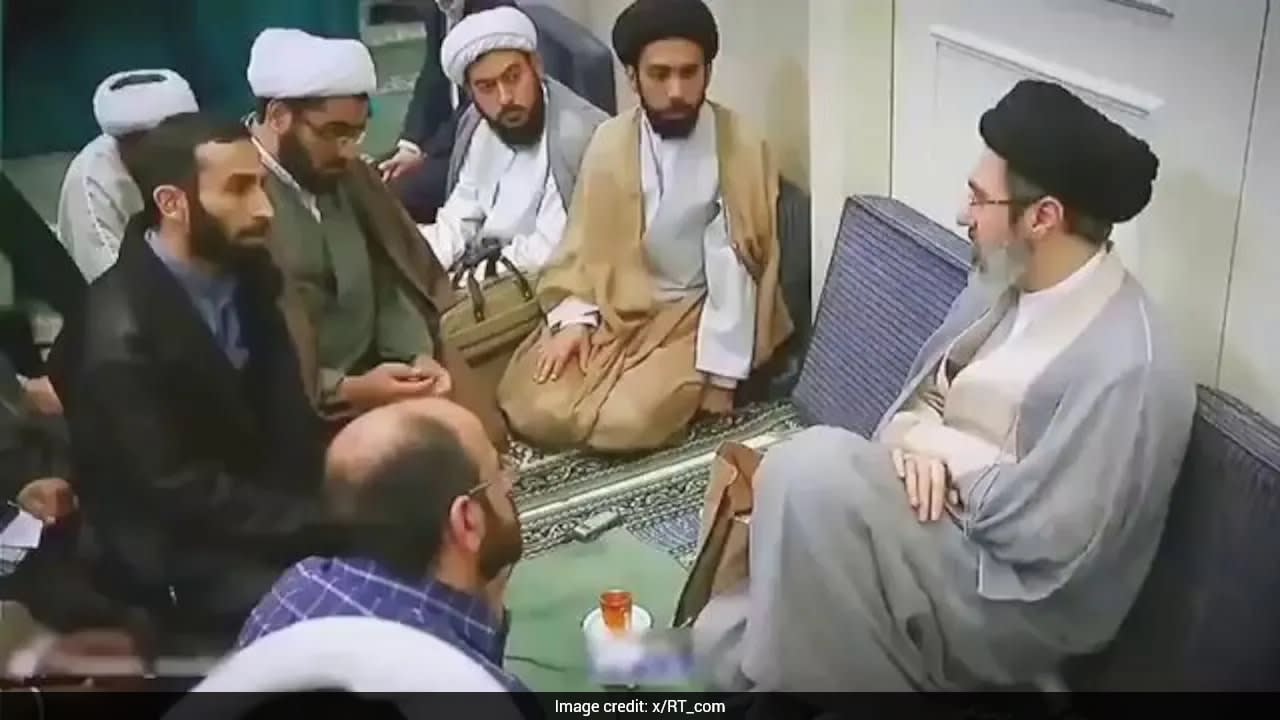
Iran has released an undated video of Mojtaba Khamenei amid speculation regarding his health and public absence. Simultaneously, Tehran is intensifying diplomatic pressure for the withdrawal of U.S. forces from the Middle East.
The Strategic Visibility of Mojtaba Khamenei
The recent release of an undated video featuring Mojtaba Khamenei serves as a calculated response to persistent rumors regarding his health and public visibility. Having been absent from the public eye since the onset of the conflict involving the United States and Iran, Mojtaba’s re-emergence in digital media is widely perceived as an attempt by the Iranian establishment to project stability and continuity. In the context of Iranian internal politics, where the succession of the Supreme Leader remains a subject of intense scrutiny, such visual cues are rarely coincidental and are likely designed to reassure domestic stakeholders of the regime's cohesion.
Challenging the Regional Status Quo
Beyond internal optics, the Iranian leadership has adopted an increasingly assertive geopolitical posture. Ali Akbar Velayati, a senior adviser to the Supreme Leader, has publicly demanded the withdrawal of foreign military forces from the Middle East. By framing the presence of outside militaries as the primary source of regional instability, Tehran is attempting to redefine the security architecture of the Persian Gulf. This narrative suggests that the region’s native powers are fully capable of maintaining order without the intervention of Western powers, a direct challenge to the long-standing U.S. security presence in the area.
The Post-War Narrative and IRGC Influence
This diplomatic push is inextricably linked to the recent conflict, with the Islamic Revolutionary Guard Corps (IRGC) leveraging the battlefield narrative to criticize international actors, specifically targeting Donald Trump’s handling of the crisis. By praising the resilience of the Iranian public and the efficacy of its regional allies, Tehran is attempting to translate its wartime endurance into a mandate for regional dominance. The strategy appears to be a dual-track approach: silencing domestic doubts through controlled media releases while simultaneously pushing for a geopolitical reset.
Regional Implications and Future Trends
As Iran seeks to reset the Gulf order, the demand for the exit of U.S. forces signals a desire to eliminate the primary check on its regional ambitions. If Tehran successfully convinces Gulf states that they can secure themselves through regional cooperation rather than Western alliances, it could lead to a significant shift in the balance of power. However, this depends heavily on whether neighboring states perceive Iran as a stabilizing partner or an expansionist threat. The coming months will likely see continued efforts by Tehran to test the resolve of the current U.S.-led security framework.
Conclusion
The convergence of Mojtaba Khamenei’s public re-emergence and the aggressive diplomatic rhetoric regarding U.S. military withdrawal suggests that Iran is entering a new phase of its foreign and domestic policy. By linking the personal image of its leadership to a broader vision of a Western-free Middle East, the regime is attempting to solidify its influence. Whether this strategy results in a genuine shift in regional power dynamics or further isolates Tehran remains a critical question for international observers to track as the post-war landscape continues to evolve.
Multiple Citing Sources
Verification Required?