Brics Summit: India and UAE discuss boost to IMEC, energy infra
Source Entity
TNN
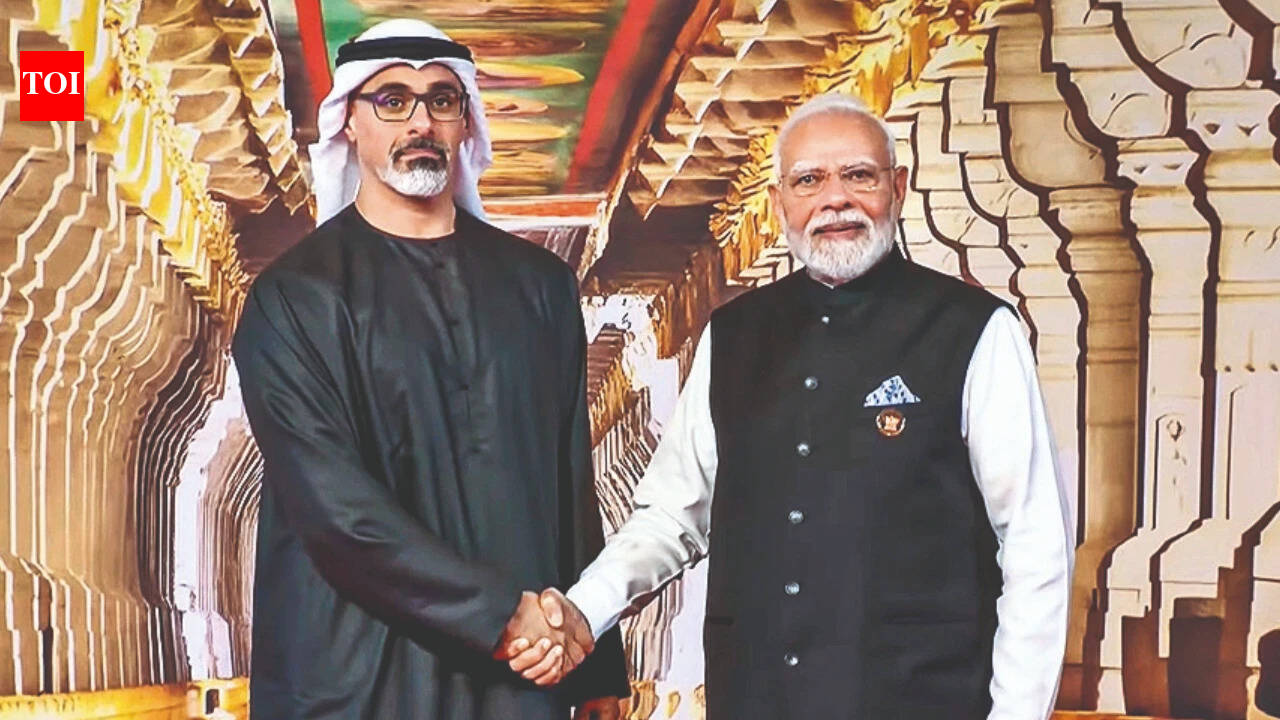
Iranian President Masoud Pezeshkian visited New Delhi for the 18th BRICS summit, criticizing US and Israeli 'aggression' amid escalating economic and regional tensions. Prime Minister Modi urged for dialogue and diplomacy, emphasizing the critical need to maintain freedom of navigation in the conflict-strained Strait of Hormuz.
Geopolitical Tensions Take Center Stage at BRICS 2026
The 18th BRICS summit in New Delhi, held on September 12-13, 2026, has become a pivotal platform for addressing the intensifying conflict in West Asia. Iranian President Masoud Pezeshkian’s arrival in India underscores the urgency of the current geopolitical climate, particularly as he seeks to navigate the repercussions of extensive international sanctions and recent military escalations. The summit serves as a high-stakes arena where the intersection of regional security and global economic stability is being debated by influential world leaders.
The Intersection of Economic Security and Regional Conflict
President Pezeshkian’s address at the BRICS Business Forum highlighted a core Iranian concern: the inextricable link between economic security and national sovereignty. By characterizing the recent surge in U.S. and Israeli actions as 'active aggression,' Pezeshkian signaled that Iran views current economic pressures not merely as trade barriers, but as a direct challenge to its regional standing. The president explicitly stated that these pressures have entered a 'far more dangerous phase' since the February 28 coalition attacks, reflecting a hardening of Tehran's diplomatic stance.
India’s Diplomatic Balancing Act
Prime Minister Narendra Modi’s meeting with President Pezeshkian demonstrates India's commitment to its traditional policy of 'dialogue and diplomacy.' While India maintains robust ties with global powers, its engagement with Iran is essential for regional stability and energy security. By advocating for peaceful resolution, Modi aims to de-escalate the rhetoric between Tehran and the U.S./Israel coalition, positioning India as a neutral mediator capable of navigating the complex web of West Asian politics.
The Strategic Importance of the Strait of Hormuz
Central to the discussions was the disruption of energy supply chains, specifically regarding the Strait of Hormuz. As a vital artery for global oil transport, the 'chokehold' on these sea lanes poses a significant threat to global market stability. Prime Minister Modi’s emphasis on the 'freedom of navigation' underscores the broader economic implications of the conflict. Any sustained disruption in this region poses a direct risk to India’s energy imports and the broader stability of global commodity markets.
Future Trends and Diplomatic Outlook
Looking ahead, the discourse at the BRICS summit suggests that the economic isolation of Iran will remain a primary point of contention in international relations. President Pezeshkian’s firm declaration that 'Iran will not be bullied' indicates that Tehran is unlikely to soften its position without significant concessions or a fundamental shift in the regional security architecture. As BRICS continues to expand its influence, the ability of the bloc to act as a stabilizing force in these conflicts will be a key indicator of its future efficacy in global governance.
Conclusion
The engagement between India and Iran at the 2026 BRICS summit highlights a critical juncture in international diplomacy. As the world watches the fallout from the February 28 coalition actions, the need for a collaborative approach to maritime security and conflict resolution has never been more apparent. Whether through the BRICS framework or bilateral dialogues, the path forward requires a delicate balance between asserting national interests and maintaining the global economic order.
Multiple Citing Sources