Brics 2026: Officials claim 50 outcomes, but no clarity on united declaration
Source Entity
TNN
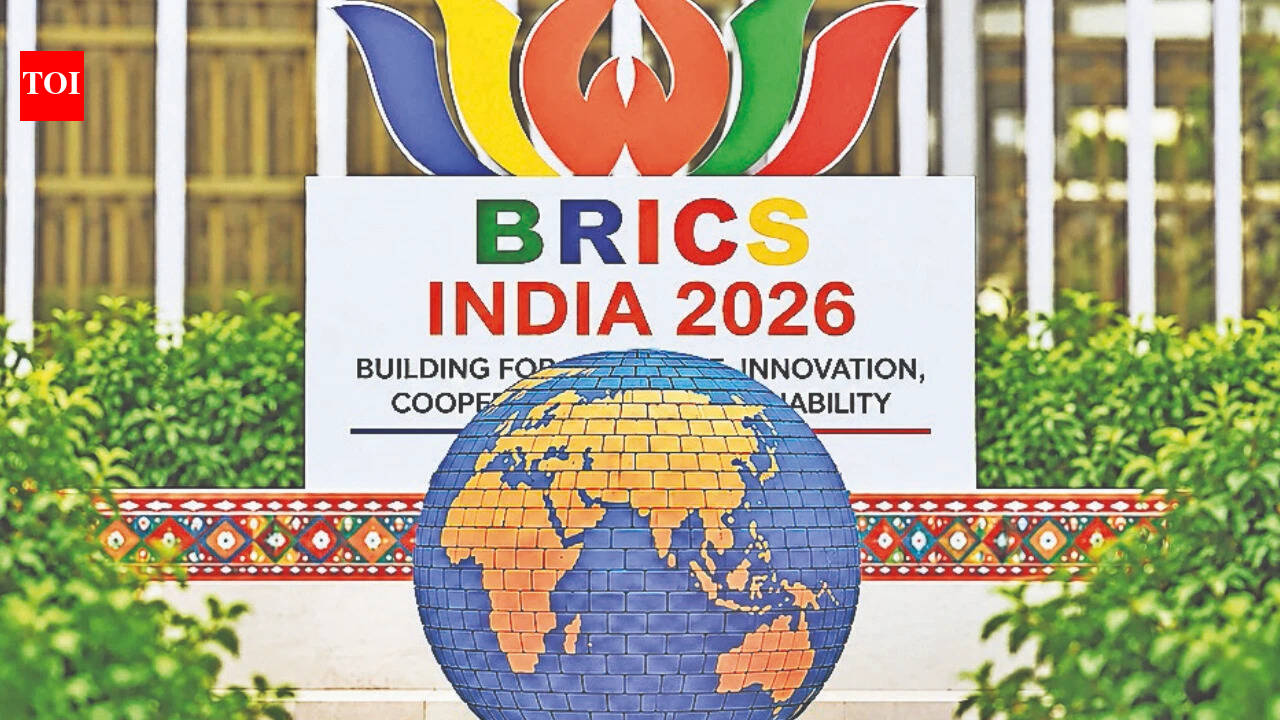
Iranian President Masoud Pezeshkian visited New Delhi for the 18th BRICS summit, highlighting the severe impact of US and Israeli aggression on Iran's economy. Prime Minister Narendra Modi urged for diplomatic resolutions and emphasized the critical need for secure navigation in the Strait of Hormuz.
The Geopolitical Stakes of the 18th BRICS Summit
The arrival of Iranian President Masoud Pezeshkian in New Delhi for the 18th BRICS summit marks a pivotal moment in international relations, occurring against a backdrop of escalating regional conflict. As the world observes the summit, the primary focus remains on the intersection of global economic stability and the volatile security situation in West Asia. The summit serves as a platform for Iran to voice its concerns regarding the intensifying economic pressures it faces, which President Pezeshkian characterizes as entering a 'far more dangerous phase.'
Economic Security as National Security
President Pezeshkian’s address at the BRICS Business Forum underscored a fundamental truth in modern statecraft: economic security is inseparable from national and regional stability. With extensive US sanctions already in place, the recent months have seen an escalation that Tehran describes as 'active aggression' by the United States and Israel. This economic warfare is not merely a bilateral issue between Tehran and Washington; it has profound implications for the global supply chain, particularly regarding energy exports originating from the Persian Gulf.
The Strait of Hormuz: A Global Chokepoint
Prime Minister Narendra Modi’s engagement with President Pezeshkian highlighted the acute risks currently facing global trade. The Strait of Hormuz, a vital artery for the world's energy supply, has faced significant disruptions since the coalition actions on February 28. PM Modi’s emphasis on the 'freedom of navigation' reflects the anxiety of nations dependent on these sea lanes. The stability of these routes is essential for global energy prices, and any further restriction acts as a catalyst for worldwide inflation and economic volatility.
The Call for Diplomacy Over Coercion
In his bilateral discussions, Prime Minister Modi advocated for 'dialogue and diplomacy' as the only viable path to de-escalation. By positioning India as a mediator, the summit provides a rare venue for addressing the grievances of a nation that feels it is being targeted by 'bullies.' President Pezeshkian’s firm stance—that 'Iran will not be bullied'—signals that while Tehran is open to economic cooperation with partners like India, it remains recalcitrant in the face of perceived external military and economic pressure.
Future Trends and Regional Implications
Looking ahead, the relationship between India and Iran will likely hinge on balancing strategic energy needs with the complex realities of international sanctions. As the BRICS bloc continues to evolve, the ability of member nations to protect their commercial interests from unilateral punitive measures will become a central theme of future summits. The ongoing crisis in West Asia suggests that without a substantive diplomatic breakthrough, the region will remain a flashpoint, with the Strait of Hormuz serving as a barometer for the health of international trade and regional peace.
Multiple Citing Sources