Tested by mud and water, in Bundelkhand
Source Entity
India Latest News: Top National Headlines Today & Breaking News | The Hindu
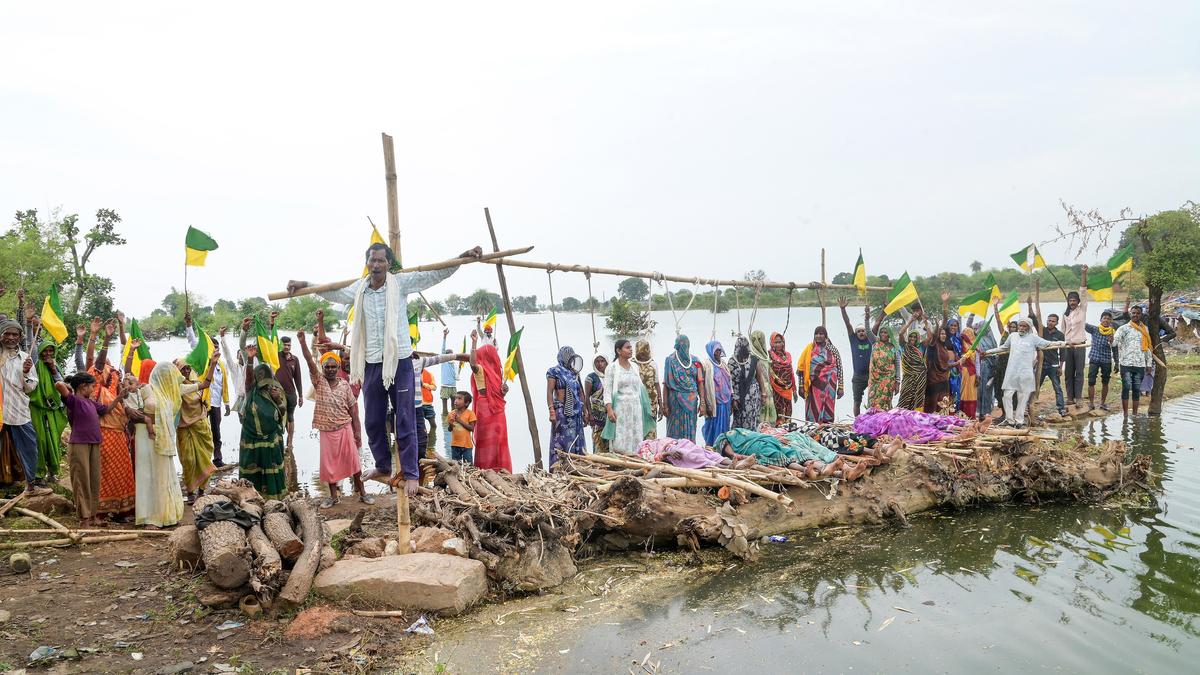
Tribal communities in Madhya Pradesh's Panna district are staging a 'jal satyagraha' to protest against the Majhgaon irrigation project. Demonstrators are demanding fair compensation and rehabilitation, citing severe irregularities in the government's land acquisition process.
The Jal Satyagraha: A Struggle for Land and Dignity in Panna
In the heart of Madhya Pradesh’s Bundelkhand region, a profound humanitarian crisis is unfolding as tribal communities take to the water in a desperate bid for justice. The ongoing jal satyagraha in Panna district serves as a poignant reminder of the friction between large-scale infrastructure ambitions and the fundamental rights of indigenous populations. Following months of unrest regarding the Ken-Betwa river link project, the focus has shifted to the Majhgaon irrigation project, which has left hundreds of local families displaced and disillusioned.
The Anatomy of the Protest
On October 6, the village of Banhari Kalan became the stage for a harrowing display of civil disobedience. Protesters utilized symbolic imagery—including mock funeral pyres (chita andolan), nooses, and crucifixions—to articulate the existential threat they feel. By standing in the water for extended periods, these individuals are not merely protesting; they are physically embodying the precariousness of their survival, signaling to the state that their livelihoods have been submerged by administrative apathy and project-related displacement.
Allegations of Administrative Irregularity
At the core of the agitation lies a deep-seated distrust of the rehabilitation process. The affected tribal residents allege significant irregularities in how compensation is calculated and distributed. For these communities, land is not merely an asset; it is their ancestral heritage and primary source of sustenance. The protesters argue that the compensation offered is grossly inadequate and that the rehabilitation framework fails to account for the long-term socio-economic impact of losing their traditional farming grounds.
The Broader Context of Bundelkhand
Bundelkhand has long been characterized by water scarcity and agricultural volatility, making irrigation projects a double-edged sword. While the state government frames these projects as essential for regional development and water security, the jal satyagraha highlights the human cost of such 'development.' The movement reflects a broader pattern of conflict where tribal voices are often sidelined in favor of centralized planning, leading to a breakdown in the social contract between the state and its most vulnerable citizens.
The Path Forward and Future Implications
As the protest enters its second month, the refusal of the tribal community to back down despite alleged pressure and force underscores a rising tide of grassroots awareness. If the administration continues to ignore these demands for transparency and equity, the movement may serve as a catalyst for wider unrest across the region. Future trends suggest that unless a dialogue is established that prioritizes fair rehabilitation over bureaucratic speed, projects like Majhgaon may continue to face significant delays and moral challenges that could hinder their ultimate utility.
Verification Required?